
Arsenal Women’s Season Review: Missed Opportunities in WSL and Champions League
Arsenal Women conclude a season that saw them lift the inaugural Champions Cup but ultimately fall short in their pursuit of the Women's Super League and UEFA Women's Champions League titles, with key factors identified as slow starts, squad depth challenges, and a congested fixture schedule.
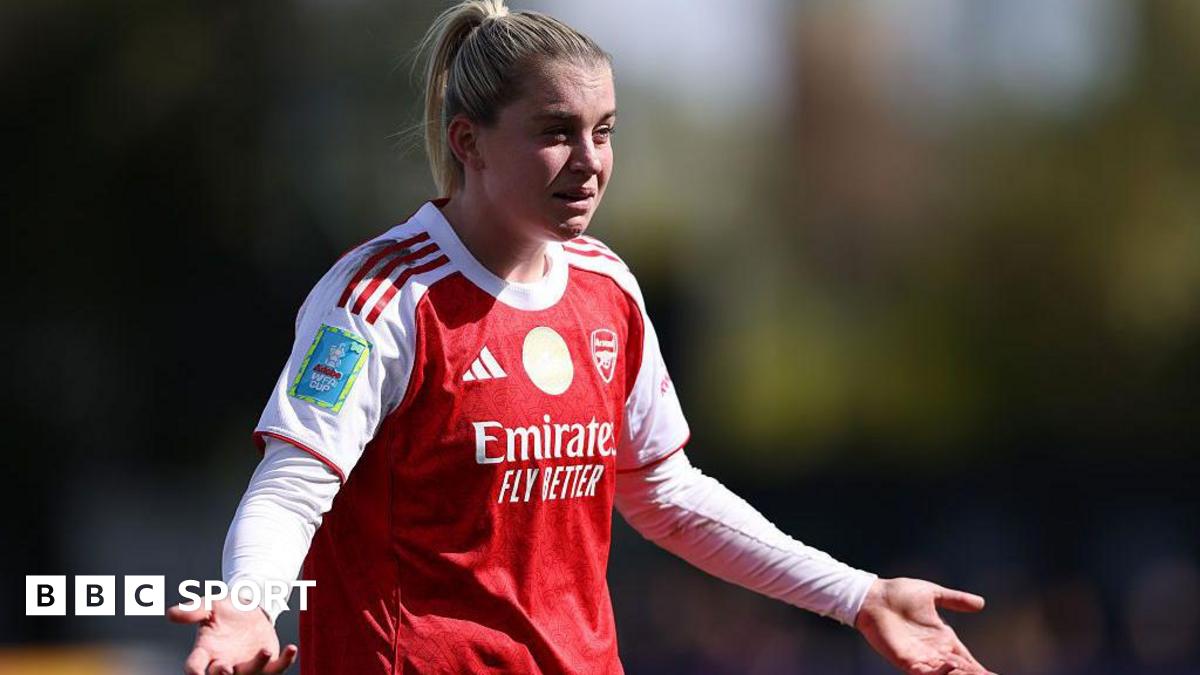
Arsenal Women concluded their 2025-26 season without securing the Women’s Super League (WSL) title, extending their wait since 2019, and failed to retain their UEFA Women’s Champions League crown. Despite lifting the inaugural Champions Cup, the club exited the FA Cup at the quarter-final stage and the League Cup in the semi-finals, prompting a review into the factors that prevented them from challenging for the season’s biggest prizes.
Key challenges for Renee Slegers’ side included a recurring issue of slow starts to their league campaigns, significant demands on squad depth due to participation in multiple competitions, and a condensed fixture list towards the season’s end. These elements collectively impacted their performance and ability to maintain a consistent challenge against rivals, particularly newly crowned WSL champions Manchester City.
Slow Starts Proved Costly
A persistent problem for Arsenal has been their inability to hit the ground running in the WSL. After a strong opening, winning their first two league matches with an aggregate score of 9-2, Arsenal secured only two points from their subsequent three fixtures. This period included a crucial 3-2 defeat to Manchester City and back-to-back draws against Chelsea and Tottenham in November. By Christmas, they found themselves eight points adrift after 11 matches, a deficit they were unable to overcome.
This trend of early-season struggles is not unique to Slegers’ tenure, having affected Arsenal’s title ambitions in the past three campaigns. Former England international Ellen White noted on the Women’s Football Weekly podcast that “The start of the season was another issue for them. They’ve done that for a couple of seasons now and then they’re on catch-up.” Despite only losing one game all season, these early draws proved particularly detrimental in a competitive league.
Squad Depth and Fixture Congestion
Arsenal’s involvement in five competitions this season—WSL, Women’s Champions League, FA Cup, League Cup, and the Champions Cup—stretched their squad to its limits. The expanded Champions League format and the additional two games in the Champions Cup meant Arsenal played significantly more matches than their rivals. Alessia Russo, for instance, played 3,150 minutes, making her Slegers’ most used player. In contrast, Manchester City’s top scorer, Khadija Shaw, played 762 minutes less than Russo, equivalent to nearly eight and a half fewer games.
The increased workload appeared to take its toll, with players visibly fatigued during a 1-1 draw at Brighton, which occurred just four days after their Champions League exit in Lyon. This result effectively ended their WSL title hopes. The team’s schedule was further condensed at the end of the season, with Arsenal playing six games in 18 days, compared to City’s two games in the same period. Former Scotland and Arsenal defender Jen Beattie highlighted the difficulty, stating, “Too many games were postponed to this part of the season… it’s the hardest part, so you don’t want your biggest accumulation of games to come at this point in the season.”
Key facts:
| Factor | Impact on Arsenal Women’s Season |
|:—|:—|
| Slow Starts | Eight-point deficit by Christmas, difficult to close |
| Squad Depth | Most used player (Russo) played 762 more minutes than City’s top scorer |
| Fixture Congestion | Six games in 18 days late in the season, contributing to fatigue |
Manchester City’s Dominance
Beyond Arsenal’s internal challenges, Manchester City’s exceptional performance played a significant role. The champions demonstrated superior form throughout the season, winning 17 matches, boasting the league’s best attack with 58 goals, and the second-best defence. After an initial loss, they embarked on a 13-match winning streak, including a dominant 5-1 victory over Chelsea, which gave them an 11-point lead with eight games remaining. This commanding lead proved insurmountable for Arsenal.
Future Outlook and Transfers
With the season concluded for Arsenal, attention has already turned to the upcoming transfer window. The club has begun to address potential shortcomings, with Beth Mead, a long-serving player with 86 goals in 264 appearances, confirmed to depart after nine years. Defender Laia Codina and midfielder Victoria Pelova will also leave at the end of the season.
Conversely, Arsenal is reportedly targeting significant signings to bolster their squad. Speculation links them with Bayern Munich and England midfielder Georgia Stanway, as well as Barcelona full-back Ona Batlle. These potential acquisitions signal the club’s intent to strengthen and mount a more robust challenge for major honours in the next campaign. The upcoming summer transfer window will be crucial in shaping Arsenal’s prospects for future success across all competitions.
Fuente: BBC Sport Football RSS https://www.bbc.com/sport/football/articles/c2k2gxpky37o?atmedium=RSS&atcampaign=rss
Key facts
| Point | Detail |
|---|---|
| Source | BBC Sport Football RSS |
| Date | 2026-05-13T21:08:27+00:00 |
| Topic | Why Arsenal have fallen short in WSL and Champions League this season |
Source
BBC Sport Football RSS Original publication: 2026-05-13T21:08:27+00:00
Related news
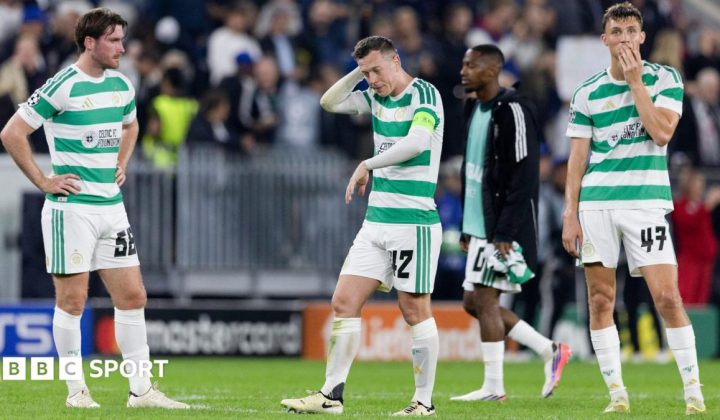
Celtic’s Champions League Collapse: A Timeline of the LASK Disaster
Celtic threw away a 4-0 aggregate lead against LASK in the Champions League qualifiers, suffering a humiliating 5-4 defeat after extra time.…
Read story
Body of Missing 5-Year-Old Belgian Boy Likely Found Near Football Club; Father Still Missing
The body of 5-year-old Tyméo Brigou, missing since late June, has likely been found in a wooded area just two kilometers from…
Read story
Serie A clubs Lazio and Fiorentina show interest in free agent Mauro Icardi
The 33-year-old Argentine striker remains a free agent after leaving Galatasaray, with Lazio and Fiorentina both considering a move before the Italian…
Read story
Therian Interrupts “Aura Farming” Gathering in La Plata, Gets Escorted Out by Crowd
A person identifying as a therian briefly disrupted a large "aura farming" meetup in La Plata's Plaza Moreno on Saturday, only to…
Read story