
Football Tactics Explained: Pressing, Build-Up Play and Formation Basics
A plain-English guide to football tactics, from pressing and build-up play to formations, roles, trade-offs and smarter ways to read a match.
Football Tactics Explained: Pressing, Build-Up Play and Formation Basics
Football tactics are the organised choices a team makes inside the laws of association football: how players are arranged, how a team attacks, how it defends, and how it reacts when possession changes. The Laws of the Game define the playing framework; tactics describe the football decisions made within that framework.
This guide keeps the language practical. Pressing means applying pressure when the opponent has the ball, build-up play means moving the ball from deeper areas toward attack, and formations are useful starting shapes rather than complete explanations of a team’s style.
Quick takeaway: Watch shape, pressure, passing routes, transitions and match context together. A scoreline tells you what happened; tactics help explain how a team tried to make it happen.
Date checked: This explainer was reviewed against the listed public sources for general football rules and background. It does not claim current team tactics, league tables, injuries, transfers, odds or match results.
The Basics of Football Tactics
In association football, two teams compete to score by getting the ball into the opposing goal under the rules of the game. Tactics sit inside that framework: where players stand, how they use space, when they pressure the ball, and how they support each other in attack and defence.
A simple way to read a match is to separate four moments: a team has the ball, does not have the ball, has just won the ball, or has just lost the ball. That lens helps explain why the same team can look calm in possession but exposed immediately after losing it.
Core Tactical Terms
| Term | Plain-English meaning | Why it matters |
|---|---|---|
| Pressing | Pressure applied when the opponent has the ball | Helps explain how a team tries to disturb the opponent’s passing |
| Build-up play | Moving the ball from deeper areas into attack | Shows how a team tries to progress rather than simply clear the ball |
| Formation | A reference shape for player positions | Gives a starting map, but not the full tactical picture |
| Transition | The moment possession changes | Often reveals whether a team is balanced or stretched |
| Low block | Defending with players positioned deeper and compactly | Can protect space near goal but may concede territory |
| Overload | Having more players in one area than the opponent | Can help create a passing route or free space elsewhere |
| Possession | Time or share of the ball recorded in match data | Useful context, but not the same thing as control or chance quality |
These terms are best treated as viewing tools, not magic answers. A formation or possession number can describe part of a match, but it cannot explain every player decision, opponent adjustment or individual error by itself.
Pressing and Build-Up
What Pressing Means
Pressing is the team behaviour of applying pressure when the opponent has possession. It may happen near the opponent’s goal, around midfield, or closer to a team’s own penalty area depending on the match plan and situation.
For fans, the most useful thing to watch is whether pressure is coordinated. One player sprinting toward the ball can be easy to bypass; several players moving together can close nearby passing options and make the opponent’s next action harder.
Pressing also carries risk. If the opponent plays through or around the pressure, space can open behind the players who stepped forward. That is the basic trade-off: pressure can help regain control, but failed pressure can leave a team stretched.
What Build-Up Play Means
Build-up play is how a team moves the ball from defence into midfield and attack. It can involve short passes, longer forward passes, dribbling, or a mix of routes depending on the players, the opponent’s pressure and the score situation.
Playing short from the back is not automatically “better” football, and direct play is not automatically poor football. Short build-up can draw opponents forward and create space elsewhere; direct play can bypass pressure and move the game into attacking areas more quickly.
For more match-specific context, this type of tactical reading can sit alongside our [match previews](/match-previews/), where team approach, recent performance and likely game state can be discussed together.
Formations and Roles
A formation is a reference structure for how players are arranged. Common football discussion often uses labels such as a back four, midfield three or front two, but those labels do not explain every movement a team makes.
Shape Is Not the Same as Style
Two teams can start from similar shapes and still play differently. One may press aggressively and pass forward early; another may defend deeper and build attacks more slowly. The listed formation is the beginning of the analysis, not the conclusion.
Roles matter because players do different jobs from similar starting positions. A wide defender might stay deep, overlap outside a winger, or move into midfield areas when the team has the ball. A midfielder might mainly protect space, connect passes or support attacks near the penalty area.
Why Tactics Change During Matches
Tactics can shift because of the score, substitutions, fatigue, opponent changes or the need to protect space. A team chasing a goal may accept more risk; a team protecting a lead may defend deeper and attack with fewer players.
Those changes are why fans should avoid judging a whole performance from the starting graphic alone. The better question is how the shape behaved in different phases of the match.
How to Spot Tactical Patterns
Use this practical checklist during the opening stages of a match:
- Check the defensive shape: Is the team pressing high, holding midfield space, or defending closer to its own goal?
- Watch the first forward route: Does build-up go through central midfield, wide areas, the goalkeeper, or quickly toward a forward?
- Track support around the ball: Are nearby teammates offering passing options, or is the ball-carrier isolated?
- Notice transitions: What happens in the first few seconds after the ball is won or lost?
- Compare evidence carefully: Use stats as clues, then check whether the same pattern appears repeatedly on the pitch.
Repeated behaviours matter more than one isolated action. A single long pass, tackle or turnover may be a one-off moment; repeated passing routes, pressure points or defensive gaps are stronger clues about the team’s approach.
Common Fan Misconceptions
Possession does not automatically mean dominance. A team can have long spells on the ball without creating clear danger, while another team can defend compactly and attack quickly after winning possession.
Defensive football is not the absence of tactics. Compact positioning, covering space, limiting central routes and choosing when to counter-attack are tactical choices within the game.
A formation does not explain everything. The same starting shape can become more attacking or more cautious depending on player roles, spacing, substitutions, the score and opponent behaviour.
When Stats Help — and When They Mislead
Match statistics are useful when they answer a clear question. Goals, shots and possession can describe parts of a match, but they should be read with the game state and tactical context in mind.
Stats can mislead when treated as the whole story. A team protecting a lead may allow the opponent more of the ball; a team chasing the match may produce volume without much control. The number matters, but the situation around the number matters too.
The safest approach is to combine evidence: watch the team shape, identify repeated patterns, then use available numbers to check whether those patterns produced territory, chances or defensive stability.
How to Judge a Team’s Approach
Before making a strong tactical verdict, ask whether the team created useful situations or only circulated possession safely. Also ask whether the press made the opponent uncomfortable, whether build-up moved the ball forward, and whether the formation protected important central spaces.
A team can play well and lose, or play poorly and win. Tactics explain patterns and choices; they do not explain every bounce, finish, refereeing decision or individual mistake.
Cover Image Plan
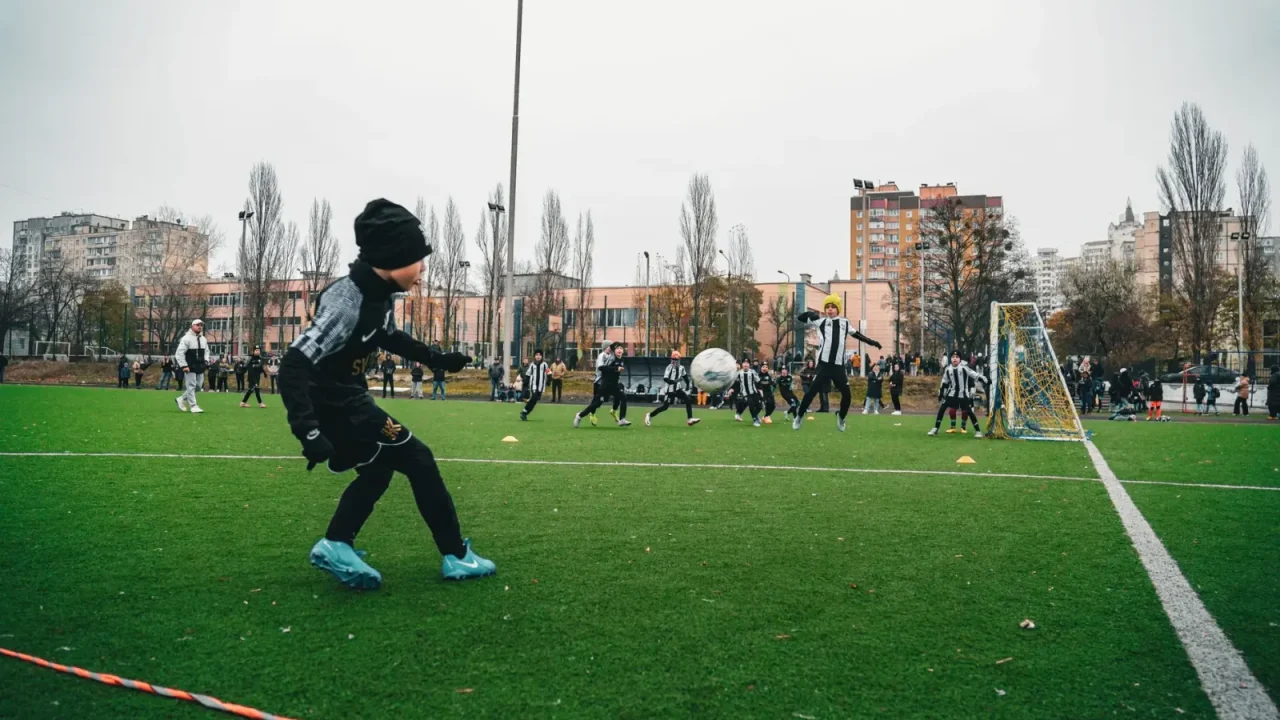
Use a licensed image that clearly shows a football tactics board, coaching board or dressing-room tactical setup. Suggested alt text: “Football tactics board used by a coach.” Avoid using generic match-action imagery with that alt text because it would not accurately describe the image.
Sources and Further Reading
- The IFAB Laws of the Game — official framework for the rules of association football.
- Association football overview — general background on the sport, positions and match structure.
Sources
- The IFAB Laws of the Game – The IFAB.
- Association football overview – Wikipedia.
- what do you mean by subject? – Copernicus GmbH.
Related news

Luis Díaz Hat-Trick Powers Bayern Munich to 6-1 Rout of RB Leipzig
The Colombian winger scored a brilliant hat-trick and added an assist as Bayern Munich thrashed RB Leipzig 6-1, ending a slow start…
Read story
Bruno Fernandes Contract Talks Underway as Man United Face Key Summer Decisions
Manchester United are in active discussions with captain Bruno Fernandes over a contract extension, according to reports, as the 32-year-old enters the…
Read story
Celtic’s Europa League struggles deepen as Benfica expose familiar flaws
A 4-1 defeat in Lisbon leaves Celtic with two losses from two Europa League group games. Martin O’Neill sees positives in the…
Read story
Borussia Dortmund Fall to Bodø/Glimt in Champions League Shock
Fredrik Sjøvold’s second-half strike gave the Norwegian side a 1-0 win over Niko Kovač’s Dortmund, who struggled to break down a disciplined…
Read story