
Dutch Scientists Awarded Top Honors for Groundbreaking Research
Four Dutch researchers, including neuroscientist Karin Roelofs and biochemist Hermen Overkleeft, have received the prestigious Spinoza and Stevin Prizes for their significant contributions to neuroscience, medicine, and AI.
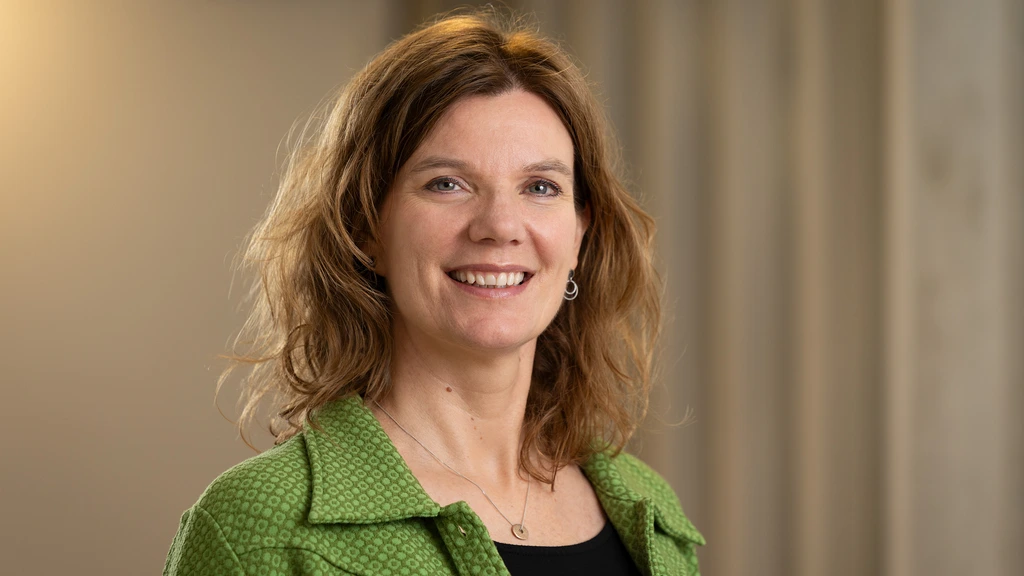
Four leading Dutch scientists have been recognized with the nation’s highest scientific honors, the Spinoza and Stevin Prizes, for their impactful research across diverse fields including neuroscience, medicine, and artificial intelligence. The awards, presented annually by the Netherlands Organisation for Scientific Research (NWO), come with a substantial grant of 1.5 million euros each, enabling further in-depth scientific inquiry.
Neuroscience Breakthroughs in Stress Response
Neuroscientist Karin Roelofs from Radboud University has been awarded the Spinoza Prize for her pioneering research into the “freeze-response” and its role in managing stress. Her work investigates how individuals’ brains and bodies react to stressful situations, identifying that those who make sound decisions under pressure often exhibit a low heart rate while maintaining a heightened state of alertness. This physiological state, likened to simultaneously applying the gas and brake pedals, allows for crucial thinking time before action.
Roelofs’ research has already yielded practical applications, including a VR game designed to train police officers in mastering this beneficial freeze-response during their education. With the Spinoza Prize funding, Roelofs plans to delve deeper into fundamental research, aiming to understand how the brain can be influenced to enhance stress resilience.
Advancements in Medicine and Protein Research
Joining Roelofs in receiving the Spinoza Prize is chemical biologist Hermen Overkleeft, a professor at Leiden University. Overkleeft has been recognized for his development of methods to influence human proteins, positioning him among the global leaders in bio-organic chemistry. His research has been instrumental in the development of new treatments for cancer, rare metabolic disorders, and autoimmune diseases. Overkleeft intends to utilize the prize money to explore new avenues in his research and translate these findings into practical clinical applications.
Societal Impact Through AI and Psychiatry
The Stevin Prizes, awarded to scientists whose research has made a significant societal impact, have been presented to Professor of Psychiatry Iris Sommer and Media Scientist Claes de Vreese. Both recipients will also receive 1.5 million euros for their continued research endeavors.
Iris Sommer, a professor at the UMC Groningen, has developed an AI application capable of detecting psychological relapses through speech analysis. Her work also focuses on psychiatric treatments for women, examining the influence of hormones on psychoses. The NWO specifically lauded her book, “Het vrouwenbrein” (The Female Brain), for bridging the gap between science and society. Sommer plans to use her prize to support young researchers in her team and further her focus on women’s mental health.
Claes de Vreese, a professor of AI and Society at the University of Amsterdam, was recognized for his research into the rise of AI, the influence of Big Tech, and the future of democracy. The NWO highlighted his commitment to communicating his research findings, which has a tangible societal impact. De Vreese expressed that receiving the Stevin Prize is an overwhelming and honorable recognition of his work.
Key facts
| Recipient | Prize | Field | Institution | Research Focus |
|————————|————-|————————————-|———————————-|———————————————————————————-|
| Karin Roelofs | Spinoza | Neuroscience | Radboud University | Stress response, freeze-reaction, decision-making under pressure |
| Hermen Overkleeft | Spinoza | Bio-organic Chemistry | Leiden University | Methods to influence human proteins, cancer and autoimmune disease treatments |
| Iris Sommer | Stevin | Psychiatry | UMC Groningen | AI for detecting psychological relapse, women’s mental health, hormonal influences |
| Claes de Vreese | Stevin | AI and Society / Media Science | University of Amsterdam | AI’s impact on democracy, Big Tech, societal implications of AI |
This development is significant for FootballGames10 readers as it highlights advancements in understanding human behavior under pressure, which can have implications for athlete performance and psychological well-being. Furthermore, the breakthroughs in medicine and AI underscore the broad impact of scientific research on society, including potential future applications in sports science and technology.
Source: NOS Voetbal – https://nos.nl/l/2620365
Datos clave
| Punto | Detalle |
|---|---|
| Fuente | NOS Voetbal |
| Fecha | 2026-06-26T05:37:19+00:00 |
| Tema | Onderzoek naar 'freeze-reactie' krijgt hoogste wetenschappelijke beurs |
Source
NOS Voetbal Original publication: 2026-06-26T05:37:19+00:00
Related news

Celtic’s Europa League struggles deepen as Benfica expose familiar flaws
A 4-1 defeat in Lisbon leaves Celtic with two losses from two Europa League group games. Martin O’Neill sees positives in the…
Read story
Borussia Dortmund Fall to Bodø/Glimt in Champions League Shock
Fredrik Sjøvold’s second-half strike gave the Norwegian side a 1-0 win over Niko Kovač’s Dortmund, who struggled to break down a disciplined…
Read story
Brajan Gruda Strike Gives RB Leipzig 1-0 Champions League Win Over PSV
Brajan Gruda scored in the 75th minute after Maarten Vandevoordt saved an Ivan Perisic penalty as RB Leipzig defeated PSV Eindhoven 1-0.
Read story
Real Betis vs Porto: Champions League Clash Preview and Prediction
Real Betis host Porto in a crucial Champions League league-phase match. Preview includes team news, possible lineups, and analysis of both sides'…
Read story