
World Cup Knockout Stage Kicks Off: Europe vs. South America Narrative Emerges
As the FIFA World Cup transitions into its knockout phase, a distinct geographical rivalry appears to be taking shape, with Europe and South America positioned for potential clashes in the latter stages. Day 18 saw Canada secure a historic win, while anticipation builds for marquee matchups.
The FIFA World Cup has entered its most critical phase, the knockout stage, and a compelling narrative of geographical rivalry between European and South American nations is beginning to define the latter half of the tournament. Day 18 of the competition, though featuring only one match, provided a historic moment for co-hosts Canada and set the stage for what promises to be a tense and exciting run towards the final.
Canada’s Historic Victory
In the sole fixture played on Sunday, co-hosts Canada secured a dramatic 1-0 victory over South Africa, with a stoppage-time winner from Stephen Eustaquio. This marked Canada’s first-ever men’s World Cup knockout game win, a significant milestone for the nation’s footballing history. Coach Jesse Marsch lauded his players as “Canadian heroes” following the match. The victory propels Canada into the Round of 16, where they will face either Morocco or the Netherlands. While the match itself was not a high-scoring spectacle, Eustaquio’s well-taken goal provided the decisive moment, underlining the fine margins that often decide knockout encounters.
The Knockout Stage Dynamic
The transition from the open, goal-filled group stage to the more cautious, high-stakes knockout phase is a familiar pattern in major tournaments. As teams become more defensively disciplined and the fear of elimination looms large, matches can sometimes become tighter and less expansive. The Canada-South Africa game, while between sides not considered among the tournament’s elite, served as a potential indicator of this shift. However, organizers and fans alike will be hoping for more attacking flair as the competition progresses and the stakes rise.
Europe vs. South America: A Developing Rivalry
A notable aspect of the World Cup 2026 draw is the apparent geographical split in the latter stages of the bracket. FIFA’s seeding for this tournament aimed to keep the top four seeds – France and Spain in the top half, Argentina and England in the bottom half – apart until the semi-finals, provided they won their respective groups, which they have.
The top half of the draw appears particularly strong for European representation, featuring France, Spain, the Netherlands, Germany, and Portugal. The bottom half, while containing strong contenders like Argentina and Brazil, seems to have fewer of the traditional European powerhouses, partly due to Portugal finishing as runners-up in their group and Uruguay’s early exit.
This configuration sets up a potential Europe versus South America showdown in the latter stages. England, despite some unconvincing performances in the group stage, faces a challenging path through the bottom half, potentially encountering Mexico, Brazil, and Argentina en route to the final. This physical and tactical test will be a significant hurdle for Gareth Southgate’s side.
Key Upcoming Matches
As the tournament moves into full swing, several high-profile fixtures are on the horizon:
Brazil versus Japan: Five-time champions Brazil, seeking to end a 24-year wait for World Cup glory, face a determined Japan side. While Brazil boasts immense pedigree, Japan has consistently shown promise and cohesion, posing a threat with their possession-based play. The question remains whether they can convert that possession into goals against a formidable opponent.
Germany versus Paraguay: Four-time champions Germany, who have yet to hit top form, will be aiming to build momentum against a resilient but underdog Paraguay. This fixture represents a more favorable opening knockout test for the German side.
Netherlands versus Morocco: This clash pits the three-time World Cup runners-up, the Netherlands, against Morocco, who captured hearts with their semi-final run in Qatar. The match carries added intrigue with several Moroccan players, including Sofyan Amrabat and Noussair Mazraoui, having Dutch origins, suggesting divided loyalties in some parts of the Netherlands.
The introduction of a Round of 32 marks a new format for the World Cup, offering underdog nations a single opportunity to cause an upset against more established teams.
Key facts
| Match | Date | Time (ET) |
|—|—|—|
| Brazil v Japan | Today | 1pm |
| Germany v Paraguay | Today | 4:30pm |
| Netherlands v Morocco | Today | 9pm |
The unfolding geographical narrative and the array of high-stakes matches underscore the evolving dynamics of the FIFA World Cup knockout stage. As more prominent nations prepare to face off, the competition is poised to deliver compelling football and potentially solidify the Europe vs. South America storyline.
Source: The Athletic Football – Is this World Cup now Europe v South America? Which giants fall today? Day 18 recap – https://www.nytimes.com/athletic/7404446/2026/06/29/world-cup-europe-south-america-recap/
Datos clave
| Punto | Detalle |
|---|---|
| Fuente | The Athletic Football |
| Fecha | 2026-06-29T04:15:09+00:00 |
| Tema | Is this World Cup now Europe v South America? Which giants fall today? Day 18 recap |
Source
The Athletic Football Original publication: 2026-06-29T04:15:09+00:00
Related news

Celtic’s Europa League struggles deepen as Benfica expose familiar flaws
A 4-1 defeat in Lisbon leaves Celtic with two losses from two Europa League group games. Martin O’Neill sees positives in the…
Read story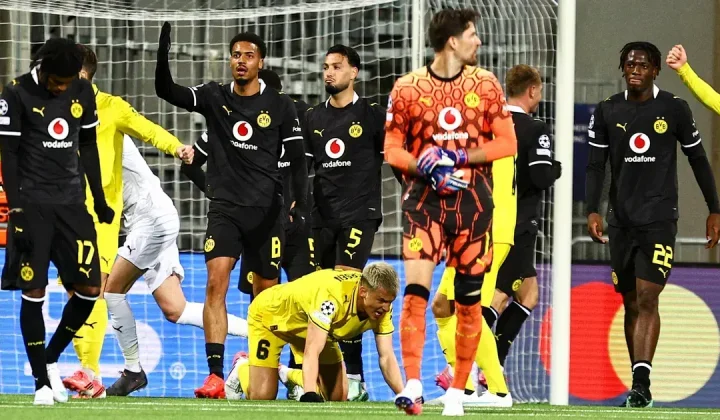
Borussia Dortmund Fall to Bodø/Glimt in Champions League Shock
Fredrik Sjøvold’s second-half strike gave the Norwegian side a 1-0 win over Niko Kovač’s Dortmund, who struggled to break down a disciplined…
Read story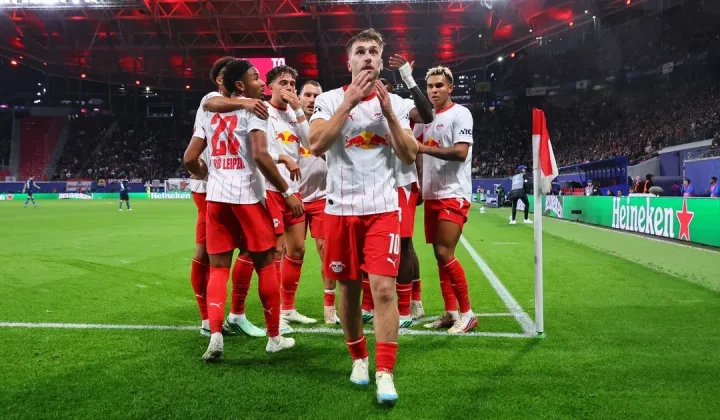
Brajan Gruda Strike Gives RB Leipzig 1-0 Champions League Win Over PSV
Brajan Gruda scored in the 75th minute after Maarten Vandevoordt saved an Ivan Perisic penalty as RB Leipzig defeated PSV Eindhoven 1-0.
Read story
Real Betis vs Porto: Champions League Clash Preview and Prediction
Real Betis host Porto in a crucial Champions League league-phase match. Preview includes team news, possible lineups, and analysis of both sides'…
Read story