
Japan’s Unique Tactical Approach Could Be Key to Overcoming Brazil
An analysis of Japan's passing strategy, inspired by a viral video of internationals playing 100 schoolchildren, suggests a tactical blueprint that could trouble Brazil in the World Cup.
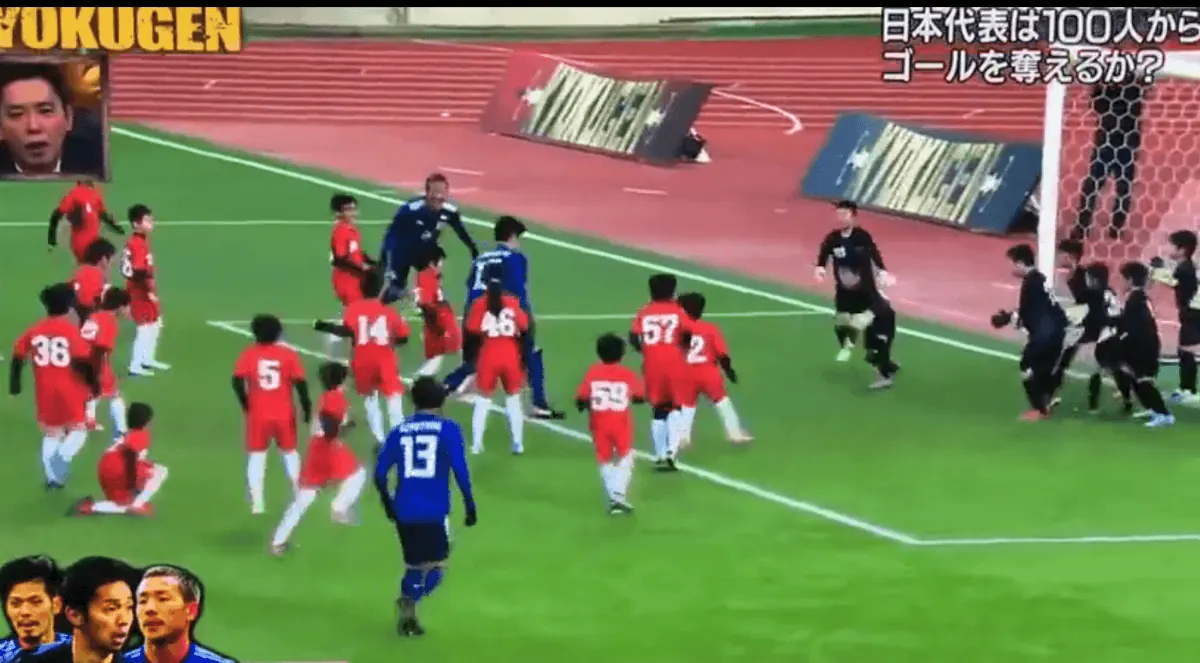
Japan’s national football team is preparing for a crucial World Cup encounter against Brazil, armed with a tactical approach that draws inspiration from an unexpected source: a viral video of three Japanese internationals skillfully navigating a game against 100 schoolchildren. This unique strategy, focused on exploiting space and switching play, has become a hallmark of Japan’s current system and could prove to be a significant challenge for the Selecao.
The intriguing tactical concept was highlighted in a viral clip featuring former Japan internationals Hotaru Yamaguchi, Hiroshi Kiyotake, and Yosuke Ideguchi. In the video, the three professionals demonstrate an ability to maintain possession and execute passes amidst overwhelming numbers of young opponents. Their success lay in identifying and exploiting positional naivety, consistently dragging the schoolchildren to one side of the pitch before switching play to an unmarked player on the opposite flank.
Por que importa
This seemingly farcical drill appears to have translated into Japan’s modern playing style. The team’s prevalent 3-4-3 formation, which often morphs into a front five during possession, is designed to create overloads and find a “bonus back” – an unmarked player running into the box on the blind side of the opposition defense. This fundamental principle of switching play and exploiting space is central to their offensive threat.
A notable aspect of Japan’s approach involves their wing-backs. Unlike traditional wing-backs who are solely focused on arriving late at the far post, Japan’s wide players, such as the left-footed Ritsu Doan and the right-footed Keito Nakamura, possess the versatility to cut inside. This allows them to shoot or, crucially, to switch the play with angled passes. A passage of play during their draw with Sweden exemplified this: a switch to the left flank, a cut-back, and a subsequent switch back to the opposite side for a volley demonstrated their ability to find and exploit space through rapid transitions.
Contexto
The upcoming match against Brazil presents an opportunity for Japan to test this tactical framework against one of football’s giants. Brazil’s full-back positions are identified as a potential area of weakness. Danilo, likely to be in his mid-thirties by the tournament’s end, may lack the mobility of younger counterparts, while Douglas Santos has not consistently performed at the highest level. While Brazil’s central defenders Marquinhos and Gabriel are formidable, Japan’s strategy aims to bypass them by switching the play effectively.
The question remains how Brazil will counter Japan’s runners on the far side. Many of Japan’s previous opponents have opted to drop an extra player into defense, forming a back five to contain Japan’s attacking five. This defensive adjustment often frees up the full-backs to stay wide and deal with switches. It is unclear if Brazil will adopt a similar strategy, and if so, which player – perhaps Casemiro or the less experienced Rayan – would be tasked with such a role.
This potential World Cup clash is significant not only for the tournament itself but also for the broader narrative of global football. While traditionally dominated by European and South American powerhouses, Japan has consistently shown the infrastructure, technical quality, and tactical cohesion to be a major force. A victory against Brazil, the most successful nation in World Cup history, would be a monumental achievement and could solidify Japan’s status as a global footballing elite.
Key facts
| Aspect | Detail |
|—|—|
| Tactical Inspiration | Viral video of Japan internationals playing 100 schoolchildren |
| Japan’s Formation | Primarily 3-4-3, forming a front five in possession |
| Key Strategy | Exploiting space and switching play to find unmarked players |
| Potential Brazil Weakness | Full-back positions (Danilo, Douglas Santos) |
| Significance of Victory | Potential to break knockout stage barrier and challenge elite status |
The tactical ingenuity displayed by Japan, derived from such an unconventional source, underscores their evolving approach to the game. If they can successfully implement this strategy against Brazil, it could mark a historic moment not just for Japanese football, but for the global game as a whole.
Source: The Athletic Football – https://www.nytimes.com/athletic/7404237/2026/06/29/japan-100-schoolkids-brazil-world-cup/
Datos clave
| Punto | Detalle |
|---|---|
| Fuente | The Athletic Football |
| Fecha | 2026-06-29T04:14:40+00:00 |
| Tema | How Japan's strategy for overcoming 100 schoolkids might help to eliminate Brazil |
Source
The Athletic Football Original publication: 2026-06-29T04:14:40+00:00
Related news

Celtic’s Europa League struggles deepen as Benfica expose familiar flaws
A 4-1 defeat in Lisbon leaves Celtic with two losses from two Europa League group games. Martin O’Neill sees positives in the…
Read story
Borussia Dortmund Fall to Bodø/Glimt in Champions League Shock
Fredrik Sjøvold’s second-half strike gave the Norwegian side a 1-0 win over Niko Kovač’s Dortmund, who struggled to break down a disciplined…
Read story
Brajan Gruda Strike Gives RB Leipzig 1-0 Champions League Win Over PSV
Brajan Gruda scored in the 75th minute after Maarten Vandevoordt saved an Ivan Perisic penalty as RB Leipzig defeated PSV Eindhoven 1-0.
Read story
Real Betis vs Porto: Champions League Clash Preview and Prediction
Real Betis host Porto in a crucial Champions League league-phase match. Preview includes team news, possible lineups, and analysis of both sides'…
Read story