
US Homeland Security Chief Revels in Iran’s World Cup Exit
The head of the US Department of Homeland Security has expressed significant satisfaction with Iran's elimination from the World Cup, citing logistical challenges and political tensions.
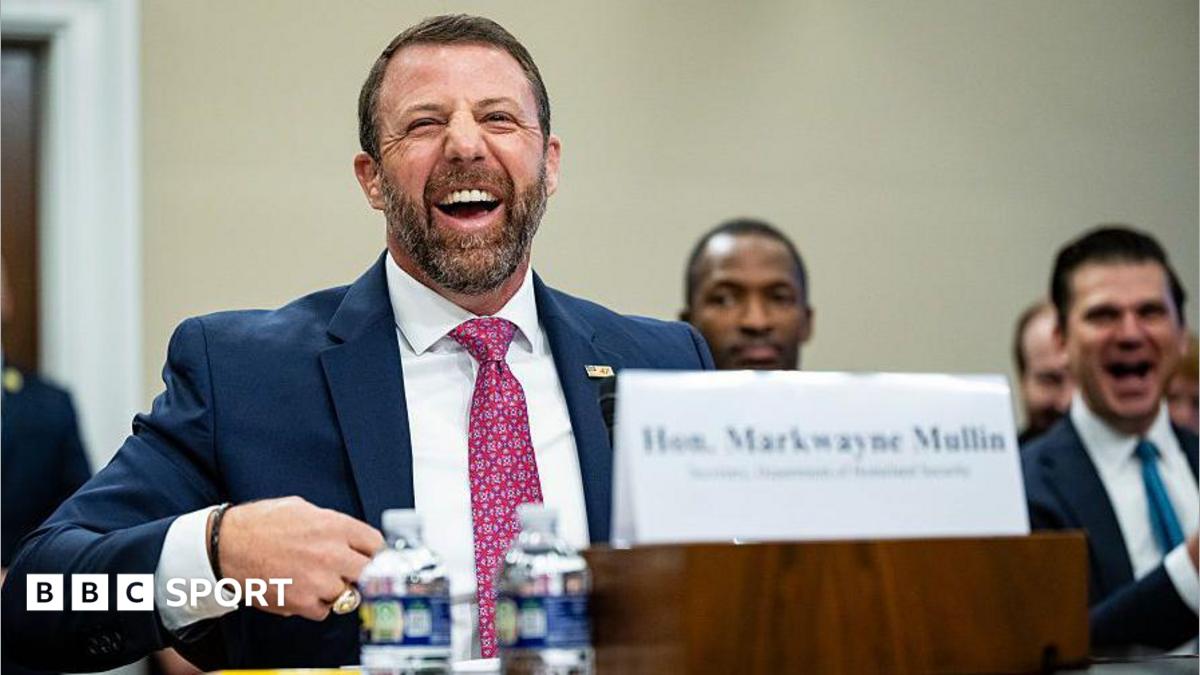
The United States’ head of homeland security has revealed he “danced a happy dance” upon confirmation of Iran’s elimination from the World Cup. Markwayne Mullin, speaking to reporters, detailed the significant logistical challenges and visa restrictions his department imposed on the Iranian team throughout their participation in the tournament.
Iran narrowly missed out on advancing from the group stage on goal difference, a fate sealed after a stoppage-time winner against Egypt was disallowed for a marginal offside call. Following their elimination, Iran’s coach Amir Ghalenoei described his team as the “most oppressed” at the tournament, citing the backdrop of ongoing political conflict between the US and Iran.
Visa Restrictions and Logistical Hurdles
Mullin stated his happiness that Iran’s participation was over and that they would not be returning to US soil. He admitted to pulling their visas and expressed satisfaction that they had to leave. “There wasn’t a single team that we had to spend more time dealing with than Iran,” Mullin told reporters, highlighting the extensive efforts involved in managing the team’s presence.
Iran’s training base was relocated from Arizona to Tijuana, Mexico, prior to the World Cup. Throughout the tournament, the team faced strict travel restrictions. Under the terms of their visas, Iran was only permitted to enter the US the day before their first two matches and had to depart on the same day as the game. These restrictions were slightly eased for their final group game in Seattle, allowing them to arrive two days early, but they were required to return to Tijuana immediately after the match.
Iran’s Accusations of Unfair Treatment
Coach Ghalenoei, speaking after Iran’s exit, asserted that the US, a co-host of the World Cup, had “treated us very unfairly.” He claimed his squad had received “less than half” the necessary training window to prepare adequately for the competition. Iran’s captain, Mehdi Taremi, echoed these sentiments, stating that “this kind of tension undermines the joy of the World Cup. I felt the tension from the first moment we arrived.”
Despite the political tensions and logistical challenges, Iran still had a theoretical chance to qualify as one of the eight best third-placed teams. However, their elimination was confirmed when Algeria and Austria played out a 3-3 draw on Sunday, which pushed Iran down the rankings.
The statements from Secretary Mullin highlight the complex interplay between international sports events and geopolitical relations, with significant logistical and political considerations influencing team movements and the overall atmosphere of the tournament.
Key facts
| Fact | Detail |
|---|---|
| US Official | Markwayne Mullin, Secretary of Homeland Security |
| Iran’s World Cup Status | Eliminated from the group stage |
| Mullin’s Reaction | Expressed happiness and “danced a happy dance” |
| Team Restrictions | Faced visa and travel restrictions imposed by the US |
The development matters for FootballGames10 readers as it sheds light on the broader political and logistical factors that can impact international sporting events, offering a behind-the-scenes look at the US government’s involvement in managing visiting teams during the World Cup.
Source: BBC Sport Football, https://www.bbc.co.uk/sport/football/articles/crr8x5qkly1o?at_medium=RSS&at_campaign=rss
Source
BBC Sport Football Original publication: 2026-06-30T07:47:46+00:00
Related news

Celtic’s Europa League struggles deepen as Benfica expose familiar flaws
A 4-1 defeat in Lisbon leaves Celtic with two losses from two Europa League group games. Martin O’Neill sees positives in the…
Read story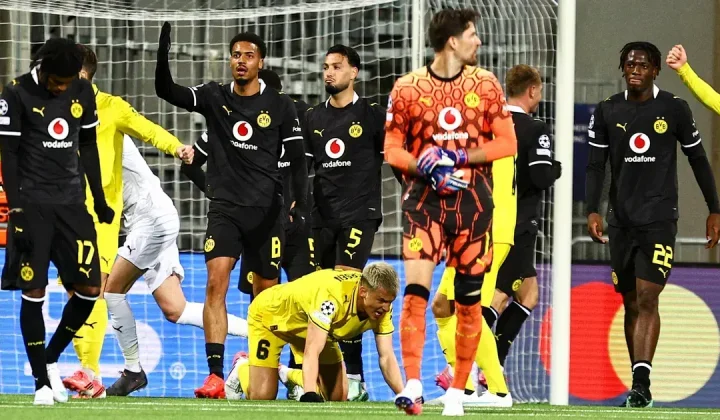
Borussia Dortmund Fall to Bodø/Glimt in Champions League Shock
Fredrik Sjøvold’s second-half strike gave the Norwegian side a 1-0 win over Niko Kovač’s Dortmund, who struggled to break down a disciplined…
Read story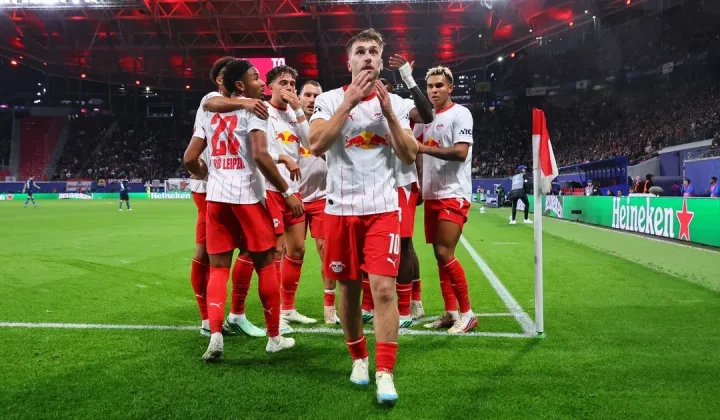
Brajan Gruda Strike Gives RB Leipzig 1-0 Champions League Win Over PSV
Brajan Gruda scored in the 75th minute after Maarten Vandevoordt saved an Ivan Perisic penalty as RB Leipzig defeated PSV Eindhoven 1-0.
Read story
Real Betis vs Porto: Champions League Clash Preview and Prediction
Real Betis host Porto in a crucial Champions League league-phase match. Preview includes team news, possible lineups, and analysis of both sides'…
Read story