
Australia Gripped by Devastating Mouse Plague Following Record Harvest
A severe mouse infestation is wreaking havoc across large parts of Australia, causing extensive damage to crops and threatening school operations. Farmers are facing significant financial losses due to ruined harvests and the escalating costs of pest control.
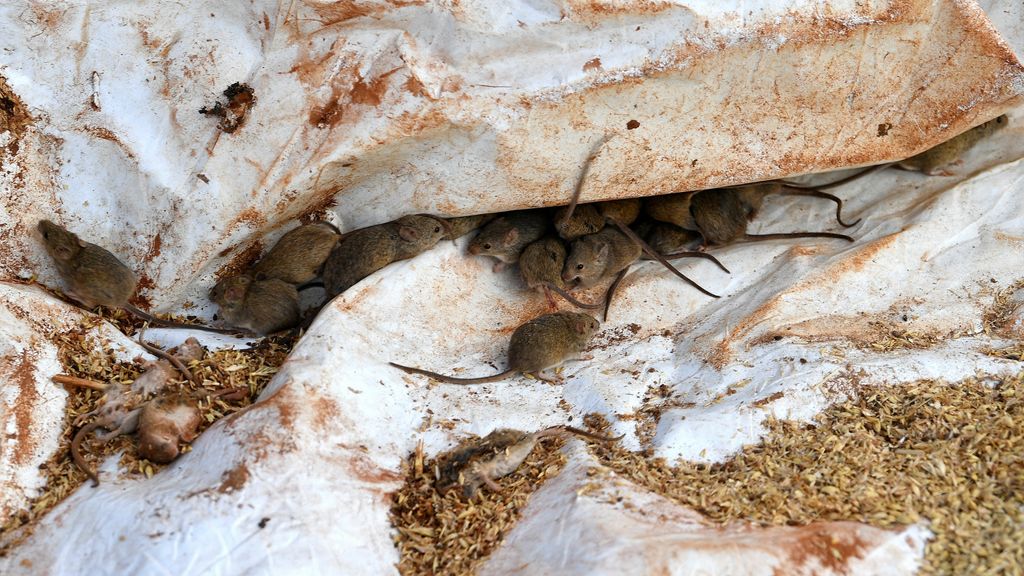
Widespread Infestation Disrupts Rural Life
Large areas of Australia are currently under siege from a massive mouse plague, an infestation of a scale not seen in years. Farmers are reporting widespread destruction of their crops, with the rodents consuming newly sown seeds and decimating fields. The agricultural sector is facing significant financial strain, not only from the direct damage to crops but also from the escalating costs associated with pest control measures. Farmers are being forced to replant crops and are spending substantial amounts on rodenticides.
Agricultural Machinery at Risk
The impact of the mouse plague extends beyond the fields, as agricultural machinery is also falling victim to the relentless pests. Mice are gnawing on wiring and hoses, causing damage that leads to expensive repairs and further exacerbates the financial burden on farmers. These additional costs come at a difficult time, with fuel and fertilizer prices already elevated due to geopolitical events, such as the closure of the Strait of Hormuz.
Schools Face Unprecedented Challenges
Educational institutions, particularly in rural Western Australia, are facing extraordinary challenges due to the mouse infestation. Teachers are reporting the need to clean classrooms of mouse droppings and deceased rodents before the school day can even begin. School administrators have highlighted a critical shortage of cleaning staff, leading to increased workloads and stress for existing personnel. The Ministry of Education has established a dedicated taskforce to assist schools in managing and eradicating the mice within their buildings.
A school in Morawa, Western Australia, was forced to close temporarily last week. The closure was necessitated by the use of a pesticide not approved for indoor use, posing potential health risks to students and staff. The school requires thorough cleaning before it can reopen. One student described the pervasive presence of mice throughout the school, noting that in some classrooms, the odor of decaying rodents was unbearable.
Innovative, Albeit Unconventional, Educational Approaches
In response to the overwhelming situation, some educators are incorporating the mouse plague into their lesson plans. Jonathon Arnott, head of a school leaders’ association, mentioned that some schools are arranging weekly carpet cleaning and utilizing the infestation as a teaching tool. He cited an example where a school is using the rapid reproduction rate of mice as a practical subject for mathematics lessons, turning an environmental crisis into an educational opportunity.
Record Harvest Fuels Infestation
The current mouse plague is believed to have originated from last year’s record harvest. According to farmer Belinda Eastough, the substantial grain yields resulted in significant spillage during the harvesting process. These spilled grains provided an abundant food source for mice. Following the harvest, summer rains promoted the growth of young shoots, creating what Eastough described as a “mouse paradise” – a plentiful supply of both grains and fresh vegetation.
Current estimates suggest there are approximately 9,000 mice per hectare in affected areas, a stark contrast to the 800 mice per hectare typically considered the threshold for an infestation. Many farms are teeming with mice, highlighting the severity of the problem. The rapid reproductive cycle of mice, with individuals becoming sexually mature in as little as six weeks and capable of producing six to ten offspring every three weeks, contributes to the exponential growth of the population.
Datos clave:
| Aspecto | Detalle |
|—|—|
| Ubicación | Amplias zonas de Australia |
| Causa principal | Cosecha récord del año anterior y lluvias de verano |
| Impacto | Daños a cultivos, maquinaria agrícola, interrupción escolar |
| Población estimada | Hasta 9,000 ratones por hectárea |
| Reproducción | Madurez sexual en 6 semanas, 6-10 crías cada 3 semanas |
The current mouse plague in Australia presents a significant challenge to the agricultural sector and educational institutions. The scale of the infestation, exacerbated by favorable environmental conditions following a record harvest, underscores the delicate balance of ecosystems and the potential for rapid population booms in pest species. The economic and social implications are substantial, requiring coordinated efforts for control and mitigation.
Fuente: NOS Voetbal – https://nos.nl/l/2616512
Datos clave
| Punto | Detalle |
|---|---|
| Fuente | NOS Voetbal |
| Fecha | 2026-05-31T01:18:20+00:00 |
| Tema | Muizenplaag in Australië: muizenparadijs door recordoogst |
Source
NOS Voetbal Original publication: 2026-05-31T01:18:20+00:00
Related news

Premier League Predictions: Man United vs Tottenham, Arsenal vs Leeds Headline Saturday’s Fixtures
Sports Mole's roundup of Saturday's Premier League gameweek six predictions, including Manchester United vs Tottenham Hotspur at Old Trafford and Arsenal vs…
Read story
One Injured in Marble Hill Shooting; No Football Disruption Confirmed
A person was hospitalized after a shooting reportedly involving federal agents in New York’s Marble Hill neighborhood. The initial account identifies no…
Read story
Boca vs River Superclásico Confirmed for November 1 at La Bombonera
The Argentine Professional League has set the date and time for the next Boca Juniors vs River Plate Superclásico, scheduled for Sunday,…
Read story
Harry Kane equals Peter Shilton’s England caps record with two goals in Nations League win over Czechia
Harry Kane scored twice on the night he equalled Peter Shilton’s all-time England appearance record, leading the Three Lions to a 3-0…
Read story