
Demystifying Football Match Previews: A Tactical Language Guide for New Fans
Learn how to read football match previews like a seasoned analyst. This guide breaks down common tactical terms, explains their significance, and helps new fans understand what to look for beyond just scores and star players.

Football, often called “the beautiful game,” is a sport of passion, skill, and intricate strategy. For new fans, the excitement of a match can be captivating, but understanding the nuances of how a game might unfold, or why a particular result occurred, often requires delving into the world of match previews. These articles, written by journalists and analysts, offer invaluable insights. However, they frequently use a language rich in tactical terminology that can be daunting for those just beginning their journey into the sport.
This guide aims to demystify that tactical language, helping you navigate match previews with confidence. We’ll break down common terms, explain their significance, and provide a framework for understanding what analysts are trying to convey, moving beyond just player names and recent scores.
Why Read a Match Preview?
Before diving into the jargon, let’s establish why match previews are so important. They are not merely predictions of who will win, though that’s often a component. Instead, they offer a window into the strategic battle that is about to take place. A good match preview will:
- Provide Context: Who are the key players? What is their recent form? Are there any significant injuries or suspensions?
- Highlight Tactical Battles: How might one team’s strengths exploit another’s weaknesses? What formations are expected, and what implications do they have?
- Identify Key Areas: Which parts of the pitch will be crucial? Will it be a battle for midfield dominance, or will the flanks be decisive?
- Offer Insights into Coaching Philosophy: What is the manager’s preferred style of play, and how might they adapt it for this specific opponent?
Understanding these elements allows you to appreciate the game at a deeper level, transforming you from a passive observer into an informed spectator who can anticipate moves and understand strategic shifts as they happen.
Decoding Formations and Systems
The most fundamental tactical element discussed in any match preview is the formation. This refers to how a team’s outfield players are arranged on the pitch. It’s typically expressed as a series of numbers, e.g., 4-4-2, 4-3-3, 3-5-2.
- 4-4-2: Four defenders, four midfielders, two forwards. A classic, balanced formation.
- 4-3-3: Four defenders, three midfielders, three forwards. Often used by attacking teams, emphasizing wing play.
- 3-5-2: Three defenders, five midfielders (often including wing-backs), two forwards. Focuses on midfield control and attacking width from deeper positions.
It’s important to remember that these are starting points. Formations are fluid and change throughout a game based on possession, defensive duties, and substitutions. When a preview mentions a formation, consider:
- Defensive Stability vs. Attacking Threat: Does the formation suggest a solid defence or an emphasis on goals?
- Width: Does it use traditional wingers (e.g., 4-3-3) or rely on full-backs/wing-backs to provide width (e.g., 3-5-2)?
- Midfield Control: Does it pack the midfield (e.g., 4-5-1 or 3-5-2) to win the ball and dictate play?
Beyond the numbers, you might encounter terms like “system” or “style of play.” These describe the overarching philosophy.
- Possession-based football: A team aims to keep the ball for long periods, tiring opponents and creating openings through intricate passing.
- Counter-attacking football: A team defends deep, wins the ball, and then quickly launches attacks into space behind the opposition’s defence.
- High press: Forwards and midfielders aggressively push up the pitch to win the ball back near the opponent’s goal.
- Low block: A team defends deep in its own half, often with many players behind the ball, to deny space.
Key Tactical Roles and Responsibilities
Match previews often delve into specific player roles that go beyond their nominal position.
- Regista / Deep-lying Playmaker: A midfielder who dictates play from a deep position, often sitting in front of the defence. Think Andrea Pirlo.
- Box-to-box Midfielder: A midfielder who contributes significantly in both attacking and defensive phases, covering a lot of ground.
- Inverted Winger: A winger who plays on the opposite side of their dominant foot (e.g., a right-footed player on the left wing), cutting inside to shoot or combine.
- False Nine: A central forward who drops deep into midfield, pulling defenders out of position and creating space for others.
- Sweeper-Keeper: A goalkeeper who is proactive in coming off their line to clear long balls or intercept through passes, acting as an extra defender.
- Wing-back: A defender in a back three or five who has significant attacking responsibilities, operating almost like a winger.
Understanding these roles helps you grasp the specific tasks assigned to players and how they contribute to the team’s overall strategy.
Common Tactical Concepts Explained
Here’s a breakdown of other frequently used tactical terms:
| Tactical Term | Explanation | Significance in a Match Preview |
|---|---|---|
| Transition | The moment a team loses possession and switches to defence, or wins possession and switches to attack. | Previews might discuss which team is better at “transitions,” indicating their speed in reacting to changes in possession. |
| Pressing | An organised defensive tactic where players aggressively close down opponents to win the ball back. | A “high press” suggests a team will try to win the ball near the opponent’s goal. A “mid-block” or “low block” means they’ll press deeper. |
| Overload | Creating numerical superiority in a specific area of the pitch to gain an advantage. | A preview might say a team “looks to overload the flanks,” meaning they’ll send multiple players down the wings to create chances. |
| Underlap / Overlap | Overlap: A player (often a full-back) runs past a teammate wide on the outside. Underlap: Runs inside. | Discusses how teams create width and depth in attack. An “overlapping full-back” provides attacking support. An “underlapping run” creates central space. |
| Spaces between the Lines | The area between the opposition’s defence and midfield. | An attacking team will try to exploit these spaces by having players drift into them to receive passes and turn. |
| Set-pieces | Free-kicks, corners, and throw-ins. | Previews often highlight a team’s strength or weakness from set-pieces, as they can be crucial scoring opportunities or defensive vulnerabilities. |
What to Look For: Actionable Takeaways
When reading a match preview, try to identify the answers to these questions:
Who controls the midfield? Many games are won or lost in the middle of the park. Which team is expected to dominate possession and dictate the tempo?
2. Where are the attacking threats coming from? Is it through the wings, direct long balls, or intricate central play? Which players are key to these attacks?
3. What are the defensive vulnerabilities? Does a team struggle against pace, aerial balls, or through passes? Are there individual matchups that favour one attacker over a defender?
4. Are there any key individual duels? For example, a star striker against a top centre-back, or a creative midfielder against a strong defensive midfielder.
5. How might substitutions impact the game? While often speculative, previews might mention potential tactical changes a manager could make.
Bringing it All Together: An Example
Imagine a preview discussing a match between Team A (known for a 4-3-3, high press) and Team B (known for a 3-5-2, counter-attacking).
- The preview might state that Team A will try to “high press” Team B’s three centre-backs, forcing errors.
- It could then suggest that Team B will look to exploit the space behind Team A’s advancing full-backs with their “wing-backs” on the counter.
- The article might highlight Team A’s “inverted wingers” cutting inside to shoot, while Team B will rely on their “box-to-box midfielders” to win the ball and launch quick attacks.
- A key battle might be identified in the “spaces between the lines” where Team A’s attacking midfielder will try to receive the ball against Team B’s deep-lying midfielder.
By understanding these terms, you can now visualise the tactical struggle before the whistle even blows. You’ll be able to follow the commentator’s analysis with greater comprehension and appreciate the strategic decisions made by managers and players alike.
Conclusion
Reading football match previews is an art that enhances your enjoyment and understanding of the game. By familiarising yourself with formations, roles, and common tactical concepts, you’ll gain a deeper appreciation for the strategic chess match unfolding on the pitch. No longer will “high press” or “inverted winger” be obscure jargon; instead, they will be tools in your analytical toolkit, helping you anticipate the flow of the game and marvel at the tactical brilliance of football. Keep practicing, keep reading, and soon you’ll be dissecting match previews like a seasoned pro.
Related news

Luis Díaz Hat-Trick Powers Bayern Munich to 6-1 Rout of RB Leipzig
The Colombian winger scored a brilliant hat-trick and added an assist as Bayern Munich thrashed RB Leipzig 6-1, ending a slow start…
Read story
Bruno Fernandes Contract Talks Underway as Man United Face Key Summer Decisions
Manchester United are in active discussions with captain Bruno Fernandes over a contract extension, according to reports, as the 32-year-old enters the…
Read story
Celtic’s Europa League struggles deepen as Benfica expose familiar flaws
A 4-1 defeat in Lisbon leaves Celtic with two losses from two Europa League group games. Martin O’Neill sees positives in the…
Read story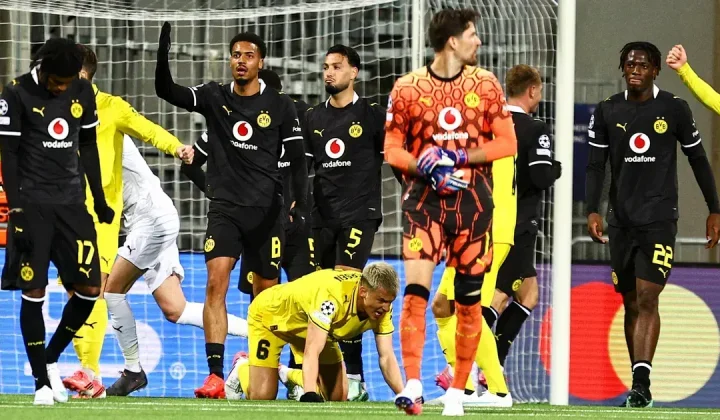
Borussia Dortmund Fall to Bodø/Glimt in Champions League Shock
Fredrik Sjøvold’s second-half strike gave the Norwegian side a 1-0 win over Niko Kovač’s Dortmund, who struggled to break down a disciplined…
Read story