
England’s New Era: From Laughable Underdogs to Serial Contenders
A decade after a dismal Euro 2016 exit, England's consistent deep runs in major tournaments signal a remarkable transformation, built on investment and a new generation of talent.
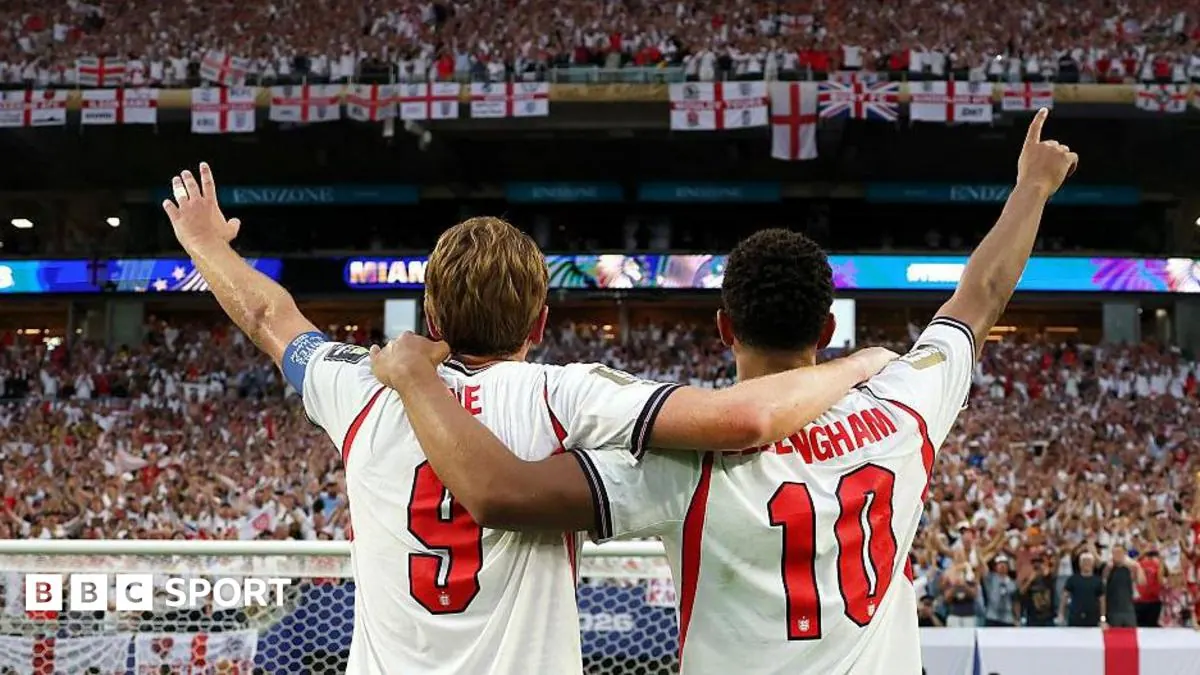
A decade ago, the idea of England consistently reaching the latter stages of major international football tournaments would have sounded like a distant fantasy. Following their ignominious exit from Euro 2016 to Iceland and a bottom-of-the-group finish at the 2014 World Cup, the Three Lions were far from being considered serial contenders. However, a significant shift has occurred, with England now firmly established in the conversation for championship titles, a testament to their remarkable transformation.
Unprecedented Period of Success
Since the disappointment of Euro 2016, England has reached at least the semi-finals in four out of five major tournaments. This level of sustained success is a feat only surpassed by footballing powerhouses Argentina and France, who boast World Cup and Copa America titles to their names. Following their recent extra-time victory over Norway, England now faces Argentina in the semi-finals, a highly anticipated clash with Lionel Messi. Even if they do not lift the trophy this year, the current England squad is built for consistent competition, marking a departure from brief flirtations with success in the past.
A Shift from Past Humiliations
The song “Three Lions,” once a symbol of English optimism often met with derision for perceived arrogance, now reflects a reality shaped by lived experience rather than hope over expectation. The historical record paints a stark picture: after reaching the semi-finals of Euro 1968, England endured a 22-year wait until their next semi-final appearance at the 1990 World Cup. This long drought included failures to qualify for two World Cups and three European Championships. Even after Euro 1996, another 22-year wait ensued for a semi-final berth, a period punctuated by memorable tournament exits, such as David Beckham’s red card against Argentina in 1998, Wayne Rooney’s dismissal against Portugal in 2006, and Ronaldinho’s decisive free-kick in the 2002 quarter-final loss to Brazil. The failure to even qualify for Euro 2008 further underscored the team’s struggles. In the 68 years prior to the 2018 World Cup, England had only reached one final and three semi-finals, with two of those as hosts. The so-called “golden generation” also failed to progress beyond the quarter-finals.
The Modern Transformation
Today, the landscape is dramatically different. A young England fan is now accustomed to deep tournament runs, with two finals and two semi-finals in the last eight years. Gareth Southgate guided England to successive European Championship finals, losing to Italy on penalties in 2021 and 2-1 to Spain in 2024. This era of excellence extends to the women’s game, with the Lionesses securing back-to-back European Championship titles and finishing as runners-up in the 2023 Women’s World Cup. With a home European Championship on the horizon, this successful period shows no signs of abating.
Strategic Investment and Talent Pipeline
This incredible transformation is not a matter of chance but the result of deliberate strategic planning. In 2013, then-FA chairman Greg Dyke identified a “serious, very serious” problem with the lack of homegrown talent. He set ambitious targets for England: reaching the Euro 2020 semi-finals and winning the 2022 World Cup. Dyke’s foresight was rooted in two key developments: the £340 million Elite Player Performance Plan (EPPP), approved in 2011, which funded a significant overhaul of elite academies and restructured the youth development system, and the establishment of St George’s Park. After an 11-year construction period, the state-of-the-art national football centre opened in 2012, serving as a hub for coaching and development across all levels of the England teams.
The EPPP, a long-term investment in coaching and facilities, has created a production line of talent. Academy players now benefit from cutting-edge training centres, elite coaching, and comprehensive support staff. While the pathway is not without its challenges, with a high percentage of academy players not reaching professional careers, it has undeniably produced a generation of stars. Jude Bellingham, Declan Rice, Bukayo Saka, and Elliot Anderson are prominent examples of EPPP graduates. The depth of talent is such that players like Trent Alexander-Arnold, Cole Palmer, and Phil Foden, who were part of the Euro 2021 final squad, can be omitted without diminishing the team’s ability to reach the semi-finals. The talent pipeline continues to flow, with emerging players like Alex Scott, Josh King, Ethan Nwaneri, and Rio Ngumoha featuring in training squads, and 16-year-old Max Dowman already breaking records and attracting attention.
New Anthems for a New Era
The traditional anthem “Three Lions” has been supplemented by new terrace chants, such as “Football’s coming home again, with Thomas Tuchel,” reflecting the current optimism and the team’s sustained success. This new era signifies a profound shift in English football, moving from a history of near misses and dashed hopes to a consistent presence among the world’s elite.
Key facts
| Aspect | Detail |
|---|---|
| Tournament Performance | Reached semi-finals in 4 of last 5 major tournaments since Euro 2016. |
| Key Investments | Elite Player Performance Plan (EPPP) and St George’s Park. |
| Notable Players | Jude Bellingham, Harry Kane, Declan Rice, Bukayo Saka, Elliot Anderson. |
| Manager | Gareth Southgate (transitioning to Thomas Tuchel). |
This development is significant for FootballGames10 readers as it highlights a sustained period of success for a major footballing nation, offering insights into the strategic planning and player development that underpins consistent high performance. It signals a shift in the global football landscape, where England is now a team consistently expected to contend for major honours.
Source: BBC Sport Football – These are unprecedented times for England – enjoy them (https://www.bbc.co.uk/sport/football/articles/c932rqverkvo?at_medium=RSS&at_campaign=rss)
Source
BBC Sport Football Original publication: 2026-07-13T05:25:22+00:00
Related news

Ajax Targets Marcos Leonardo: A Prolific Goalscorer’s Profile
Dutch club Ajax is reportedly pursuing Brazilian striker Marcos Leonardo, known for his efficient goal-scoring ability and promising talent.
Read story
Danny Bakker Seals Transfer to South Korean Club FC Anyang
Dutch defender Danny Bakker has officially joined South Korean side FC Anyang on a free transfer, the club confirmed on Monday. The…
Read story
Celtic Manager O’Neill Resigned to Losing Key Players Maeda and Engels
Celtic boss Martin O'Neill anticipates the departures of forward Daizen Maeda and midfielder Arne Engels this summer as the club navigates transfer…
Read story
Milan Facing Squad Overhaul: Leao’s Future Uncertain Amidst Transfer Quandary
AC Milan is reportedly looking to offload Rafa Leao as part of a squad reshuffling, with the Portuguese winger's future at the…
Read story