The Post-Guardiola Era: Can Enzo Maresca Navigate Manchester City’s Looming Challenges?
Enzo Maresca is reportedly the leading candidate to succeed Pep Guardiola at Manchester City, a role many are calling football's most impossible job. As the club faces significant squad changes, 115 Premier League charges, and scrutiny over ownership, Maresca's potential tenure could be fraught with unprecedented chall
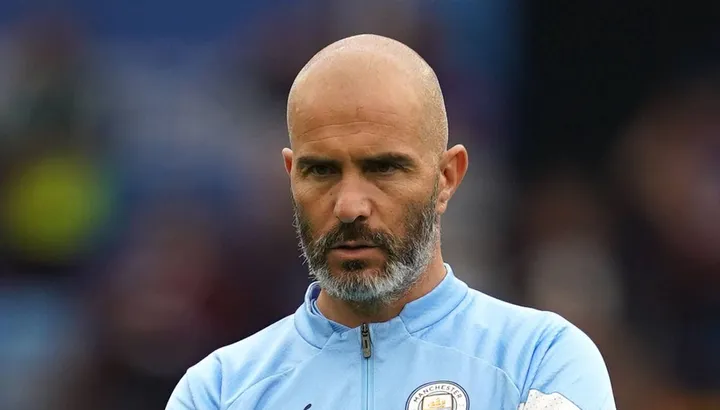
The football world is bracing for a momentous shift as the Pep Guardiola era at Manchester City appears to be drawing to a close. After a decade of unprecedented success, transforming City into a global benchmark, the impending departure of Guardiola leaves an almost impossible void to fill. The leading candidate to step into this monumental role is Enzo Maresca, a figure already familiar with the club’s philosophy and trusted within its ranks, according to reports from Sports Mole. However, the question isn’t merely about finding a successor, but whether Maresca is walking into the opportunity of a lifetime or a meticulously wrapped grenade with its pin already pulled.
Maresca’s potential appointment is seen as logical, given his loyalty to Guardiola’s principles and his existing relationship with Manchester City. Yet, logic alone doesn’t guarantee success, especially when following a managerial titan. The scenario bears striking resemblances to other post-transformational manager periods in football history, often fraught with difficulties and prolonged transitions.
Why Maresca’s Task is Unprecedented
The immediate challenges awaiting Maresca are multifaceted and significant. Firstly, there’s the impending squad upheaval. Key players such as Bernardo Silva and John Stones are reportedly set to depart this summer, with uncertainty also surrounding the futures of Rodri, Phil Foden, James Trafford, and Nathan Aké. Rebuilding or even maintaining the current squad’s elite level amidst such significant changes will be a formidable task for any new manager.
Beyond personnel, a colossal shadow looms over the Etihad: the unresolved 115 charges from the Premier League. Should severe penalties be imposed, Maresca’s role could quickly shift from managing a winning team to navigating an unprecedented club crisis. This legal battle adds an unpredictable and potentially cataclysmic layer to an already high-pressure position, as highlighted by Sports Mole’s analysis.
External Pressures and Ownership Scrutiny
Moreover, the club’s ownership has recently faced scrutiny. Allegations concerning Shaikh Mansour’s financial support for the Rapid Support Forces in Sudan’s civil war, though largely under the radar recently, could have significant implications for the club’s image and operations in the near future. These external pressures combine to create an environment far removed from the stable and successful platform Guardiola has enjoyed for much of his tenure. A new manager would likely be thrust into navigating these complex geopolitical dimensions in addition to on-field performance.
Historical Precedents Offer Little Comfort
The historical precedent for succeeding a transformational manager offers little comfort. Manchester United’s struggles post-Sir Alex Ferguson, now 13 years on, serve as a stark reminder of the long and arduous road to recovery. Arsenal, despite their recent Premier League triumph, took eight years to fully re-establish themselves after Arsène Wenger’s departure in 2018. Even Liverpool, following Jürgen Klopp’s exit, are beginning to show signs of strain despite an immediate league title, suggesting that the foundations laid by such figures can be more fragile than they appear. These examples underscore the difficulty of maintaining momentum after the departure of a footballing legend.
Key Managerial Transition Factors
- Squad Turnover: Reported departures of key players (Silva, Stones) and uncertainty for others. | Significant rebuilding effort required.
- Legal Challenges: Unresolved 115 Premier League charges. | Risk of severe penalties and club instability.
- Ownership Scrutiny: Allegations regarding Shaikh Mansour’s financial activities. | Potential damage to club’s reputation and operations.
- Precedent: Historical struggles of clubs post-legendary managers. | High expectations vs. difficult reality.
A closer historical parallel might be Barcelona’s succession plan in 2012 when Guardiola was replaced by his assistant, Tito Vilanova. Vilanova, like Maresca, deeply understood the club’s tactical philosophy and ecosystem. He led Barcelona to a 100-point league title in his first season, demonstrating that a seamless transition is possible, at least initially. However, Vilanova’s tragic early death meant the full extent of his potential could never be realised. This example offers a glimmer of hope that a successor steeped in the club’s existing methods can indeed deliver immediate success, but it also underscores the unpredictable nature of football, where external factors can swiftly change the narrative.
What Remains Unclear
While Maresca is widely reported as the leading candidate, the official confirmation of his appointment has not yet been made. The full extent of potential player departures and arrivals this summer also remains to be seen, with many reports still speculative. Furthermore, the timeline and potential outcomes of the Premier League’s 115 charges against Manchester City are highly uncertain, making it difficult to predict the exact environment a new manager would step into. The long-term implications of the ownership scrutiny are also an evolving situation.
For Manchester City’s core readership, these developments are critical. The club’s identity and winning culture have been meticulously crafted by Guardiola. The post-Guardiola era represents not just a change in manager, but a potential redefinition of the club’s trajectory. Will City be able to sustain its dominance, or will it enter a period of introspection and potential struggle like so many other elite clubs before it? The decisions made in the coming months regarding the managerial appointment and squad management will dictate the club’s immediate future.
Guardiola did not merely build a team; he engineered a footballing masterpiece, a system deeply intertwined with his unique vision. Replacing such an architect is not a straightforward process that will be devoid of problems. History repeatedly shows that life after a transformational figure rarely begins with immediate, sustained success; more often, it begins with a long and painful reality check. Maresca, if appointed, will inherit a club at a pivotal crossroads, with the potential for either continued glory or unprecedented chaos.
Source: Sports Mole Football RSS – https://www.sportsmole.co.uk/football/news/maresca-to-man-city-why-following-guardiola-could-end-in-chaos_597847.html
Source
Sports Mole Football RSS Original publication: 2026-05-19T21:49:16+00:00
Related news
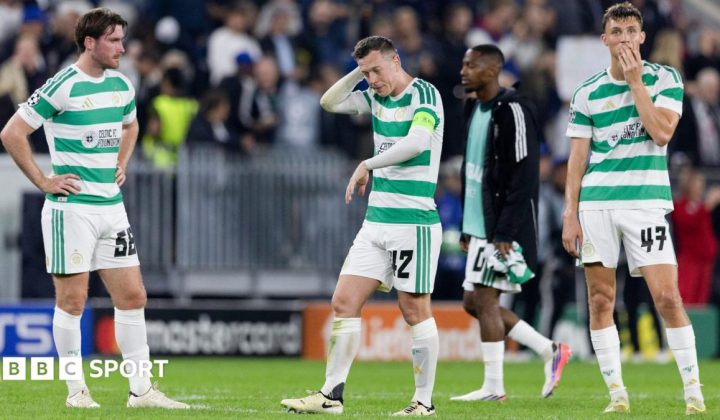
Celtic’s Champions League Collapse: A Timeline of the LASK Disaster
Celtic threw away a 4-0 aggregate lead against LASK in the Champions League qualifiers, suffering a humiliating 5-4 defeat after extra time.…
Read story
Body of Missing 5-Year-Old Belgian Boy Likely Found Near Football Club; Father Still Missing
The body of 5-year-old Tyméo Brigou, missing since late June, has likely been found in a wooded area just two kilometers from…
Read story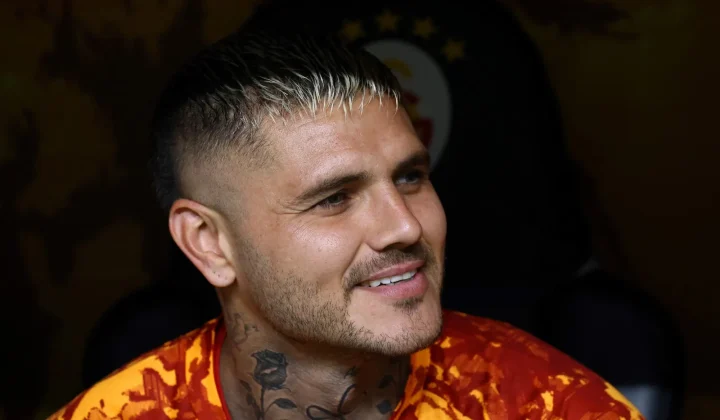
Serie A clubs Lazio and Fiorentina show interest in free agent Mauro Icardi
The 33-year-old Argentine striker remains a free agent after leaving Galatasaray, with Lazio and Fiorentina both considering a move before the Italian…
Read story
Therian Interrupts “Aura Farming” Gathering in La Plata, Gets Escorted Out by Crowd
A person identifying as a therian briefly disrupted a large "aura farming" meetup in La Plata's Plaza Moreno on Saturday, only to…
Read story