FIFA Concussion Protocols Questioned After USA Player’s Head Knock
A leading neuroscientist has voiced concerns over FIFA's on-field concussion testing procedures following an incident involving U.S. defender Alex Freeman during a World Cup match.
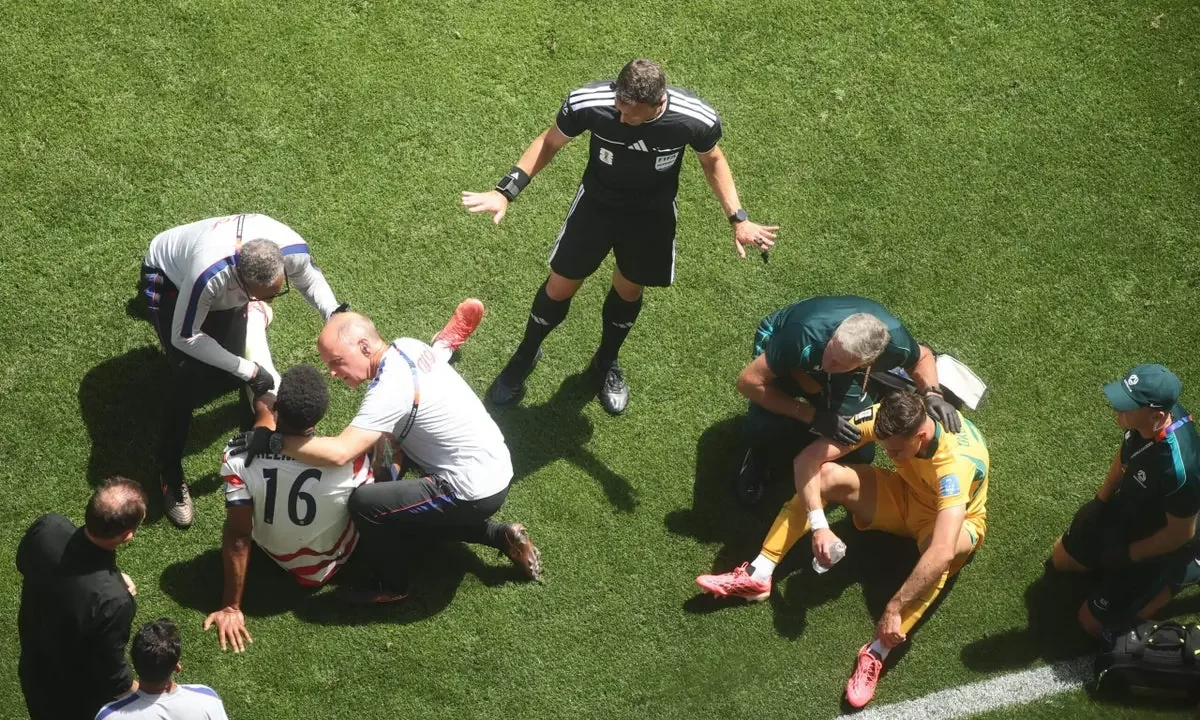
FIFA’s concussion protocols are facing renewed criticism after a head clash involving United States defender Alex Freeman during their World Cup Group D match against Australia. Neuroscientist Chris Nowinski, co-founder of Boston University’s CTE Center and CEO of the Concussion & CTE Foundation, has stated that FIFA’s current policy of allowing on-field concussion tests “puts players at risk and means they’re not going to have optimal medical diagnoses.”
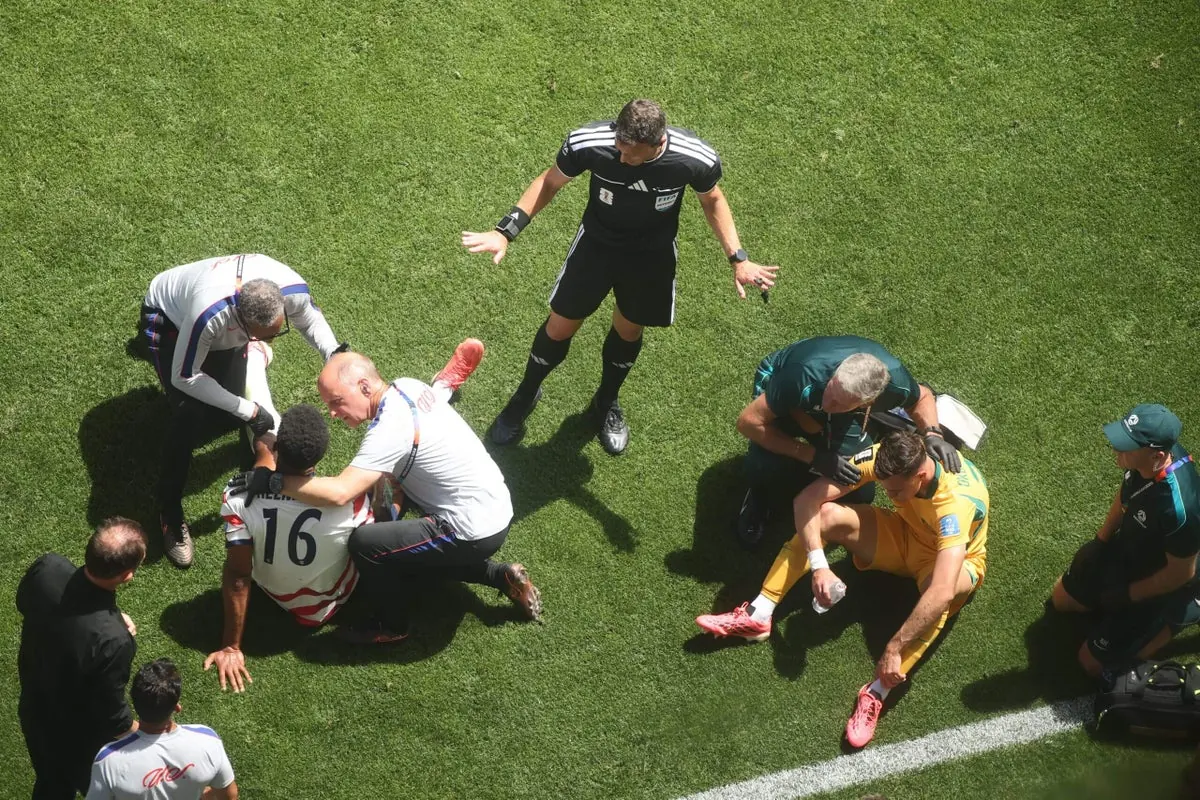
The incident occurred in the final minutes of the first half when Freeman collided heads with Australia’s Paul Okon-Engstler. Freeman remained on the ground, appearing shaken, before being assessed by U.S. medical staff on the pitch and subsequently cleared to continue playing. He went on to score the United States’ second goal shortly after, following a lengthy VAR review.
Por que importa
Nowinski, alongside prominent brain injury charities such as Headway, is advocating for the implementation of temporary concussion substitutes (TCSs). This system would allow players suspected of concussion to be thoroughly examined off the pitch, providing a more comprehensive assessment away from the immediate pressures of the game. Several football organizations, including the Premier League, EFL, and FIFPRO, have also urged IFAB, football’s rule-making body, to trial the TCS system, though FIFA has yet to adopt it.
Key facts
| Fact | Detail |
|---|---|
| Incident | Head clash involving USA’s Alex Freeman and Australia’s Paul Okon-Engstler |
| Critic | Neuroscientist Chris Nowinski |
| Concern | On-field concussion tests put players at risk |
| Proposed Solution | Temporary Concussion Substitutes (TCSs) |
| Current FIFA Protocol | One permanent concussion substitute allowed |
The current FIFA competition rules, governed by IFAB, permit one permanent concussion substitute. This means a team can use an extra substitution if a player sustains a suspected concussion, but that player cannot return to the field. The opposing team also receives an additional substitute. This system, however, can incentivize on-field checks, as teams may be reluctant to substitute a player who might pass a head injury assessment, effectively gifting the opposition an extra substitution.
Contexto
Nowinski highlighted the shortcomings of the current approach, stating, “The problem that persists is that doctors are forced to do rushed concussion evaluations on the pitch.” He further emphasized that FIFA’s position compromises the accuracy of diagnoses: “FIFA’s position puts players at risk and means they’re not going to have optimal medical diagnoses and outcomes when it comes to the most important organ in their body.”
He explained that players might be able to mask symptoms during on-field assessments: “Instead, as we saw in the USA game, the players are allowed to lie on the ground as long as they want, so if they do have symptoms, they will dissipate — if they’re seeing stars, if their balance is impaired, it’ll go away.” Nowinski also pointed out that time limits imposed on doctors for sideline assessments can lead to rushed and less accurate evaluations.
The call for TCSs is based on the principle that doctors should have at least ten minutes for a thorough concussion evaluation, free from the pressure of being on the field and observed by spectators. A private environment, where players and doctors can communicate more effectively, is deemed essential for accurate diagnosis. Nowinski believes that without such measures, “we’ll have more players continuing playing with concussion than we would have done if we took them off the field.”
FIFA and U.S. Soccer have been approached for comment regarding these concerns. The incident underscores the ongoing debate within football about the best methods to protect players from the potentially devastating effects of head injuries.
Source: The Athletic Football (https://www.nytimes.com/athletic/7377615/2026/06/19/fifa-concussion-alex-freeman/)
Source
The Athletic Football Original publication: 2026-06-19T23:58:43+00:00
Related news
Bruno Fernandes Contract Talks Underway as Man United Face Key Summer Decisions
Manchester United are in active discussions with captain Bruno Fernandes over a contract extension, according to reports, as the 32-year-old enters the…
Read story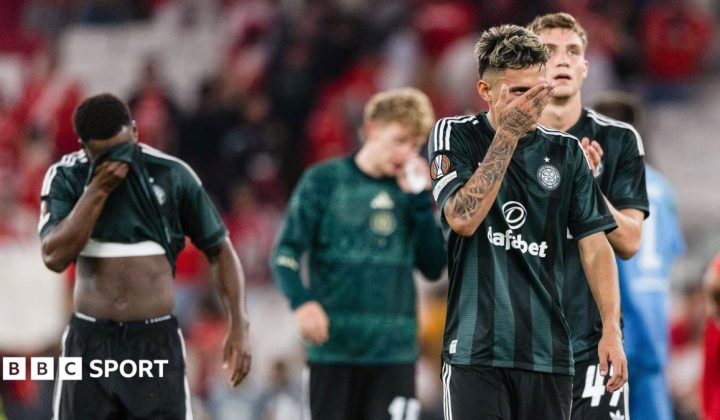
Celtic’s Europa League struggles deepen as Benfica expose familiar flaws
A 4-1 defeat in Lisbon leaves Celtic with two losses from two Europa League group games. Martin O’Neill sees positives in the…
Read story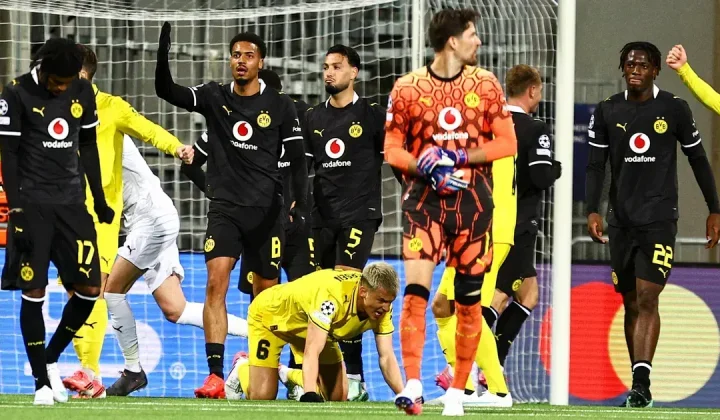
Borussia Dortmund Fall to Bodø/Glimt in Champions League Shock
Fredrik Sjøvold’s second-half strike gave the Norwegian side a 1-0 win over Niko Kovač’s Dortmund, who struggled to break down a disciplined…
Read story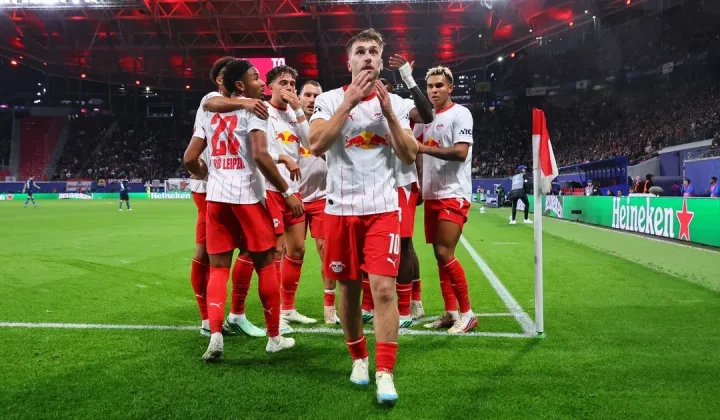
Brajan Gruda Strike Gives RB Leipzig 1-0 Champions League Win Over PSV
Brajan Gruda scored in the 75th minute after Maarten Vandevoordt saved an Ivan Perisic penalty as RB Leipzig defeated PSV Eindhoven 1-0.
Read story