
Former USMNT Player Esmir Bajraktarevic Faces USA in World Cup Knockout Stage
Wisconsin-born Esmir Bajraktarevic, who debuted for the USMNT in 2024, will now compete against his birth nation as Bosnia and Herzegovina takes on the United States in the World Cup round of 32.


Wisconsin-born Esmir Bajraktarevic, who made his debut for the U.S. men’s national team (USMNT) in January 2024, is set to face his birth nation on Wednesday when Bosnia and Herzegovina plays the United States in the World Cup round-of-32 knockout match.
Bajraktarevic, a winger who previously played for the New England Revolution, represented the USMNT in a friendly against Slovenia. However, his path has now led him to compete for Bosnia and Herzegovina, a nation with deep familial ties for him.
FIFA Eligibility Rules Explained
The ability for players to represent more than one international team is governed by FIFA’s complex eligibility rules, primarily based on nationality and citizenship. A player can represent a country if they hold its citizenship, whether obtained at birth or through naturalization. Crucially, dual-nationals must demonstrate a genuine connection to the country through birth, ancestry, or residency.
Historically, playing at the youth level for one nation could tie a player to that country for their entire career. However, rule changes, influenced by lobbying from national federations like Algeria, have allowed for more flexibility.
One-time switches were permitted for players who had represented a country’s youth teams but not played in a senior competitive match, provided they had dual nationality and made the request before the age of 21. Further amendments in 2009 and 2020 have continued to loosen these regulations, now allowing switches after the age of 21, or even after a limited number of senior competitive appearances before turning 21, under specific conditions.
Global Trend of Dual Nationality
The phenomenon of players representing nations other than their birth country is increasingly common in international football. At the current World Cup, a significant portion of players were born in a country different from the one they represent. Many national squads feature players with ancestral ties to various nations, reflecting global migration patterns and the interconnectedness of modern football.
For example, several USMNT players have familial roots in other countries, including Christian Pulisic (Croatia), Sergino Dest (Netherlands), and Folarin Balogun (England, Nigeria). Conversely, players like Alejandro Zendejas switched to the U.S. after playing for Mexico, while Brian Gutierrez moved from the USMNT to Mexico.
Bosnia and Herzegovina’s Diaspora
Bosnia and Herzegovina’s World Cup squad is a testament to the country’s significant diaspora. A substantial number of their players were born abroad, a direct consequence of the large Bosnian population living outside the country, particularly following the Bosnian War (1992-1995). The war led to widespread displacement and a significant increase in refugees seeking new homes.
Esmir Bajraktarevic’s family, originally from Srebrenica, Bosnia, became refugees during the war. His parents found temporary refuge in Switzerland before migrating to the United States in 2001. Bajraktarevic was born in Wisconsin three years later.
The Bosnian diaspora is so large that in 2018, an estimated four million Bosnians lived abroad, a figure greater than the country’s national population at the time. This global presence means many individuals hold dual nationality and maintain strong connections to their ancestral homeland, influencing their international football choices.
Other players in the Bosnian squad also illustrate this trend. Ermin Mahmic represented Austria up to under-21s before switching to Bosnia, while Armin Gigovic played senior-level matches for Sweden before changing his allegiance.
The match between the United States and Bosnia and Herzegovina in the World Cup knockout stage highlights not only a competitive fixture but also the intricate personal and political narratives woven into the fabric of international sport, shaped by FIFA’s evolving eligibility rules and the global realities of migration and heritage.
Key facts
| Detail | Information |
|---|---|
| Player | Esmir Bajraktarevic |
| Birthplace | Wisconsin, USA |
| International Teams | Debuted for USMNT (Jan 2024), now represents Bosnia and Herzegovina |
| FIFA Eligibility Basis | Nationality, dual citizenship, ancestral ties, residency |
| Context | World Cup round-of-32 match between USA and Bosnia and Herzegovina |
The presence of Esmir Bajraktarevic on the opposing side of the USMNT in a crucial World Cup match provides a compelling narrative about the modern international football landscape and the intricate rules that govern player eligibility. For fans of both nations, the match represents a significant sporting event, further amplified by the personal journey of a player navigating his dual heritage.
Source: The Athletic Football – https://www.nytimes.com/athletic/7398459/2026/06/28/usmnt-bosnia-world-cup-esmir-bajraktarevic/
Source
The Athletic Football Original publication: 2026-06-28T04:13:47+00:00
Related news
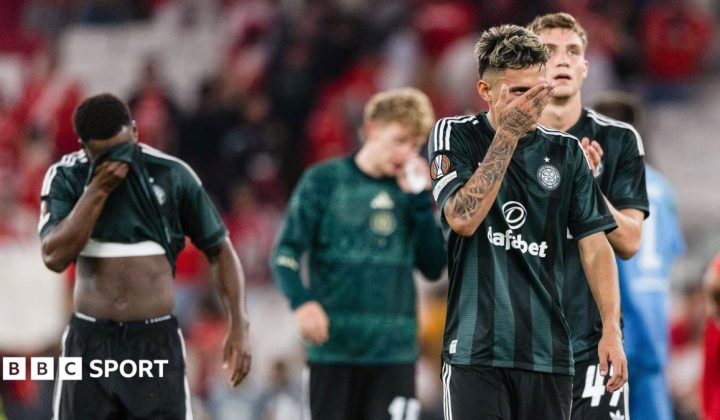
Celtic’s Europa League struggles deepen as Benfica expose familiar flaws
A 4-1 defeat in Lisbon leaves Celtic with two losses from two Europa League group games. Martin O’Neill sees positives in the…
Read story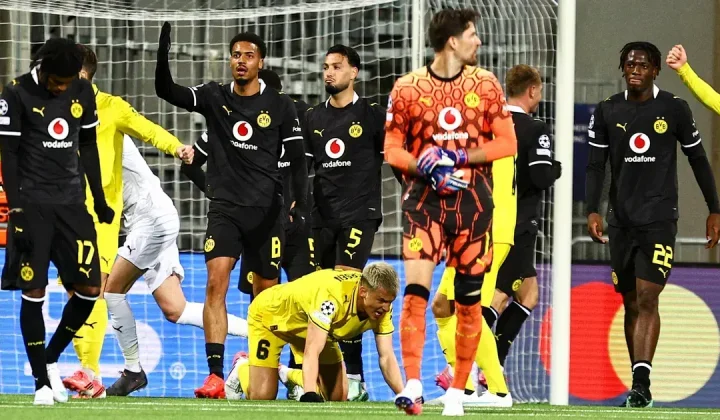
Borussia Dortmund Fall to Bodø/Glimt in Champions League Shock
Fredrik Sjøvold’s second-half strike gave the Norwegian side a 1-0 win over Niko Kovač’s Dortmund, who struggled to break down a disciplined…
Read story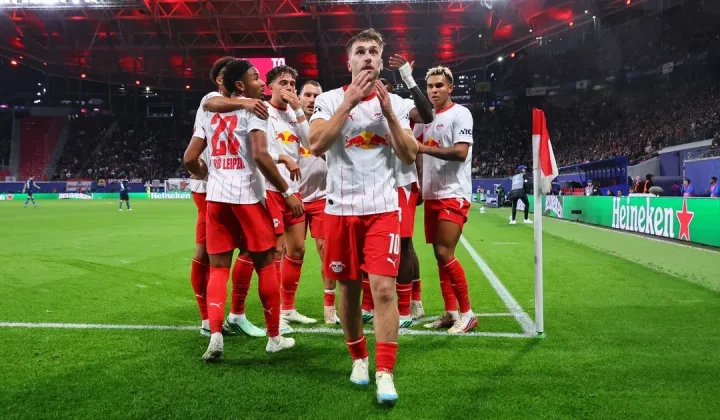
Brajan Gruda Strike Gives RB Leipzig 1-0 Champions League Win Over PSV
Brajan Gruda scored in the 75th minute after Maarten Vandevoordt saved an Ivan Perisic penalty as RB Leipzig defeated PSV Eindhoven 1-0.
Read story
Real Betis vs Porto: Champions League Clash Preview and Prediction
Real Betis host Porto in a crucial Champions League league-phase match. Preview includes team news, possible lineups, and analysis of both sides'…
Read story