
Hearts’ Long-Term Vision for Scottish Title Contention Under Tony Bloom
Hearts, backed by owner Tony Bloom and his data analytics company, are poised to be consistent challengers for the Scottish Premiership title, despite narrowly missing out this season.
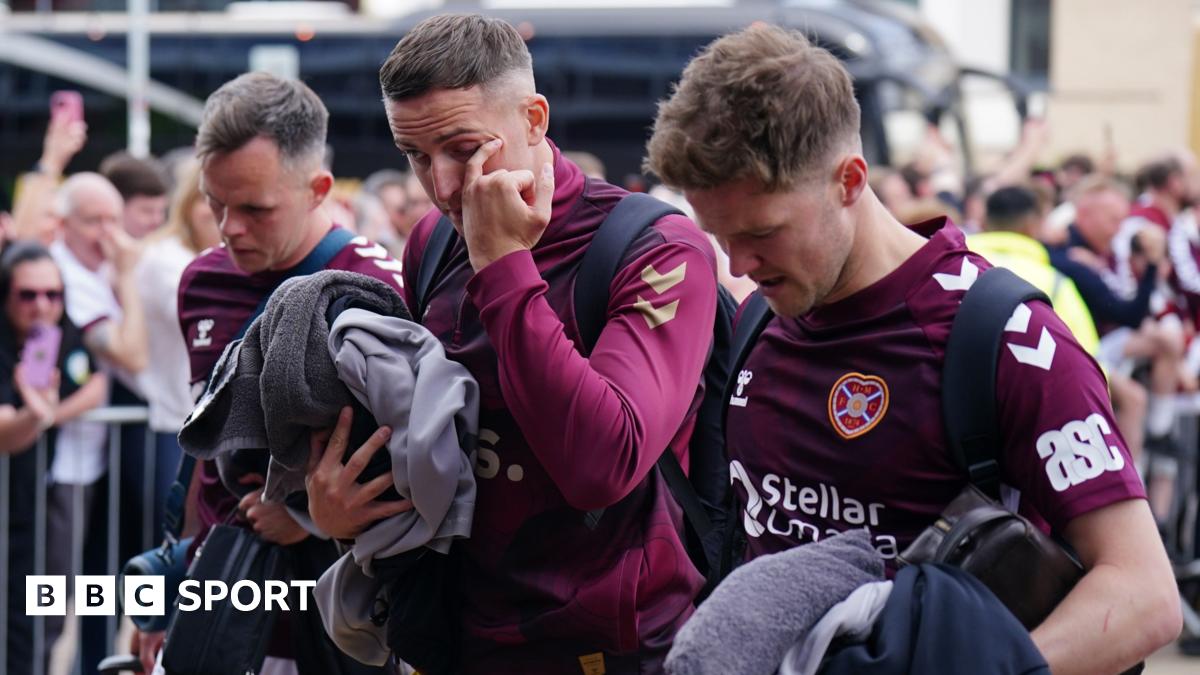
Hearts’ recent challenge for the Scottish Premiership title, which saw them lead the league for 250 days before ultimately finishing second to Celtic, is unlikely to be a fleeting success. The club’s owner, Tony Bloom, and his data analytics firm are committed to a long-term strategy aimed at making Hearts consistent contenders for the championship. This approach, which has already disrupted the traditional dominance of Celtic and Rangers, suggests that the club’s recent performance is a foundational step in a decade-long plan.
Bloom’s investment philosophy, mirrored in his other successful ventures with Brighton & Hove Albion and Union Saint-Gilloise, relies heavily on data-driven player recruitment and a sustainable financial model. While the recent title race ended in heartbreak for Hearts, the club has secured a place in the second round of Champions League qualifying for next season, providing a safety net of potential Europa League or Conference League participation.
The Bloom Model
Tony Bloom’s strategy involves identifying undervalued players and developing them, a method that has propelled Brighton to sustained Premier League success and Union Saint-Gilloise from the Belgian second tier to the Champions League. This player-trading model allows clubs to generate significant revenue through sales, which is then reinvested into the squad and infrastructure. Hearts fans should anticipate the sale of key players, such as Claudio Braga and Alexandros Kyziridis, as part of this sustainable growth model.
This approach stands in contrast to the challenges faced by other Scottish clubs entering European competitions, which often struggle with squad depth and subsequent league form. Hearts’ former head coach, Robbie Neilson, highlighted the need for a larger, high-quality squad to cope with the demands of European football, a challenge Bloom’s data-centric recruitment aims to address.
Key facts:
| Aspect | Detail |
|—|—|
| Owner | Tony Bloom |
| Strategy | Data analytics, long-term player development |
| Recent Achievement | Second in Scottish Premiership, Champions League qualifying |
| European Experience | Europa League quarter-finals (Union SG) |
Challenging the Old Firm
For over 40 years, the Scottish title has been predominantly shared between Celtic and Rangers. Hearts’ performance this season has demonstrated that this duopoly is not insurmountable. The data-driven approach allows Hearts to compete more effectively against wealthier opposition, a strategy proven at Bloom’s other clubs.
The current atmosphere at both Celtic and Rangers, despite Celtic’s title win, is marked by fan discontent and questions over recruitment and management. This period of relative instability could provide an opportunity for Hearts to further solidify their position as a top contender. Bloom’s 10-year plan, coupled with a data advantage, places significant pressure on Glasgow’s traditional giants to adapt.
European Ambitions and Squad Depth
While securing European football is a significant achievement, managing the increased fixture load presents a challenge. Scottish clubs often struggle to balance domestic and European commitments, leading to a drop in league performance the following season. Hearts played 44 games this season, significantly fewer than Celtic’s 59 and Rangers’ 58. Competing on multiple fronts – domestic cups, league, and European competition – will require a substantial increase in squad depth and quality.
Former Hearts coach Robbie Neilson emphasized that it takes “three or four campaigns in Europe to get you used to playing Thursday and Sunday,” and that a squad of “22 to 24 top players” is essential. Hearts’ recruitment over the summer will be crucial in building a team capable of handling these demands and progressing further in European competitions, while maintaining their challenge domestically.
The success of Union Saint-Gilloise, which reached the Europa League quarter-finals in their first European season, offers a blueprint for Hearts. By strategically acquiring and offloading players like Deniz Undav and Victor Boniface, Union built a financially robust and competitive team. Hearts will aim to replicate this model to sustain their long-term ambitions.
Fuente: BBC Sport Football RSS – https://www.bbc.com/sport/football/articles/cn4pjjw4y3vo?atmedium=RSS&atcampaign=rss
Key facts
| Point | Detail |
|---|---|
| Source | BBC Sport Football RSS |
| Date | 2026-05-16T19:24:59+00:00 |
| Topic | Why Hearts’ title tilt is unlikely to be a one-off |
Source
BBC Sport Football RSS Original publication: 2026-05-16T19:24:59+00:00
Related news

Premier League Weekend Preview: Dowman Chance, Spurs-Chelsea Balance, Disasi Redemption
Arsenal teenager Max Dowman could feature after Bukayo Saka’s injury, Roberto De Zerbi seeks balance at Stamford Bridge, and Axel Disasi looks…
Read story
Atalanta’s Sarri Faces Injury Crisis Ahead of Ajax Clash, Turns to Youth in Conference League
Atalanta boss Maurizio Sarri confirmed the team is missing eight key players for their Conference League match against Ajax, turning to young…
Read story
VfB Stuttgart Hold 10-Man Atletico Madrid to Champions League Draw
Jamie Leweling scored but Stuttgart could not hold on as Julián Alvarez equalised for 10-man Atletico Madrid in a 1-1 Champions League…
Read story
Racing in Turmoil: Locker Room Rift and Discipline Issues Force Overhaul Plans for 2027
Racing Club faces a fractured locker room after defender Alfonso Espino’s gesture toward fans and Matko Miljevic’s exclusion from the squad. The…
Read story