
How to Read World Cup Group-Stage Tactics: Formations, Phases, and Trends to Watch
A cautious tactical guide to reading group-stage football: what formations can tell you, what they can hide, and which phase-based patterns are worth tracking.
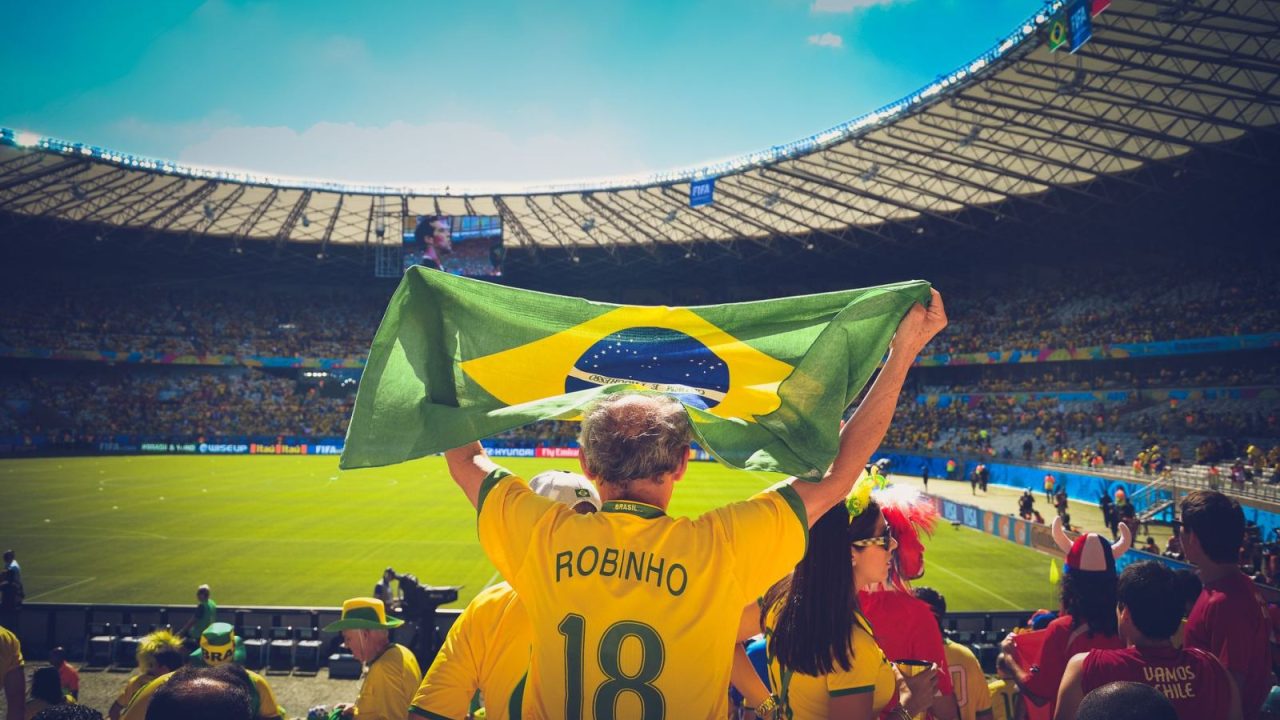
How to Read World Cup Group-Stage Tactics: Formations, Phases, and Trends to Watch
Summary: Formation labels are useful, but they rarely tell the full story. In tournament football, the better approach is to separate a team's starting shape from its in-possession structure, defensive block, and transition behaviour. This article stays with source-supported public claims and avoids unsupported statements about any specific 2026 World Cup group-stage matches, results, or dominant systems.
Date check: Reviewed against the currently verified source set available for this draft. That source set does not confirm specific World Cup 2026 group-stage tactical trends, official lineups, or match-by-match patterns.
What happened
The assigned topic points toward a tournament-specific tactical breakdown, but the verified source base available here supports only a broader explainer. The strongest confirmed point is that football's rules create the framework of the sport without prescribing formations, pressing schemes, or possession structures. Coaches therefore have significant freedom to organize teams in different ways within the same Laws of the Game.
That matters because a team-sheet formation is only a starting reference. In serious tactical analysis, the more revealing questions are often about phase changes: how a side builds play, how it defends space, and how it reacts after losing or winning possession. Broader expert commentary on international football also supports the idea that coaching depth and tactical variation are important parts of the modern game.
A useful comparison table for readers
| What to track | What it means in practice | Why it matters in group-stage analysis | What to be careful about |
|---|---|---|---|
| Starting formation | The nominal shape on the lineup graphic, such as 4-3-3 or 4-2-3-1 | Gives a basic map of roles and spacing | It may change quickly once the match starts |
| In-possession shape | How the team spaces itself when building or attacking | Shows where width, overloads, and support are created | It may look very different from the starting formation |
| Out-of-possession block | The defensive structure when the team does not have the ball | Helps explain pressing height and central protection | Deep defending can hide the original setup |
| Transition shape | The team's reaction just after turnovers | Often reveals how well balanced the system is | One match sample can be misleading |
| Rest defence | The players left positioned to stop counters | Helps explain risk control during attacks | Good attacking width can still leave gaps behind |
A simple lesson follows from the table: formation names are shorthand, not full tactical descriptions.
Why it matters
Tournament football usually gives coaches less preparation time than club football, so clarity and repeatability become especially valuable. That does not prove one system is always best. It does suggest that teams benefit from structures players can recognize quickly in different phases of play.
Just as importantly, football's rule framework does not force one tactical route. Teams can seek control through possession, compact defending, wing-backs, a double pivot, or more direct transitions. The game objective stays constant, but the structure chosen to reach it can vary widely.
What is confirmed
Two points are solidly supported by the available sources. First, the Laws of the Game govern football without setting mandatory tactical systems. Second, broader expert commentary supports the view that international football includes meaningful tactical diversity and coaching adaptation.
What the current source set does not confirm is equally important. It does not establish which formation is leading a specific World Cup 2026 group stage, which teams are using which systems most often, or whether one tactical trend is statistically dominant across the tournament. Those would require official tournament pages, lineups, match centres, standings, and preferably technical analysis or strong match reporting.
Confirmed facts vs interpretation
- Confirmed: Football's official laws define the competition framework, not a required formation model.
- Confirmed: Modern international football analysis often emphasizes coaching influence, adaptation, and tactical depth.
- Interpretation: A lineup graphic alone is not enough to describe how a team actually plays.
- Interpretation: Any claim that one system is "dominating" a World Cup group stage needs direct tournament evidence not present in the current verified source pack.
What may change
Any real tournament trend can change quickly as the sample grows. Early group matches may suggest one tactical pattern, while later matches can pull teams toward more conservative spacing, different pressing heights, or more direct attacking choices depending on the opponent and stakes.
That is why readers should treat early formation talk with caution. A team may be listed in one shape, defend in another, and finish the match in a third structure after substitutions or game-state changes.
What readers should watch next
If you want to read group-stage tactics more clearly, focus on these practical checks during a match:
- Watch the first line of pressure: Is the press led by one forward, two forwards, or a winger jumping inside?
- Track the full-backs or wing-backs: Do they stay wide, move into midfield, or hold deeper to guard transitions?
- Check central protection: After possession is lost, how many players are in place to protect the middle?
- Compare phases: Does the side attack and defend in the same shape, or does it switch structures?
- Look for repeat patterns: A single example can be accidental; repeated behaviour across multiple matches is more meaningful.
What readers should do next
- Use this article as a viewing guide rather than a tournament verdict.
- Wait for official lineups, match reports, and tournament analysis before drawing conclusions about which systems are actually leading the competition.
- Separate what is confirmed from what is only a visual impression during a live broadcast.
Sources
- The IFAB Laws of the Game — official rules framework for association football.
- Africa at the World Cup: 10 teams, local coaches and tactical depth usher in a new era — commentary used here only for broad discussion of tactical depth and coaching development in international football.
Image note
Before publish, use a neutral football tactics or match-action image rather than nation-specific fan imagery, so the visual matches the article's broad tactical angle.
Related news
Harry Kane equals Peter Shilton’s England caps record with two goals in Nations League win over Czechia
Harry Kane scored twice on the night he equalled Peter Shilton’s all-time England appearance record, leading the Three Lions to a 3-0…
Read story
Jesse Marsch says Canada “not afraid” as USMNT friendly intensifies rivalry
Canada coach Jesse Marsch has welcomed the pressure of facing the United States, stating his team is “not afraid” as the two…
Read story
Scotland vs Slovenia: Nations League Group B1 Clash at Hampden Park
Scotland and Slovenia meet at Hampden Park in a pivotal Nations League Group B1 encounter, with both sides level on four points…
Read story
Padres Turn to Robbie Ray for NLDS Game 1 Start as Walker Buehler Goes on Paternity List
San Diego Padres manager Craig Stammen named Robbie Ray the starter for Game 1 of the NL Division Series against Milwaukee after…
Read story