
Miguel Ángel López’s Four-Year Ban Faces New Legal Scrutiny Amidst Divergent Court Rulings
A recent Spanish court ruling has cast a new light on cyclist Miguel Ángel López's doping ban, creating a divergence between criminal and sports jurisdictions.
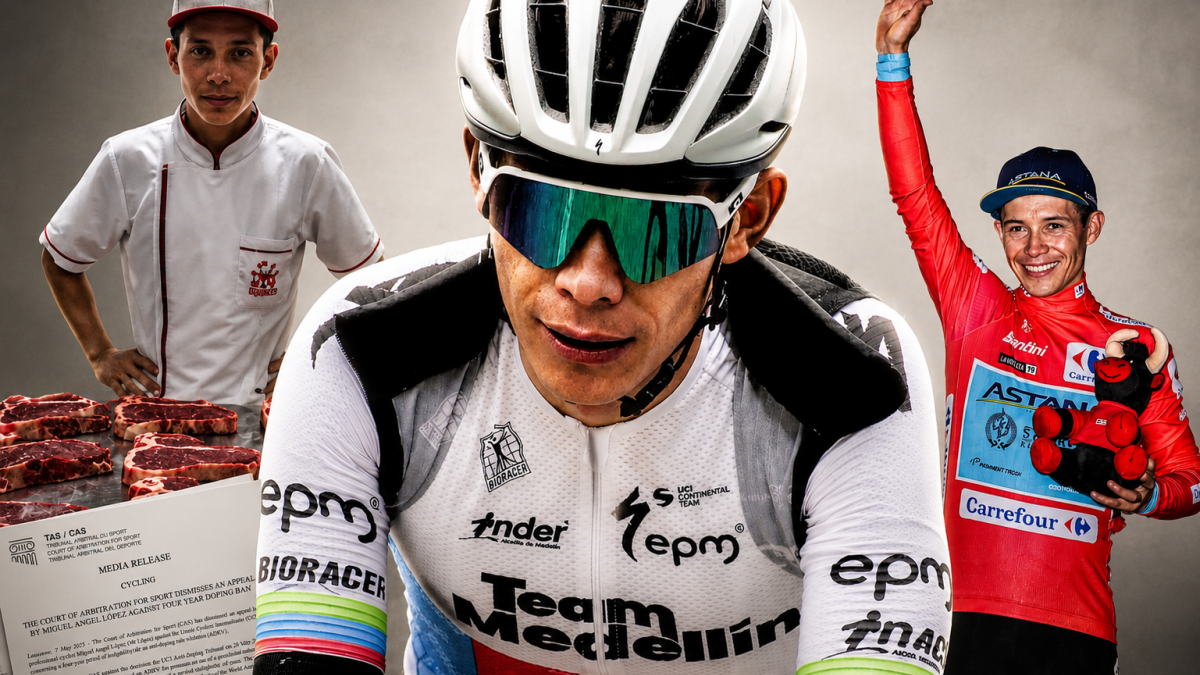
A recent ruling by a Spanish court has introduced a new layer of complexity to the four-year doping ban imposed on Colombian cyclist Miguel Ángel López. While international sports bodies like the UCI and CAS have upheld the suspension, a criminal court in Cáceres has found insufficient evidence to directly link López to the use of prohibited substances. This divergence creates a significant legal battle for the rider, who maintains his innocence.
The case stems from “Operation Ilex,” an investigation into alleged distribution of banned substances involving Dr. Marcos Maynar. López’s name emerged as a key figure, leading to his suspension by the UCI, later confirmed by the Court of Arbitration for Sport (CAS). However, the criminal court’s recent decision has highlighted a crucial distinction in the evidence presented.
Criminal vs. Sports Jurisdiction
The core of the legal dispute lies in the differing standards of proof between criminal and sports proceedings. While the UCI and CAS relied on evidence including intercepted communications and the delivery of a package containing menotropin, the criminal court has ruled that it has not been proven that the menotropin sent by Dr. Maynar actually reached López or that he used it before or during the 2022 Giro d’Italia. Furthermore, the court deemed it unproven that an inflammation López suffered during that Giro was related to the use of the substance, a point his defense has consistently argued was due to pre-existing medical documentation.
This distinction is critical. The criminal court’s finding that the chain of supply and use of menotropin was not conclusively demonstrated contrasts sharply with the conclusions reached by sports governing bodies. The UCI and CAS, relying heavily on reports from the Guardia Civil’s UCO and other analyzed evidence, concluded that López received, possessed, and utilized menotropin, even suggesting the application of a microdosing protocol.
López’s Defense Strategy
Miguel Ángel López’s defense has consistently argued that there was no positive anti-doping test and no direct scientific proof of his consumption of banned substances. They contend that the criminal court’s ruling supports their position, emphasizing the lack of definitive evidence in the penal proceedings. This ruling has become a cornerstone of their ongoing legal challenge.
The defense is now leveraging this divergence in their appeals. They have already filed an appeal with the Swiss Federal Tribunal and are considering further recourse to the European Court of Human Rights. Their argument extends beyond López’s individual case, aiming to raise broader questions about procedural guarantees in anti-doping procedures and the admissibility of evidence derived from criminal investigations in sports justice.
Financial Implications
Beyond the sporting ban, López faces significant financial repercussions. His defense claims that the four-year suspension carries a demand for repayment of a substantial portion of his earnings during the affected period, potentially amounting to around one million euros. The defense is also questioning regulatory changes and decisions made during the proceedings that they believe have unfairly impacted the financial consequences of the ban.
The future of Miguel Ángel López’s career and his legal battles remain uncertain. The differing outcomes in criminal and sports courts present a complex legal landscape, with his defense aiming to overturn the ban by highlighting the lack of conclusive evidence in the criminal proceedings.
Datos clave
| Aspecto | Detalle |
|---|---|
| Sanción Deportiva | 4 años por la UCI y CAS |
| Fallo Penal | No se acredita el uso de sustancias prohibidas |
| Sustancia Clave | Menotropina |
| Argumento Defensa | Falta de pruebas concluyentes |
| Recurso Legal | Tribunal Federal Suizo y posible Tribunal Europeo de Derechos Humanos |
This development is significant for cycling fans as it brings to light the intricate and often contentious nature of anti-doping investigations and legal challenges within the sport. The outcome of López’s appeals could have wider implications for how evidence is handled and how disciplinary actions are pursued in future anti-doping cases.
Fuente: Le sancionaron 4 años y ahora una sentencia lo puede cambiar todo: ¿qué pasa con Supermán? – MARCA Futbol (https://www.marca.com/ciclismo/2026/05/31/batalla-superman-lopez-aun-terminado-intentaron-robarme-bici-luego-mi-carrera.html)
Source
MARCA Futbol Original publication: 2026-05-31T05:36:13+00:00
Related news
Celtic’s Champions League Collapse: A Timeline of the LASK Disaster
Celtic threw away a 4-0 aggregate lead against LASK in the Champions League qualifiers, suffering a humiliating 5-4 defeat after extra time.…
Read story
Body of Missing 5-Year-Old Belgian Boy Likely Found Near Football Club; Father Still Missing
The body of 5-year-old Tyméo Brigou, missing since late June, has likely been found in a wooded area just two kilometers from…
Read story
Serie A clubs Lazio and Fiorentina show interest in free agent Mauro Icardi
The 33-year-old Argentine striker remains a free agent after leaving Galatasaray, with Lazio and Fiorentina both considering a move before the Italian…
Read story
Therian Interrupts “Aura Farming” Gathering in La Plata, Gets Escorted Out by Crowd
A person identifying as a therian briefly disrupted a large "aura farming" meetup in La Plata's Plaza Moreno on Saturday, only to…
Read story