
World Cup 2026 Highlights VAR Woes in Argentine Football
The 2026 World Cup showcases advanced VAR technology, starkly contrasting with the slow and controversial system used in Argentina's local league.

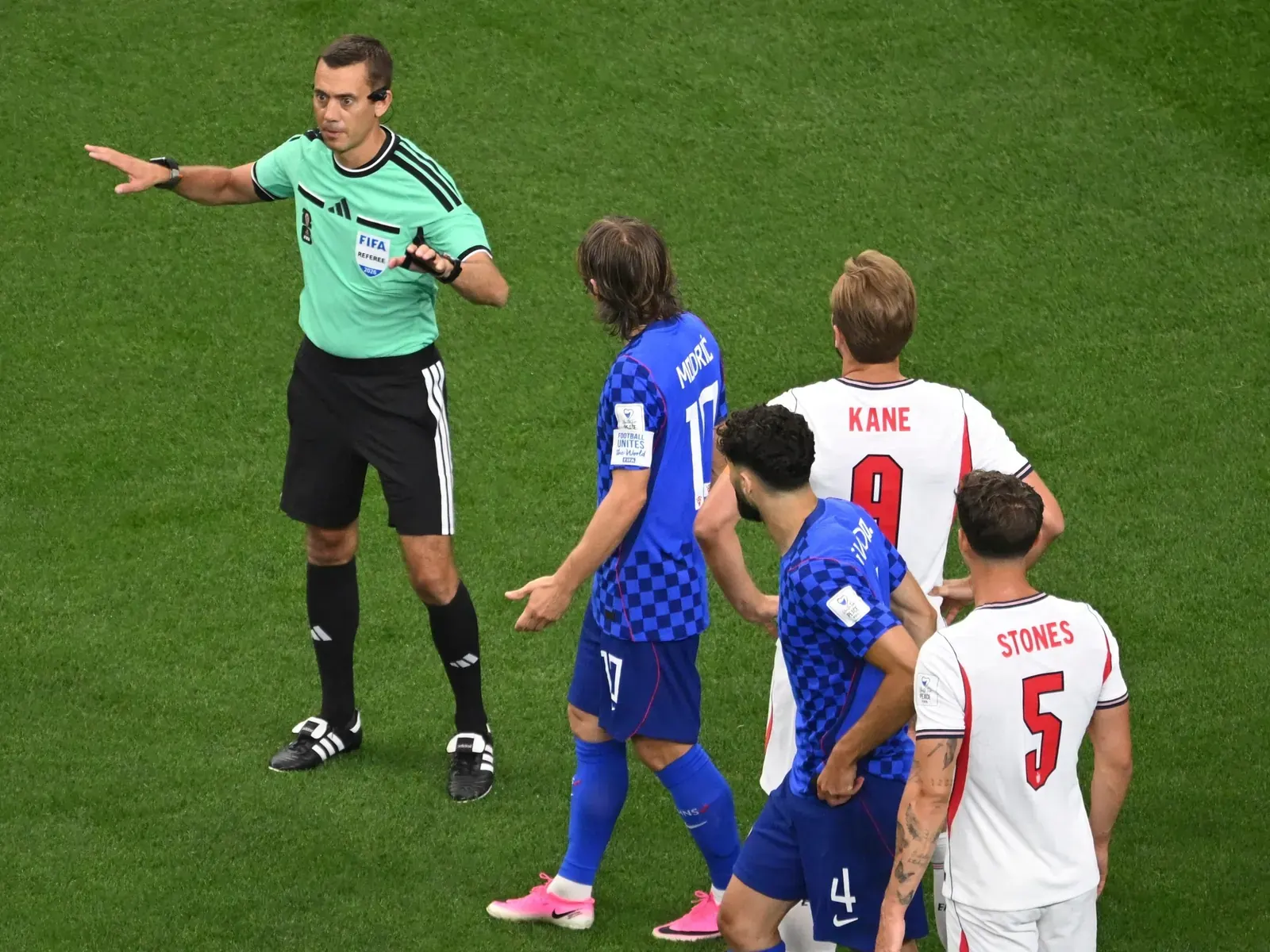
The 2026 FIFA World Cup, hosted by the United States, Mexico, and Canada, is providing a clear demonstration of how modern technology can enhance football officiating. In stark contrast, the tournament is also highlighting the significant shortcomings of the Video Assistant Referee (VAR) system used in Argentina’s domestic league, which is plagued by slowness and a lack of trust.
VAR’s Role at the World Cup
At the World Cup, the VAR system has been notably efficient, intervening only when necessary and resolving decisions swiftly. In the group stage’s opening matches, referees were seen consulting the VAR monitor on only four occasions. This limited but effective use stands in sharp contrast to many major leagues, including Argentina’s, where VAR reviews often lead to lengthy interruptions and considerable debate.
Key interventions at the tournament included correcting mistaken identity in a booking, upholding an original decision on a potential penalty, overturning a goal due to a handball, and ordering a penalty retake due to goalkeeper and player encroachment. These instances showcase VAR’s capacity to correct clear errors without becoming a disruptive element of the game.
Advanced Technology Driving Efficiency
A significant factor behind the World Cup’s VAR efficiency is FIFA’s evolution of the Semi-Automated Offside Technology (SAOT). This system aims to minimize human intervention in offside decisions, historically one of football’s most contentious calls. SAOT utilizes twelve high-speed cameras in each stadium to track twenty-nine body points on each player in real-time. This is combined with internal sensors in Adidas balls, providing 500 data points per second to pinpoint the exact moment of contact.
Artificial intelligence processes this data, which is then validated by video referees before reaching the main official. The result is a dramatic reduction in review times. An offside decision that might take around seventy seconds with traditional VAR is now resolved in approximately twenty-five seconds. This technology can even detect subtle touches, like a slight brush of the ball that leads to a goal being validated, as seen in the Sweden vs. Tunisia match, a contact that would be nearly impossible for the human eye to spot at normal speed.
The Cost of Advanced Technology
The efficiency of FIFA’s system comes at a significant cost. Implementing SAOT can cost around $20,000 per match, whereas conventional VAR systems are closer to $4,000. For a domestic league like Argentina’s, which plays fifteen matches per weekend, replicating FIFA’s model would require an investment of approximately $300,000 per matchday.
Argentina’s Current System
Currently, Argentine football operates with a more modest infrastructure. The league does not utilize semi-automated offside technology, ball sensors, or the same high-density camera systems found at the World Cup. Most stadiums are equipped with only eight camera views, forcing operators to manually draw virtual lines for offside calls. This manual process often relies on imperfect images and angles, leading to potential perspective errors and significantly longer review times, sometimes exceeding five minutes per incident. The cumulative effect is that matches can lose over fifteen minutes of playing time due to checks, interruptions, and subsequent discussions.
The contrast between the World Cup’s streamlined officiating and Argentina’s protracted VAR processes underscores a clear technological and economic gap. While Brazil has announced its intention to adopt FIFA’s advanced system after the World Cup, Argentina’s local league continues to grapple with the limitations of its current setup, leading to ongoing suspicions and frustrations among fans and players alike.
Key facts
| Aspect | World Cup 2026 | Argentine League |
|—|—|—|
| Offside Technology | Semi-Automated Offside Technology (SAOT) with 12 cameras and ball sensors | Manual line drawing with fewer cameras |
| Review Time | Approx. 25 seconds for offside | Can exceed 5 minutes for offside |
| Cost per match | Approx. $20,000 for SAOT | Significantly lower, conventional VAR |
| Operational Issues | Minimal, efficient | Slow, prone to suspicion |
Source: Clarin Deportes (https://www.clarin.com/deportes/mundial-2026-deja-evidencia-problema-futbol-argentino-var-argentina-funciona-lento-genera-sospechas_0_j4Sw9aERK2.html)
Datos clave
| Punto | Detalle |
|---|---|
| Fuente | Clarin Deportes |
| Fecha | 2026-06-20T08:01:13+00:00 |
| Tema | El Mundial 2026 deja en evidencia un problema del fútbol argentino: por qué el VAR en Argentina funciona tan lento y gen |
Source
Clarin Deportes Original publication: 2026-06-20T08:01:13+00:00
Related news

Bruno Fernandes Contract Talks Underway as Man United Face Key Summer Decisions
Manchester United are in active discussions with captain Bruno Fernandes over a contract extension, according to reports, as the 32-year-old enters the…
Read story
Celtic’s Europa League struggles deepen as Benfica expose familiar flaws
A 4-1 defeat in Lisbon leaves Celtic with two losses from two Europa League group games. Martin O’Neill sees positives in the…
Read story
Borussia Dortmund Fall to Bodø/Glimt in Champions League Shock
Fredrik Sjøvold’s second-half strike gave the Norwegian side a 1-0 win over Niko Kovač’s Dortmund, who struggled to break down a disciplined…
Read story
Brajan Gruda Strike Gives RB Leipzig 1-0 Champions League Win Over PSV
Brajan Gruda scored in the 75th minute after Maarten Vandevoordt saved an Ivan Perisic penalty as RB Leipzig defeated PSV Eindhoven 1-0.
Read story