
World Cup Winners: The Age Sweet Spot for Ultimate Glory
An in-depth look at past World Cup champions reveals a consistent age bracket that typically leads to tournament success, with implications for current contenders.
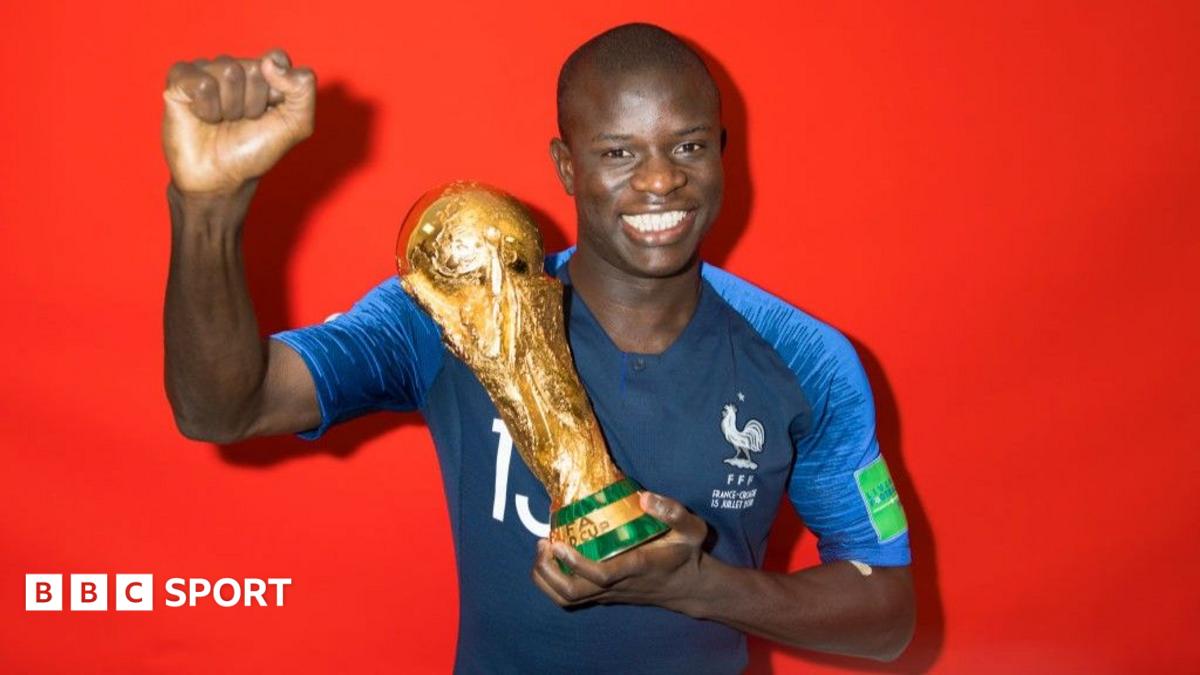
When it comes to lifting the World Cup, data suggests there’s a prime age window for national teams. An analysis of past champions reveals a striking pattern: most winning squads fall within a narrow age bracket, pointing to a sweet spot for peak performance and tournament success.
The Optimal Age Range
Of the 22 nations that have conquered the World Cup, an overwhelming majority—19—achieved victory with an average squad age between 26 and 28 years old. This statistical trend offers a clear benchmark for teams aiming for the ultimate prize in international football. The median average age of starting elevens across all World Cup-winning teams stands at a precise 27 years and 57 days.
This finding will be particularly encouraging for nations like England, France, and Spain, whose current starting lineups at the ongoing tournament fall comfortably within this age bracket. Their blend of experience and youthful energy appears to align with historical success.
Historical Perspectives on Winning Ages
Examining the historical data further paints a vivid picture. The youngest average starting elevens to claim the World Cup trophy belong to Argentina in 1978 (25 years, 195 days) and France in 2018 (25 years, 326 days). These victories demonstrate that youth can indeed triumph, but they represent the exceptions rather than the rule.
Conversely, the oldest teams to win have been few and far between. Brazil in 1962 holds the record for the highest average starting age throughout a tournament at 30 years and 204 days. Should Argentina emerge victorious in the current competition, they would join this exclusive group, with their starting eleven against Switzerland averaging 30.5 years old, including five players aged 32 or older. Lionel Messi, at 39, is a prominent figure in this veteran squad. Across the entire tournament, Argentina’s average starting age has hovered around 29 years and 302 days, with their most recent lineups exceeding the 30-year mark.
England’s Current Squad Dynamics
For England, the current World Cup squad presents an interesting case study. As of the semi-final stages, their average starting age is the youngest among the remaining four contenders at 26 years and 255 days. Chelsea defender Trevoh Chalobah, who is yet to feature, would be 27 years and 14 days old on the day of the final, were England to reach it, making him the closest to the median winning age. Arsenal midfielder Declan Rice, a regular starter, is 27-and-a-half, positioning him as one of England’s key players at the statistical peak for World Cup success.
A significant portion of England’s squad, seven players, are aged between 26 and 28. This age group has historically accounted for 86.4% of World Cup-winning average starting ages, highlighting its importance. Furthermore, the younger talents within the squad, such as Jude Bellingham, Elliot Anderson, Jarell Quansah, Morgan Rogers, and James Trafford, are all 23. By the 2030 World Cup, they will be 27, placing them squarely in the prime age bracket for potential future success.
Spain and France also present competitive age profiles. Spain’s average starting age also sits below 27, while France, despite being the second-oldest among the semi-finalists, maintains an average age of 27 years and 194 days, keeping them close to the ideal winning age.
Key Dates and Future Implications
The upcoming 2030 World Cup, hosted by Spain, Portugal, and Morocco, will be a significant event for the current generation of young English players. By then, they will have reached the age demographic that has historically proven most successful. As the tournament progresses, the age profiles of the remaining teams will continue to be a talking point, offering insights into their chances of lifting the coveted trophy.
What Remains Unclear
While historical data provides strong indicators, it is important to note that factors beyond age, such as team chemistry, tactical execution, and individual player form, play crucial roles in World Cup success. The influence of these intangible elements on a team’s performance is not captured by age statistics alone.
Statistical Snapshot of World Cup Winners
| Metric | Detail | Source |
|---|---|---|
| Winning Age Range | 19 of 22 winners had average age between 26-28 | BBC Sport |
| Median Winning Age | 27 years and 57 days (average starting 11) | BBC Sport |
| Youngest Winners | Argentina (1978), France (2018) with average starting ages below 26 | BBC Sport |
| Oldest Winner (Average) | Brazil (1962) with average starting age over 30 | BBC Sport |
| Key Age Group Percentage | 26-28 year olds account for 86.4% of winning average starting ages | BBC Sport |
Source: https://www.bbc.co.uk/sport/football/articles/cp8l8y5451vo?at_medium=RSS&at_campaign=rss
Source
BBC Sport Football Original publication: 2026-07-14T13:12:48+00:00
Related news

Gillingham vs Cambridge United: EFL Trophy Southern Group G Preview, Team News, and Prediction
League Two's in-form Gillingham host League One side Cambridge United in the EFL Trophy on Tuesday. We preview the clash with team…
Read story
Brighton defeat exposes five cracks in Arsenal’s Premier League title defence
Arsenal’s perfect start to the season came to a sudden halt with a 3-0 loss at Brighton. The result has raised fresh…
Read story
Harry Kane Fastest to 100 Bundesliga Goals, Reaches Milestone in 98 Appearances for Bayern Munich
Harry Kane scored his 100th Bundesliga goal in Bayern Munich’s 7-0 win over Union Berlin, setting a new record for the fastest…
Read story
Bayern Munich’s Luis Díaz Backs Harry Kane for 2026 Ballon d’Or
Bayern Munich and Colombia forward Luis Díaz has publicly backed teammate Harry Kane to win the 2026 Ballon d'Or, calling the England…
Read story