
2026 World Cup Shatters Goal-Scoring Records: A Look at the Factors Behind the Spree
The 2026 World Cup has become the fastest edition to reach 100 goals in 68 years, prompting an analysis of the contributing factors, including the new Adidas ball and tactical approaches.
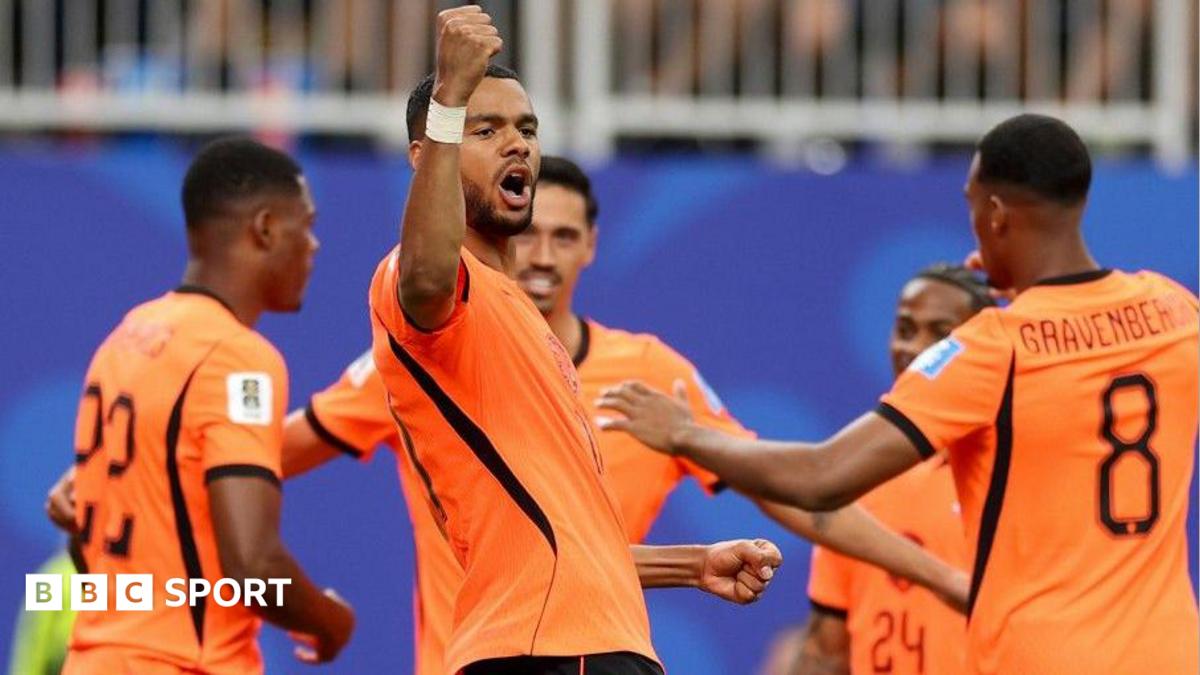
The 2026 FIFA World Cup is already making history, not just for its expanded format, but for its remarkable goal-scoring pace. The tournament has become the fastest to reach 100 goals in 68 years, achieving this milestone in just 33 matches. This rapid scoring spree has ignited discussions about the contributing factors, with the new Adidas ‘Trionda’ ball and tactical adjustments emerging as key potential drivers.
Fastest to 100 Goals Since 1958
The century mark was reached on Saturday when Cody Gakpo scored for the Netherlands in their 5-1 victory over Sweden. This feat marks the first time since the 1958 World Cup that it has taken only 33 games to hit 100 goals. The only faster tournament on record was in 1954, where it took a mere 20 matches for the 100-goal barrier to be broken. In contrast, the 2014 World Cup required 36 games, while the 1982 and 2018 editions also took 36 games. The 1978 and 1994 tournaments saw it take 38 games to reach the same tally. With an average of 3.09 goals per game so far, the 2026 World Cup is on track to surpass 300 goals overall.
The Adidas Trionda Ball Under Scrutiny
One of the most frequently cited reasons for the surge in goals is the new Adidas ‘Trionda’ ball. Several goalkeepers appear to be struggling with its flight characteristics, leading to unexpected goals. Kylian Mbappe’s long-range strike against Senegal, which beat Edouard Mendy from 30 yards, is one example. In fact, five goals in the opening round were scored from beyond 22 yards, including two from Sweden’s Yasin Ayari. Former England goalkeepers Joe Hart and Paul Robinson have both voiced concerns, suggesting the ball’s movement is proving difficult for custodians to anticipate. Hart noted the ball “rushing” Jordan Pickford quicker than expected, while Robinson commented on occasions where the ball “has not necessarily behaved as you would expect it to.” This situation echoes the controversy surrounding the Jabulani ball used in the 2010 World Cup, which was also criticized for its unpredictable movement and was thought to have contributed to several long-range goals and goalkeeping errors.
Tactical Shifts and Expanded Format
Beyond the ball, other factors may be contributing to the increased scoring. The expanded 48-team format introduces more nations, some of whom may be less tactically disciplined or defensively robust, potentially leading to wider scorelines. While some matches have seen one-sided results, such as Germany’s 7-1 win over Curacao, many games have remained competitive.
The scheduling of matches, with potential for longer breaks between games for some teams, could also be a factor. This might allow teams more time to rest, recover, and strategize, potentially leading to more dynamic performances. Furthermore, the high temperatures in North America, mitigated by mandatory hydration breaks, could be influencing player fatigue and leading to more goals in the latter stages of matches. The statistics show that a significant percentage of goals – 28.6% – have been scored between the 76th minute and full-time, the highest rate since 2014. These hydration breaks, though sometimes met with fan boos, are also being used by coaches for tactical adjustments and to issue fresh instructions, potentially influencing game outcomes.
Key facts
| Factor | Description |
|—————————|—————————————————————————–|
| 100-goal milestone | Reached in 33 games, the fastest since the 1958 World Cup. |
| Adidas Trionda ball | Suspected of contributing to increased goals due to unpredictable flight. |
| Goal timing | High percentage of goals scored in the final 15 minutes of matches. |
| Expanded format | Introduction of more teams potentially impacting tactical consistency. |
For the readers of FootballGames10, this record-breaking goal tally provides an exciting spectacle and highlights how evolving equipment and tournament structures can significantly impact the game’s dynamics. It underscores the unpredictability and entertainment value that the World Cup consistently delivers.
Source: BBC Sport Football, https://www.bbc.com/sport/football/articles/cvglnkw1l93o?at_medium=RSS&at_campaign=rss
Datos clave
| Punto | Detalle |
|---|---|
| Fuente | BBC Sport Football |
| Fecha | 2026-06-20T23:46:26+00:00 |
| Tema | Fastest World Cup to 100 goals in 68 years – are balls and breaks behind it? |
Source
BBC Sport Football Original publication: 2026-06-20T23:46:26+00:00
Related news
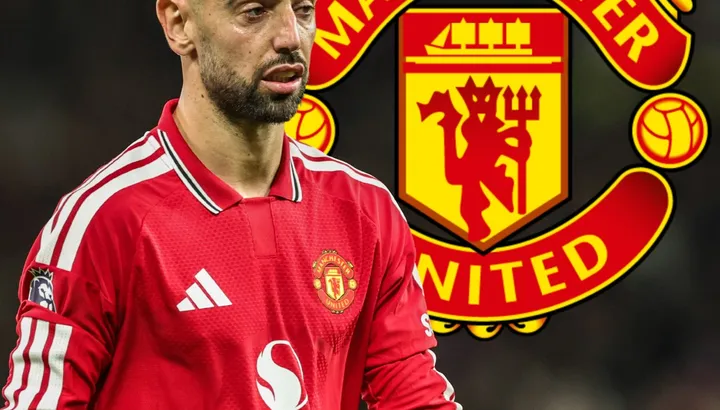
Bruno Fernandes Contract Talks Underway as Man United Face Key Summer Decisions
Manchester United are in active discussions with captain Bruno Fernandes over a contract extension, according to reports, as the 32-year-old enters the…
Read story
Celtic’s Europa League struggles deepen as Benfica expose familiar flaws
A 4-1 defeat in Lisbon leaves Celtic with two losses from two Europa League group games. Martin O’Neill sees positives in the…
Read story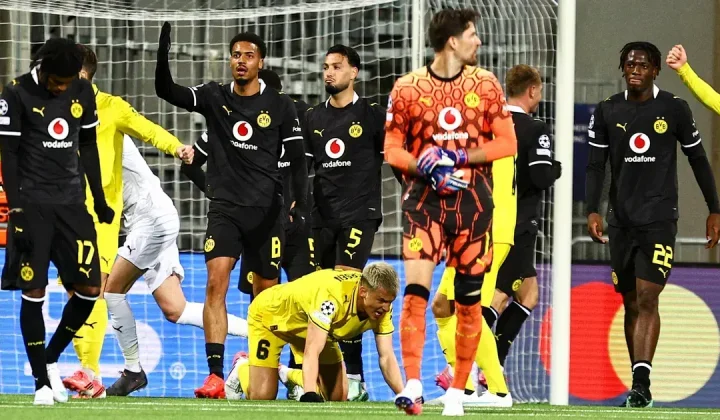
Borussia Dortmund Fall to Bodø/Glimt in Champions League Shock
Fredrik Sjøvold’s second-half strike gave the Norwegian side a 1-0 win over Niko Kovač’s Dortmund, who struggled to break down a disciplined…
Read story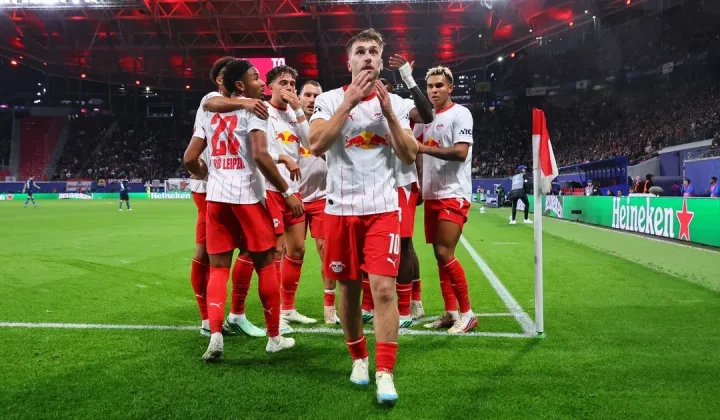
Brajan Gruda Strike Gives RB Leipzig 1-0 Champions League Win Over PSV
Brajan Gruda scored in the 75th minute after Maarten Vandevoordt saved an Ivan Perisic penalty as RB Leipzig defeated PSV Eindhoven 1-0.
Read story