
Businesses Invest More in Automation Amid Staff Shortages
Dutch companies are increasingly turning to automation to combat persistent labor shortages, a shift from previous strategies focused on better employment benefits, according to CBS data.
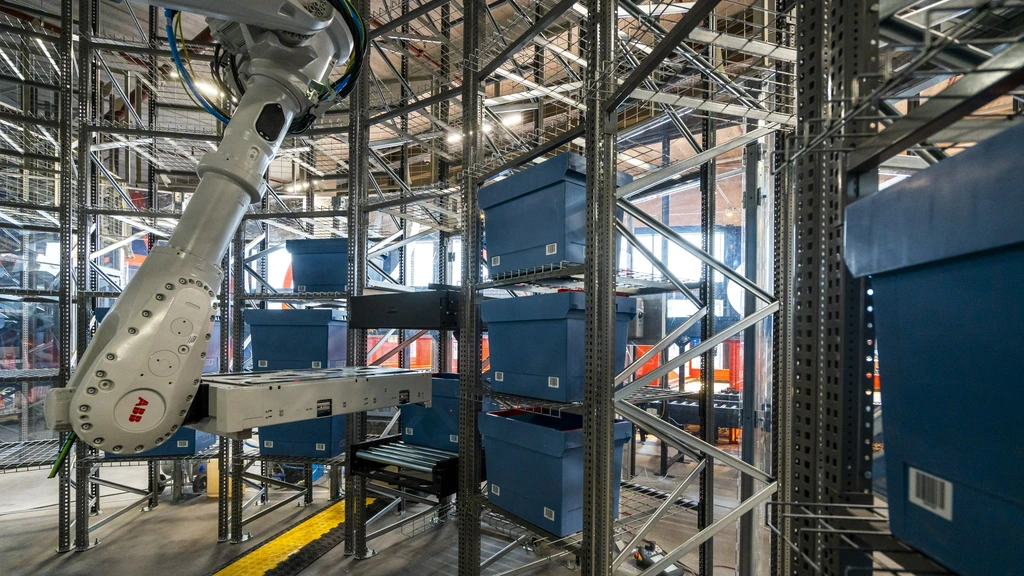
Businesses in the Netherlands are increasingly investing in automation as a solution to ongoing staff shortages. This marks a significant change in strategy, as companies previously relied more heavily on offering attractive employment conditions, such as additional days off or higher salaries, to attract and retain personnel.
Shift in Strategy
According to Peter Hein van Mulligen, chief economist at CBS (Statistics Netherlands), the former approach of competing on benefits proved less effective. “When all companies do it, your competitors do it too. Then it’s questionable how successful it can be,” he explained. The current trend indicates a move towards technological solutions to fill gaps where human labor is scarce.
Impact of Labor Shortages
Despite a slight easing of the labor market tightness, two-thirds of all businesses in the Netherlands are still grappling with a shortage of employees. This deficit directly impacts their bottom line, leading to missed revenue opportunities. For a substantial portion of businesses, specifically one in three, the lack of personnel is identified as their most significant challenge.
Automation Solutions
Automation offers a variety of ways for companies to mitigate the effects of staff shortages. In sectors like construction and industry, businesses can deploy more advanced and efficient machinery. For service-oriented industries, such as legal and IT firms, the adoption of more sophisticated chat-based programs is becoming common. These tools can assist with tasks like programming, summarizing information, and gathering knowledge.
Research Findings
The insights into how businesses are addressing labor shortages stem from a comprehensive study conducted by CBS in collaboration with the Chamber of Commerce, the Economic Institute for the Construction Industry, MKB-Nederland, and VNO-NCW. The research highlights a notable difference in automation adoption between large and small businesses.
Disparities Between Business Sizes
Larger companies are approximately twice as likely to invest in automation compared to their smaller counterparts. This is attributed to their greater financial capacity for investment. Smaller businesses, on the other hand, are often compelled to adopt alternative strategies out of necessity. These can include simply accepting fewer projects than they are capable of handling, thereby managing their limited workforce more conservatively.
This development is significant for FootballGames10 readers as it reflects broader economic trends that can indirectly affect the sports industry. For instance, the efficiency gains from automation in logistics and services could impact event organization, merchandise delivery, and even the operational costs of sports venues. Furthermore, shifts in the labor market can influence hiring practices within sports organizations and the availability of skilled personnel for roles within the football ecosystem.
Datos clave
| Aspect | Detail |
|—|—|
| Primary challenge | Staff shortages affecting two-thirds of Dutch businesses. |
| Previous strategy | Offering better employment benefits (days off, salaries). |
| Current strategy | Increased investment in automation. |
| Key sectors for automation | Construction, industry (machines), services (chat programs). |
| Research collaboration | CBS, Chamber of Commerce, MKB-Nederland, VNO-NCW. |
Fuente: NOS Voetbal – https://nos.nl/l/2616914
Datos clave
| Punto | Detalle |
|---|---|
| Fuente | NOS Voetbal |
| Fecha | 2026-06-03T04:43:55+00:00 |
| Tema | Bedrijven zetten vanwege personeelstekort meer in op automatisering |
Source
NOS Voetbal Original publication: 2026-06-03T04:43:55+00:00
Related news

Jaguares Snatch Dramatic 3-2 Win Over Tolima in Liga BetPlay Relegation Battle
Darwin López scored a 92nd-minute winner as Jaguares de Montería secured only their second victory of the Liga BetPlay 2026-II season, defeating…
Read story
San Lorenzo Seek First Win Under Insua as Riestra Visit in Tense Clausura Clash
Ruben Dario Insua makes several changes to his San Lorenzo lineup as the club seeks its first victory of his third tenure,…
Read story
Premier League Predictions: Man United vs Tottenham, Arsenal vs Leeds Headline Saturday’s Fixtures
Sports Mole's roundup of Saturday's Premier League gameweek six predictions, including Manchester United vs Tottenham Hotspur at Old Trafford and Arsenal vs…
Read story
One Injured in Marble Hill Shooting; No Football Disruption Confirmed
A person was hospitalized after a shooting reportedly involving federal agents in New York’s Marble Hill neighborhood. The initial account identifies no…
Read story