
Curazao Makes World Cup History as Smallest Nation Ever to Qualify
Despite a minuscule pool of eligible players and only one born on the island, Curazao has achieved a remarkable feat by qualifying for the World Cup, showcasing the influence of Dutch football heritage.

Curazao is set to make its debut in the FIFA World Cup, a historic achievement that positions the Caribbean island nation as the smallest country ever to qualify for the prestigious tournament. With a population of just 156,115, Curazao surpasses Iceland’s 2018 qualification mark of approximately 350,000 inhabitants. The island, a mere 444 square kilometers off the coast of Venezuela, will compete in Group E alongside football powerhouses Germany, Ecuador, and Ivory Coast.
The Road to the World Cup
The qualification of Curazao is an extraordinary feat, but its origins are deeply intertwined with the Dutch football system. The pool of eligible players for the national team is remarkably small, estimated at just 135 individuals. Of these, 94 hold Curacaoan nationality as their primary citizenship, while an additional 41 possess roots on the island.
A significant challenge lies in the competitive level of these players. Out of the 94 Curacaoan nationals, only 27 currently play in a top-tier league, and strikingly, none compete in any of Europe’s top five leagues. The remaining players are distributed across second divisions, third divisions, amateur leagues, and youth systems. This disparity is reflected in the World Cup squad itself. While 15 players are part of first-division teams and 11 are in second-tier leagues, none are currently playing in Europe’s elite leagues. Curacaoan top leagues include the Eredivisie and other less prominent championships in countries like Israel, Saudi Arabia, Switzerland, and Turkey. Notable players like Tahith Chong and Sontje Hansen ply their trade in the English Championship, the second tier of English football.
The Dutch Connection
A fascinating aspect of Curazao’s squad is that only one player, Tahith Chong, was born on the island itself. Chong, who began his youth career at Feyenoord before moving to Manchester United, represents the exception. The remaining 25 players in the squad, managed by the veteran coach Dick Advocaat, were born in the European Netherlands. At 78 years old, Advocaat will become the oldest manager to ever lead a team at a World Cup.
The explanation for this unique situation lies in Curazao’s historical ties to the Netherlands. Until its dissolution in 2010, Curazao was part of the Netherlands Antilles. It now functions as a constituent country within the Kingdom of the Netherlands, sharing the Dutch monarch and its citizens holding Dutch nationality. The Dutch diaspora in Curazao is substantial, numbering around 145,000 people, nearly matching the island’s resident population. Leveraging FIFA’s eligibility rules, the Curacaoan Football Federation has successfully recruited players with Dutch heritage who have passed through Dutch youth systems.
Missed Opportunities for the Netherlands
While Curazao celebrates its success, several talented players with Curacaoan roots have opted to represent the Netherlands. This World Cup is a prime example, with three players of Curacaoan descent featuring for the Dutch national team: Jurriën Timber (Arsenal), Quinten Timber (Olympique de Marseille), and Jorrel Hato (Chelsea). The list of Dutch internationals with Curacaoan heritage also includes Lutsharel Geertruida, Quilindschy Hartman, Tyrell Malacia, Jetro Willems (born in Willemstad, Curacao), and Leroy Fer. Geertruida, whose parents are from Curacao, expressed a strong connection to the island in 2022 but prioritized playing for the Netherlands, which he achieved a year later.
This phenomenon mirrors the situation with Suriname, another former Dutch colony. The highly successful Dutch team that won the 1988 European Championship featured players of Surinamese descent like Ruud Gullit, Frank Rijkaard, and Aron Winter. This legacy continued with players like Edgar Davids, Clarence Seedorf, Patrick Kluivert, Virgil van Dijk, and Georginio Wijnaldum. Historically, Suriname was reluctant to recruit from its diaspora, but in 2019, they introduced the ‘sports passport’ to attract players of Dutch-Surinamese heritage. Curazao’s success, however, predates this initiative, demonstrating an earlier realization of the potential within its diaspora.
Datos clave
| Aspecto | Detalle |
| :———————– | :——————————————————————– |
| Población de Curazao | 156,115 habitantes |
| Jugadores nacidos en isla | 1 (Tahith Chong) |
| Jugadores elegibles | Aproximadamente 135 (94 con nacionalidad principal, 41 con raíces) |
| Entrenador | Dick Advocaat (78 años) |
| Grupo en el Mundial | Grupo E (Alemania, Ecuador, Costa de Marfil) |
This development is significant for FootballGames10 readers as it highlights an extraordinary underdog story in international football. It showcases how nations with limited resources and player pools can achieve major sporting success through strategic recruitment and leveraging historical connections, offering a unique narrative beyond the traditional football powerhouses.
Fuente: Mundo Deportivo Futbol – https://www.mundodeportivo.com/futbol/mundial/20260610/1004193016/milagro-curazao-mundial-apenas-1-jugador-nacido-isla-apenas-135-futbolistas-seleccionables-bdg.html
Datos clave
| Punto | Detalle |
|---|---|
| Fuente | Mundo Deportivo Futbol |
| Fecha | 2026-06-10T02:36:00+00:00 |
| Tema | El milagro Curazao: al Mundial con solo 1 jugador nacido en la isla y apenas 135 futbolistas seleccionables |
Source
Mundo Deportivo Futbol Original publication: 2026-06-10T02:36:00+00:00
Related news
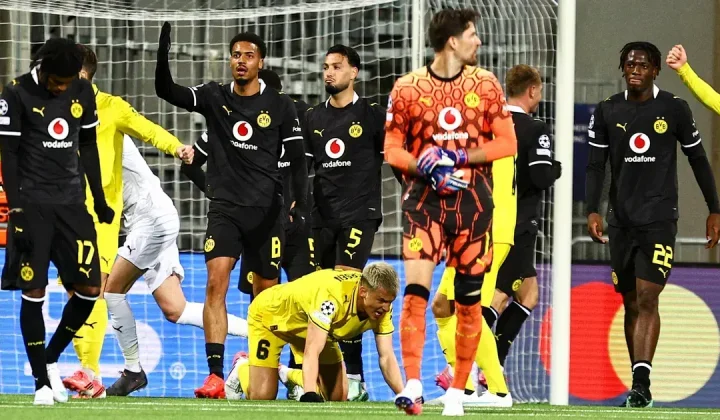
Borussia Dortmund Fall to Bodø/Glimt in Champions League Shock
Fredrik Sjøvold’s second-half strike gave the Norwegian side a 1-0 win over Niko Kovač’s Dortmund, who struggled to break down a disciplined…
Read story
Brajan Gruda Strike Gives RB Leipzig 1-0 Champions League Win Over PSV
Brajan Gruda scored in the 75th minute after Maarten Vandevoordt saved an Ivan Perisic penalty as RB Leipzig defeated PSV Eindhoven 1-0.
Read story
Real Betis vs Porto: Champions League Clash Preview and Prediction
Real Betis host Porto in a crucial Champions League league-phase match. Preview includes team news, possible lineups, and analysis of both sides'…
Read story
Jaguares Snatch Dramatic 3-2 Win Over Tolima in Liga BetPlay Relegation Battle
Darwin López scored a 92nd-minute winner as Jaguares de Montería secured only their second victory of the Liga BetPlay 2026-II season, defeating…
Read story