Tipping Point: How Payment Terminals Are Reshaping Restaurant Gratuities
A growing number of Dutch hospitality businesses are implementing tipping prompts on payment terminals, leading to an increase in gratuities given by customers, though the default choice remains "no tip.
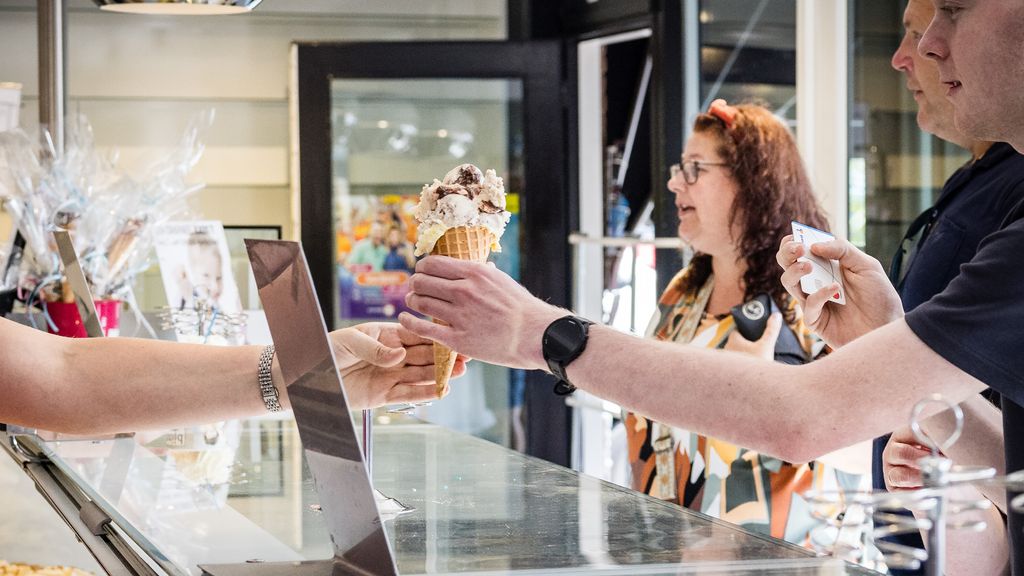
The way customers tip in the Netherlands is undergoing a significant shift, driven by the integration of tipping prompts directly into payment terminals. A growing number of hospitality establishments are adopting this technology, which appears to be encouraging more patrons to leave a gratuity, even if the most frequent selection remains “no tip.”
This trend, highlighted by data shared by payment companies with NOS, indicates a fundamental change in the gratuity landscape. While the option to tip is presented, the default choice for a majority of customers is still to opt out. However, the mere presence of the prompt seems to influence behavior.
Increased Adoption by Businesses
Payment and software company Tebi allows businesses to customize whether they display the tipping menu on their payment devices. Data reveals a notable increase in the adoption of these tipping features across various hospitality sectors. In the first half of 2026, 22% of restaurants using Tebi had enabled the tipping option, up from 19% in the same period of 2025. For bars and cafes, the adoption rate is even higher, rising from 46% to 53% within the same timeframe.
Julien Marlier, manager for Benelux at Adyen, commented on this trend, stating, “This indicates that this is increasingly becoming a standard part of modern payment processes in the hospitality industry.” This suggests that integrated tipping is moving from a novel feature to a commonplace element of the payment experience.
Customer Behavior and Preferences
When customers do choose to tip via the terminal, the most common selection is 5% of the total bill. Approximately a quarter of customers opt to enter a custom, typically small, amount. Significantly, the high “American-style” tipping percentages of 15-20% are rarely encountered.
At The Shore, a surf school and beach tent in Scheveningen, the implementation of a tipping system on their payment system in 2021 led to a resurgence in gratuities after an initial drop during the pandemic when cash payments were suspended. Co-owner Thomas Franse noted that while the prompts are a “significant source of income for staff,” he has mixed feelings about the customer experience, acknowledging that some customers initially reacted negatively. However, he has observed a growing acceptance among patrons as more establishments adopt the practice.
Regional Differences and Business Hesitation
The adoption of tipping menus is not uniform across the Netherlands. In Amsterdam, over 30% of Tebi’s clients have enabled the feature, compared to only 10% in Nijmegen. Some businesses consciously choose not to implement the feature, prioritizing a less intrusive customer experience.
Marc Bouman of Brasserij Breton in Den Bosch stated, “I don’t like to force tips unnecessarily; people give them if they want to.” Similarly, Angie Joosten of Café CinQ believes that “if you show that choice, people might feel forced.” For them, maintaining the customer’s complete freedom of choice is paramount.
Impact on Staff Income
For establishments that have embraced the feature, the impact on staff income can be tangible. At Mick O’Connells, an Irish pub in Utrecht, the daily tips collected through the terminal range from €3500 to €4000 per month. This amount is distributed among employees based on their working hours, equating to approximately €2 per hour per staff member.
Customer Reactions
Patron responses to the tipping prompts are varied. Some find the digital prompt impersonal. “I didn’t tip,” said Sophie, who ordered at a salad bar in Utrecht. “I find it less personal. It’s just like: here, do you want to tip or not?” Others appreciate the clarity and control. “I find it nice because then I can choose what and if I give,” shared a visitor to The Shore, who opted for a 5% tip, citing the hard work of the staff.
Key facts
| Aspect | Details |
|---|---|
| Most common tip | 5% of the bill |
| Adoption rate (2026) | Restaurants: 22%, Bars/Cafes: 53% |
| Default choice | 61% select ‘no tip’ on terminals with the function active |
| Average tip amount | €4.31 when a tip is given |
This development matters for FootballGames10 readers as it reflects a broader trend in consumer behavior and the integration of technology into everyday transactions, impacting the service industry and the way service workers are compensated. Understanding these shifts provides insight into evolving economic practices and customer interactions.
Source: NOS Voetbal – https://nos.nl/l/2623445
Source
NOS Voetbal Original publication: 2026-07-18T05:30:32+00:00
Related news
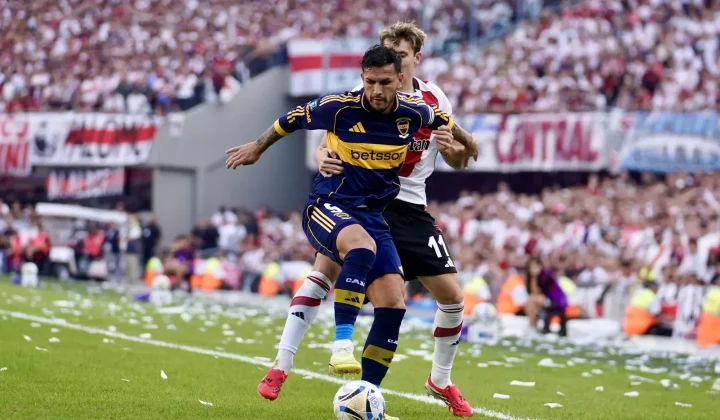
Boca vs River Superclásico Confirmed for November 1 at La Bombonera
The Argentine Professional League has set the date and time for the next Boca Juniors vs River Plate Superclásico, scheduled for Sunday,…
Read story
Harry Kane equals Peter Shilton’s England caps record with two goals in Nations League win over Czechia
Harry Kane scored twice on the night he equalled Peter Shilton’s all-time England appearance record, leading the Three Lions to a 3-0…
Read story
Jesse Marsch says Canada “not afraid” as USMNT friendly intensifies rivalry
Canada coach Jesse Marsch has welcomed the pressure of facing the United States, stating his team is “not afraid” as the two…
Read story
Scotland vs Slovenia: Nations League Group B1 Clash at Hampden Park
Scotland and Slovenia meet at Hampden Park in a pivotal Nations League Group B1 encounter, with both sides level on four points…
Read story