
Spain Beat Argentina in Extra Time as World Cup Final Tests Football’s Big-Event Format
Spain won the 2026 World Cup through Ferran Torres’ extra-time goal, but the final also raised football questions about extended half-time programming, trophy protocols and security at major finals.
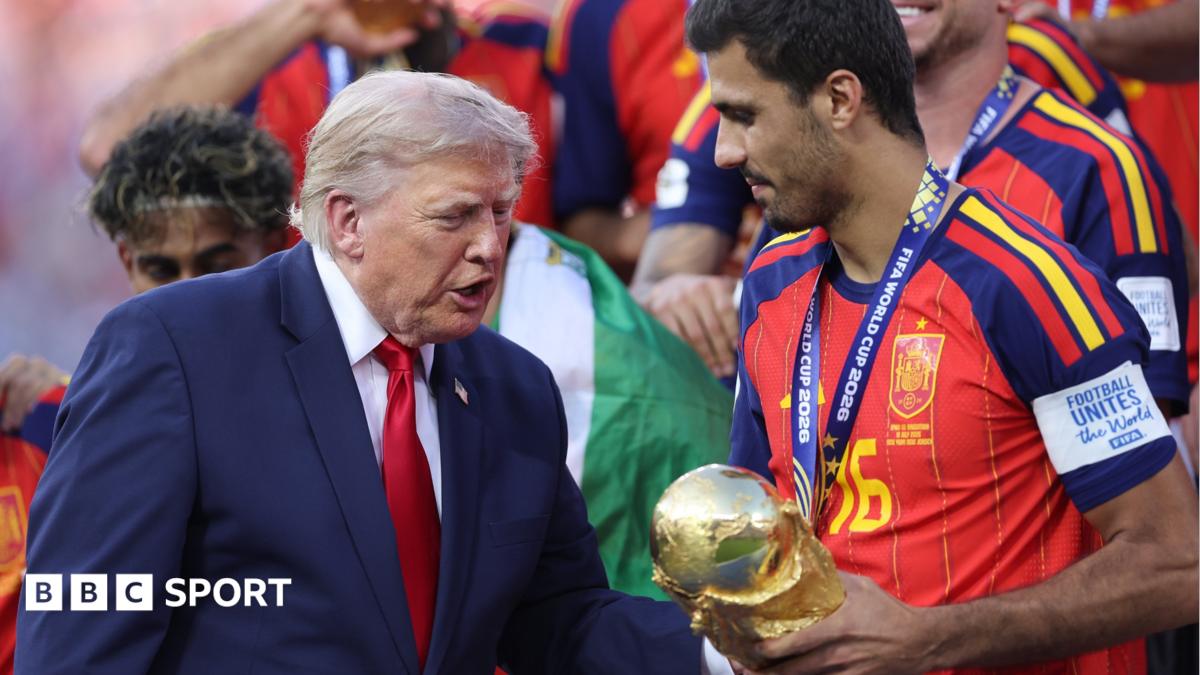
Spain won the 2026 World Cup by beating Argentina after extra time at New York New Jersey Stadium, with Ferran Torres scoring the decisive goal, according to BBC Sport.
The result gave Spain the men’s World Cup trophy for the second time. Yet the final may also be remembered inside football for how far the event stretched beyond the match itself: an extended 27-minute half-time break, a highly produced pre-match and mid-game show, visible involvement from US president Donald Trump, and tighter security procedures around the stadium.
For football fans, the central issue is not whether a final can be a global entertainment event. It already is. The sharper question is how much the match rhythm, player routines and supporter experience should change when FIFA’s biggest game is staged as a broader broadcast production.
Spain settle the final in extra time
BBC Sport reported that Torres’ extra-time goal separated Spain and Argentina in a match short on major football talking points.
That does not reduce the significance of the result. Spain leave the 2026 tournament as world champions, while Argentina’s campaign ended at the final hurdle. The title also closes the first World Cup co-hosted by the United States, Mexico and Canada, with the final staged in the New York New Jersey area.
The BBC account framed the football itself as less memorable than the surrounding event, which is unusual for a World Cup final. That contrast is likely to shape how the match is discussed: Spain’s trophy lift is the record-book headline, but the matchday format may become the longer-running debate.
Key match and event details
| Detail | What BBC Sport reported | Why it matters for football fans |
|---|---|---|
| Winner | Spain beat Argentina after extra time | Spain won the men’s World Cup for the second time |
| Decisive moment | Ferran Torres scored the winning goal | The final was decided on the pitch, despite the wider event focus |
| Venue | New York New Jersey Stadium | The final capped the North American-hosted tournament |
| Half-time length | The interval lasted 27 minutes | Longer breaks can affect rhythm, warm-ups and tactical routines |
| Security | US Secret Service led security because Trump attended | Supporters faced longer checks and queues before kick-off |
Extended half-time raises football questions
The most direct football issue was the length of the interval. BBC Sport said the half-time break lasted 27 minutes to allow a large entertainment segment featuring artists including Madonna, Justin Bieber, BTS, Coldplay and Shakira.
A standard football half-time is built around recovery, coaching adjustments and a controlled restart. Stretching that window changes the rhythm for players and staff, even if both teams face the same conditions.
Former England striker Wayne Rooney, speaking on BBC’s Match of the Day coverage, was sharply critical of the format. “Just let us play football,” he said, according to the BBC report.
That reaction captures the likely split among supporters. Some will see the expanded show as fitting for a World Cup final in the United States, where major sports events often include large-scale mid-game productions. Others will argue that a World Cup final should protect football’s usual tempo, especially when players have already come through a long tournament.
Trump’s role became part of the ceremony story
Trump’s attendance added another major focal point. BBC Sport reported that he arrived by helicopter before the match and sat alongside FIFA president Gianni Infantino.
His presence had already been a talking point during the tournament. The BBC report referred to the case of US striker Folarin Balogun, who avoided a ban after being sent off, and said Trump had previously admitted speaking to Infantino and asking him to review the sending-off.
After the final, Trump and Infantino were involved in the medal presentations. BBC Sport said Trump remained visible during part of Spain’s trophy presentation before leaving the stage. The report also said there were boos when Trump and Infantino emerged for the ceremony.
One moment involving Argentina defender Cristian Romero was described cautiously by the BBC: Romero appeared to walk past Trump after receiving his medal from Infantino. Without direct confirmation from the player, that should be treated as an observed incident, not proof of intent.
Security delays affected the matchday experience
The final also showed how high-profile attendance can change a supporter’s day. BBC Sport reported that the United States Secret Service took over security because Trump attended.
Spectator gates opened at 11:00 local time, four hours before kick-off, but the report said queues still built up because of heightened checks. Some media members also faced confusion over access points, while bag checks were described as more thorough than at previous matches.
The important football detail is that the match kicked off on time. Even so, supporters heading to future major finals can take a practical lesson from this event: when political leaders, major ceremonies and extra security overlap, arriving early may not be enough unless organisers also provide clear gate, route and entry information.
What remains unclear
The BBC report does not establish whether the extended half-time break affected either team’s physical preparation, tactical plans or performance after the restart. Any claim that Spain or Argentina were helped or harmed by the longer interval would need player or coaching staff confirmation.
It is also unclear whether FIFA will keep this model for future World Cup finals. The 2026 final may prove to be a one-off shaped by the North American setting, or it may become a sign of how FIFA wants to package its biggest match for global audiences.
What is clear is the result: Spain are world champions after an extra-time winner from Torres. The unresolved part is whether football’s showpiece final should continue moving toward a longer, more staged event format, or whether the sport’s traditional match rhythm should set the limit.
Source: BBC Sport Football, https://www.bbc.co.uk/sport/football/articles/c4gjx7nvk4go?at_medium=RSS&at_campaign=rss
Source
BBC Sport Football Original publication: 2026-07-20T00:44:03+00:00
Related news
One Injured in Marble Hill Shooting; No Football Disruption Confirmed
A person was hospitalized after a shooting reportedly involving federal agents in New York’s Marble Hill neighborhood. The initial account identifies no…
Read story
Boca vs River Superclásico Confirmed for November 1 at La Bombonera
The Argentine Professional League has set the date and time for the next Boca Juniors vs River Plate Superclásico, scheduled for Sunday,…
Read story
Harry Kane equals Peter Shilton’s England caps record with two goals in Nations League win over Czechia
Harry Kane scored twice on the night he equalled Peter Shilton’s all-time England appearance record, leading the Three Lions to a 3-0…
Read story
Jesse Marsch says Canada “not afraid” as USMNT friendly intensifies rivalry
Canada coach Jesse Marsch has welcomed the pressure of facing the United States, stating his team is “not afraid” as the two…
Read story