
Dutch Customs Intensifies Fight Against Professional Cigarette Smugglers
With 106 million illegal cigarettes seized this year, Dutch Customs is rolling out new tactics and expanding its task force to combat organized crime profiting from high tobacco taxes.
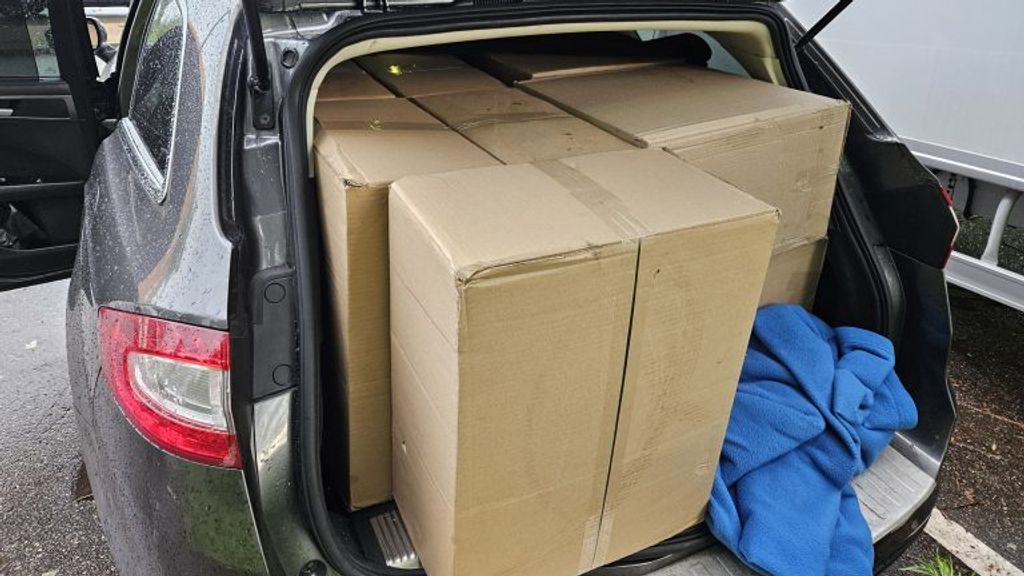
Dutch Customs is significantly increasing its efforts to combat professional cigarette smugglers, implementing a series of new measures to curb the illegal trade. This year alone, authorities have already seized 106 million illegal cigarettes, highlighting the extensive scale of the operation. Customs officials now recognize tobacco smuggling as a clear and profitable business model for criminal organizations.
The rise in cigarette smuggling is directly linked to a substantial increase in excise duties in the Netherlands. Following significant hikes in 2024, the country has become one of the most expensive in Europe for smokers, with a pack of cigarettes now retailing between €11.50 and €13.50 on average. This price disparity not only encourages smokers to purchase cigarettes abroad but has also attracted criminal elements to exploit the market by smuggling large quantities of tobacco into the country.
Organized Crime’s New Revenue Stream
Organized criminal networks, often associated with drug trafficking, are now heavily involved in the lucrative business of cigarette smuggling. Nanette van Schelven, Director-General of Customs, stated that major drug kingpins are using cigarette smuggling to supplement their income. The decrease in sales of legally taxed cigarettes has led to a considerable drop in revenue for the Dutch treasury, with €2.6 billion less collected in tobacco excise duties last year alone. This downward trend is expected to continue.
Expanding the Fight Against Smugglers
In response to this escalating threat, Dutch Customs, in collaboration with the Fiscal Intelligence and Investigation Service (FIOD), is expanding its joint task force dedicated to combating illegal cigarettes. The agency is also increasing the frequency and scope of its controls, with a strategic focus on professional smugglers who frequently use the Port of Rotterdam to transport contraband into the Netherlands. Recent operations have resulted in the interception of multiple large shipments originating from Asia.
Deploying New Technology
New technological tools are being implemented to enhance detection capabilities. A pilot program at Schiphol Airport will introduce advanced scan equipment designed to identify suitcases filled with cigarettes. While European Union regulations permit passengers to carry a maximum of four cartons of cigarettes, customs officers frequently encounter entire suitcases packed with tobacco products.
Furthermore, a legislative proposal is in development to authorize the use of cameras and drones in the fight against excise tax fraud. This would enable Customs to utilize existing ANPR (Automatic Number Plate Recognition) cameras along highways for tracking suspicious vehicles. Drones could also be employed for surveillance, identifying individuals attempting to evade traffic checks or detecting heat signatures from suspected illegal cigarette factories.
Shift in Production Locations
The number of illegal cigarette factories discovered within the Netherlands has decreased in recent years, with only one operational factory and two under construction found last year. This reduction is attributed to a new permit requirement for cigarette-making machinery, making it more challenging for criminals to acquire the necessary equipment. However, production appears to be shifting across the border, as evidenced by the discovery of eleven illegal factories in Belgium last year.
Drug Seizures Highlight Broader Smuggling Trends
In addition to cigarette smuggling, the Customs agency also released figures on drug seizures. In the first half of 2026, over 19,000 kilograms of cocaine were intercepted, marking an increase compared to the same period last year. Customs plans to increase surveillance in smaller ports to counter the risk of “drop-offs,” a method where drug packages are thrown overboard at sea and then retrieved by small, fast boats. Only one such drop-off has been recorded this year near Zeeland.
Conversely, the quantity of seized cannabis has seen a significant decline after reaching record levels last year, when 60,000 kilograms of marijuana were confiscated, primarily from countries with legal cultivation, such as Canada. This year, only 7,900 kilograms have been found. Customs attributes this decrease to stricter export controls in Canada and a reduction in container shipments of cannabis arriving at the Port of Rotterdam, although smuggling via Schiphol Airport continues.
Key Figures in the Crackdown
Aspect | Detail | Source
—|—|—
Illegal cigarettes seized | 106 million (this year) | Dutch Customs
Average cigarette price | €11.50 – €13.50 per pack | NOS Voetbal (citing Customs)
Lost excise revenue | €2.6 billion (last year) | NOS Voetbal (citing Customs)
Cocaine seized | Over 19,000 kg (first half of 2026) | Dutch Customs
Cannabis seized | 7,900 kg (first half of 2026) | Dutch Customs
What remains unclear
While the report details increased enforcement and seizures, the exact financial impact on criminal organizations from reduced cigarette smuggling is not specified. Additionally, the effectiveness of new technological measures like the Schiphol Airport scanning trial will require further evaluation.
Source: NOS Voetbal – https://nos.nl/l/2623040
Datos clave
| Punto | Detalle |
|---|---|
| Fuente | NOS Voetbal |
| Fecha | 2026-07-15T02:28:52+00:00 |
| Tema | Douane treedt harder op tegen professionele sigarettensmokkelaars |
Source
NOS Voetbal Original publication: 2026-07-15T02:28:52+00:00
Related news

Gillingham vs Cambridge United: EFL Trophy Southern Group G Preview, Team News, and Prediction
League Two's in-form Gillingham host League One side Cambridge United in the EFL Trophy on Tuesday. We preview the clash with team…
Read story
Brighton defeat exposes five cracks in Arsenal’s Premier League title defence
Arsenal’s perfect start to the season came to a sudden halt with a 3-0 loss at Brighton. The result has raised fresh…
Read story
Harry Kane Fastest to 100 Bundesliga Goals, Reaches Milestone in 98 Appearances for Bayern Munich
Harry Kane scored his 100th Bundesliga goal in Bayern Munich’s 7-0 win over Union Berlin, setting a new record for the fastest…
Read story
Bayern Munich’s Luis Díaz Backs Harry Kane for 2026 Ballon d’Or
Bayern Munich and Colombia forward Luis Díaz has publicly backed teammate Harry Kane to win the 2026 Ballon d'Or, calling the England…
Read story