
England faces extreme Miami heat against Norway in World Cup quarter-final
England's World Cup quarter-final against Norway in Miami will be played in extreme heat and humidity, posing a significant challenge for both teams, with Norway potentially better adapted to the conditions.
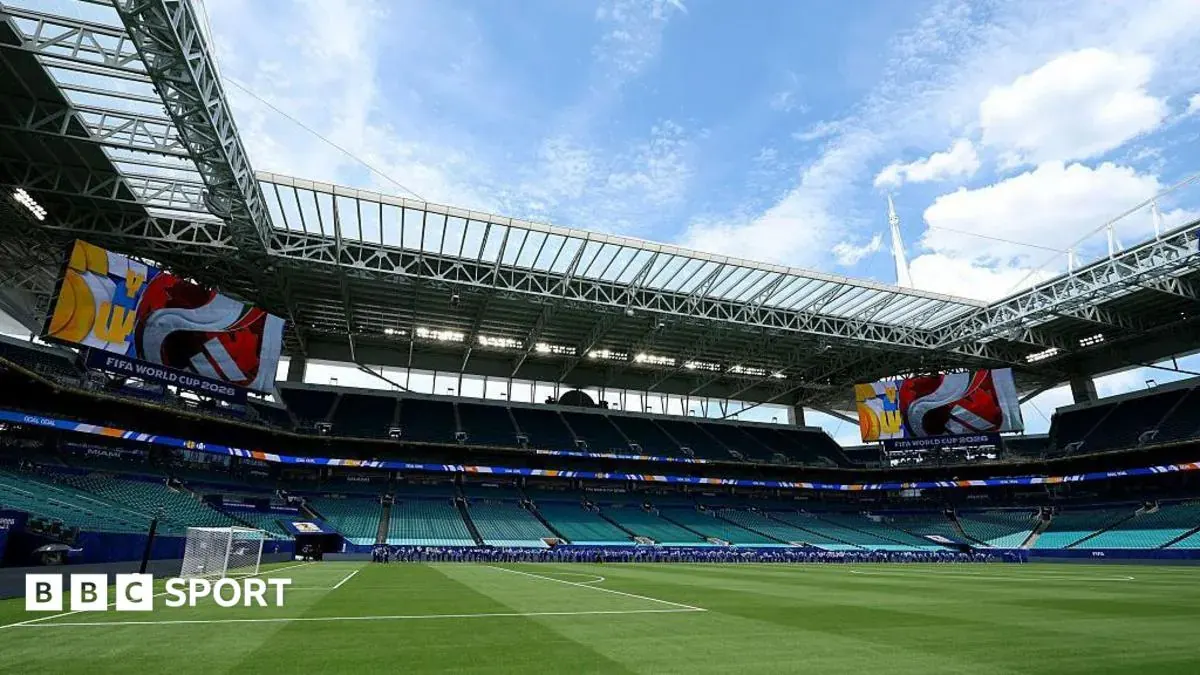
England is set to face Norway in a World Cup quarter-final match in Miami, where players will contend with extreme heat and humidity. This marks an unusual challenge for the Three Lions, who have largely been shielded from intense heat throughout the tournament.
Challenging Conditions in Miami
The match, scheduled for Saturday evening, is expected to be played in conditions that the global players’ union, Fifpro, has deemed potentially too dangerous for play. Air temperatures are predicted to be around 33C (91F), but with high humidity, the perceived temperature could reach 41C (106F). The National Weather Service has issued a heat advisory for the area, warning of a “hazardous heat threat” and an increased risk of heat-related illnesses.
The Wet Bulb Globe Temperature (WBGT), a measure used by FIFA to assess heat stress, is calculated to be between 28-30C for the match time. Fifpro guidelines suggest that a WBGT above 28C should lead to the delay or postponement of matches. Despite these concerns, there is no indication that the game will not proceed.
England’s Journey So Far
England has experienced a varied climate during the tournament. Their schedule has included indoor matches in Dallas and Atlanta, and outdoor games in Boston, New Jersey, and Mexico City were in cooler, damper conditions. The warmest match for England so far was 25C in their final group game against Panama, under overcast skies. Their initial base in Florida for pre-tournament warm-up games, followed by their tournament facility in Kansas with daily air temperatures around 32-34C, may have provided some acclimatisation.
Norway’s Adaptation
In contrast, Norway has played most of their matches outdoors. Their victory over Brazil was played in New Jersey under an extreme heat warning. While they had an indoor match against Ivory Coast, their experience in warmer, more humid conditions throughout the tournament could potentially give them an advantage. Norway’s warm-up matches were in cooler climates, but their tournament fixtures have exposed them to significant heat.
Expert Analysis
Dr. Lee Taylor, an expert in elite athlete performance and heat challenges from Loughborough University, suggests that England’s consistent exposure to hot bases during their acclimatisation period is a significant advantage. However, he notes that Norway has played four “pretty warm games,” with the New Jersey match being particularly hot. Taylor indicated that he might “rather have the scenario that England have evolved through, based on the fatigue the Norway players have acquired.”
Stadium Design Concerns
The Hard Rock Stadium in Miami features a roof that significantly reduces airflow, creating a “humidity trap” where sweat evaporation is less effective, hindering the body’s natural cooling process. This enclosed environment contrasts with many open-air stadiums, potentially exacerbating the impact of the heat on players.
Player Welfare Measures
FIFA has implemented several measures to mitigate the effects of heat, including climate-controlled benches, provision of water and electrolyte drinks, ice, cold towels, fans, mist, and shade. Pre-match use of phase-change ice vests and the application of ice-cold towels during breaks are also recommended as effective cooling strategies.
The impact of these conditions is already evident, with reports of heat-related calls at the stadium and significant numbers of heat-related incidents at the city’s Fan Fest.
Key facts
| Aspect | Detail |
|---|---|
| Match | World Cup Quarter-Final: England vs. Norway |
| Location | Miami, USA |
| Predicted Heat | ~33C air temperature, ~41C ‘feels like’ |
| Humidity | High |
| WBGT | 28-30C (potential for heat stress) |
| Stadium | Hard Rock Stadium (roofed, low airflow) |
The extreme weather conditions in Miami present a significant tactical and physical challenge for both England and Norway. While England has had some acclimatisation, Norway’s tournament experience in warmer climates and the specific stadium environment in Miami could prove decisive. The team best able to manage the heat and hydration will likely have a considerable advantage in this crucial World Cup fixture.
Source: https://www.bbc.co.uk/sport/football/articles/cx2jzl3zxpzo
Source
BBC Sport Football Original publication: 2026-07-11T05:08:35+00:00
Related news

Exposure to unhealthy food and drink branding ‘unavoidable’ during World Cup, new study finds
A University of Bristol study reveals nearly 66,000 visible appearances of unhealthy food and drink brands during the World Cup finals, raising…
Read story
Gillingham vs Cambridge United: EFL Trophy Southern Group G Preview, Team News, and Prediction
League Two's in-form Gillingham host League One side Cambridge United in the EFL Trophy on Tuesday. We preview the clash with team…
Read story
Brighton defeat exposes five cracks in Arsenal’s Premier League title defence
Arsenal’s perfect start to the season came to a sudden halt with a 3-0 loss at Brighton. The result has raised fresh…
Read story
Harry Kane Fastest to 100 Bundesliga Goals, Reaches Milestone in 98 Appearances for Bayern Munich
Harry Kane scored his 100th Bundesliga goal in Bayern Munich’s 7-0 win over Union Berlin, setting a new record for the fastest…
Read story