
FIFA Addresses Controversial England Goal: Ball Sensor Technology Under Scrutiny
The governing body explained its decision regarding England's goal against Norway, highlighting the limitations and past controversies surrounding the ball's sensor technology.
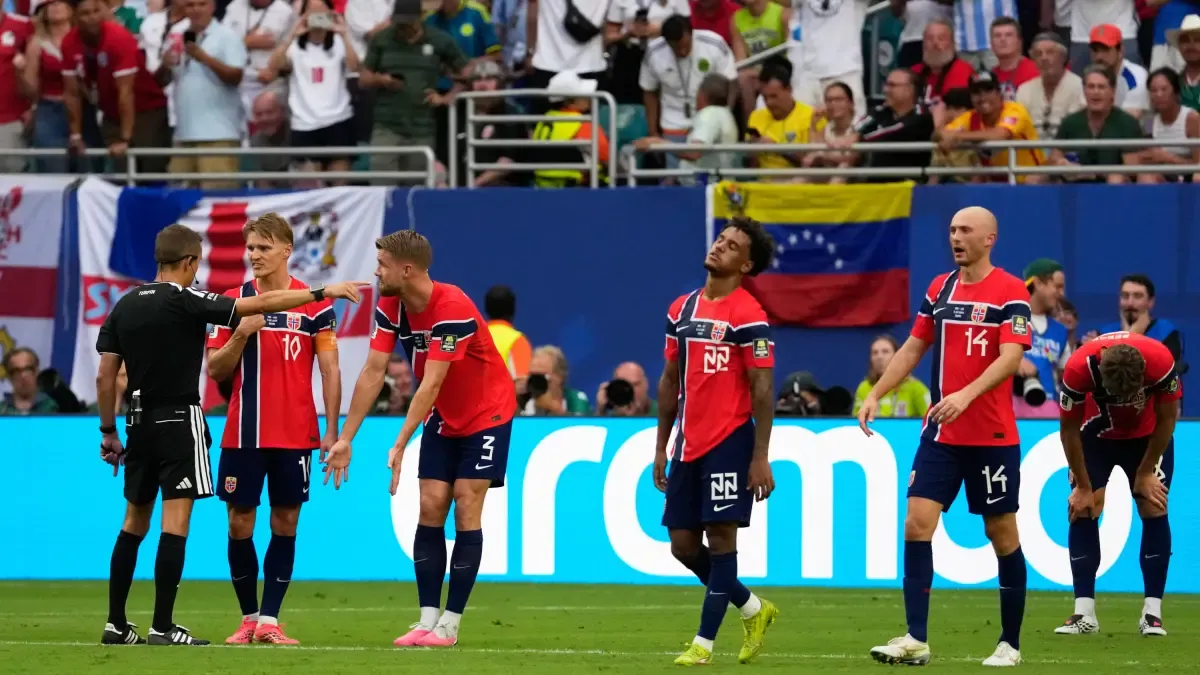
The recent World Cup match between England and Norway has become a focal point for debate surrounding the integrity of goal-line technology, following a controversial first-half goal by England’s Jude Bellingham. FIFA has since provided an explanation for the decision, emphasizing the role of the connected ball’s sensor technology.
Controversy Erupts Over Bellingham’s Goal
Norway has voiced significant dissatisfaction with the officiating, particularly concerning Bellingham’s equalizer for England. The Scandinavian team argued that the goal should have been disallowed. Their protest stemmed from an incident during goalkeeper Nyland’s goal kick, where the ball appeared to strike the ‘spidercam’ wire. Subsequent camera footage indicated the ball dropped almost vertically onto an English player, initiating the attacking move that led to the goal.
FIFA’s Statement on Sensor Data
In response to the widespread discussion, FIFA released a statement clarifying the events. According to FIFA, the sensor within the connected ball did not register any peak in the ‘heartbeat of the ball’ while it was in the air. This lack of data from the sensor meant there was no evidence presented to the VAR officials that the ball had touched the overhead wire and subsequently altered its trajectory. Consequently, the VAR did not intervene, and the goal stood.
Past Technological Hiccups
This incident is not the first time in the tournament that technology has been at the center of controversy. Earlier, in the Round of 16 match between Portugal and Croatia, a similar situation arose. Croatia had a goal disallowed in extra time after the ball sensor indicated contact with the ball by a Croatian player during a header, which led to an offside decision against another teammate. In that instance, FIFA presented sensor data showing a subtle contact, validating the referee’s decision. The governing body had previously highlighted that the IMU sensors embedded in the Trionda ball are capable of detecting even minor contacts, displaying this information to viewers as a ‘heartbeat graph’ to aid officials in making swift and accurate decisions.
Questions About Sensor Reliability
However, the Norway vs. England match appears to have raised questions about the reliability of this technology. The discrepancy between what was visually apparent to some observers and the sensor data has fueled skepticism. While FIFA maintains the technology’s efficacy, the repeated controversies suggest a need for ongoing review and transparency regarding its implementation and limitations.
Key facts
| Aspect | Details |
|---|---|
| Incident | Controversial goal by England’s Jude Bellingham against Norway. |
| FIFA’s explanation | Ball sensor did not detect contact with overhead wire. |
| VAR intervention | None, based on sensor data and lack of visual confirmation. |
| Previous controversy | Similar incident involving Portugal vs. Croatia, with sensor validation. |
The reliability of officiating technology is paramount in modern football. For fans and analysts alike, understanding how these systems work and where their limitations lie is crucial for appreciating the game’s outcomes. The ongoing debate following this match underscores the complex interplay between human judgment and technological assistance in ensuring fair play.
Source: https://www.mundodeportivo.com/futbol/mundial/20260712/1004205550/fifa-da-explicaciones-sobre-polemico-gol-inglaterra-sensor-vez-entredicho.html
Source
Mundo Deportivo Futbol Original publication: 2026-07-12T00:36:55+00:00
Related news

Harry Kane Contract Talks Set to Wrap Up After International Break, Says Bayern CEO
Bayern Munich CEO Jan-Christian Dreesen expects Harry Kane’s contract extension to be finalized during the September-October international break, as the England captain…
Read story
Exposure to unhealthy food and drink branding ‘unavoidable’ during World Cup, new study finds
A University of Bristol study reveals nearly 66,000 visible appearances of unhealthy food and drink brands during the World Cup finals, raising…
Read story
Gillingham vs Cambridge United: EFL Trophy Southern Group G Preview, Team News, and Prediction
League Two's in-form Gillingham host League One side Cambridge United in the EFL Trophy on Tuesday. We preview the clash with team…
Read story
Brighton defeat exposes five cracks in Arsenal’s Premier League title defence
Arsenal’s perfect start to the season came to a sudden halt with a 3-0 loss at Brighton. The result has raised fresh…
Read story