France’s World Cup Reign Tested: Potential Semi-Final Vulnerabilities Emerge
Despite an impressive unbeaten run to the World Cup semi-finals, France's seemingly invincible status faces scrutiny. Analysis suggests their left flank and defensive shape could be exploited by opponents capable of intense pressing and possession-based play, a challenge they haven't yet encountered.
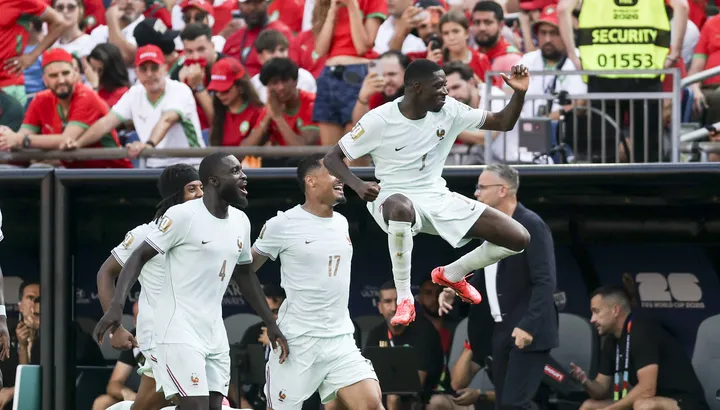
France’s journey to the semi-finals of the 2026 World Cup has been nothing short of dominant. Six matches played, minimal goals conceded, and a seemingly effortless progression have led many to believe Didier Deschamps’ side is unbeatable. However, a closer examination of their tactical setup reveals potential vulnerabilities that could be exploited by the remaining strong contenders.
The French attack has been lauded for its creativity and potency, leading the tournament in chances created and hitting the woodwork numerous times. Defensively, they have been equally impressive, conceding only twice in six games and keeping four clean sheets. This balance has made them appear almost flawless, with few clear weaknesses to identify.
Yet, according to analysis, a subtle detail in their defensive shape, particularly on the left flank, might present an opportunity for their semi-final opponents.
Left-Back Vulnerability
While Lucas Digne has been a steady presence at left-back, having taken over from Theo Hernandez who was reportedly dropped due to underperformance, questions remain about the flank’s robustness. Digne, while a more reliable defender than Hernandez, lacks the same physical attributes as his counterpart on the right, Jules Kounde. He is shorter and less imposing, and although he works diligently to press and recover in transition, he can be susceptible in isolated one-on-one duels.
This suggests that targeting the left side of France’s defense with direct individual battles could be a viable strategy. The defensive responsibility in this area also involves Kylian Mbappe, who is less naturally inclined to defensive duties, and Desire Doue, who is also noted as being less solid defensively. While Adrien Rabiot and William Saliba have provided cover, Digne himself could become the focal point for opposition attacks.
Limited Tests So Far
Despite this potential weakness, no opponent in the tournament has effectively exploited it. Senegal, in their opening match, did cause France some trouble, particularly on the counter-attack down the left side, but even then, their goal came late in a settled match. Sweden, in the Round of 16, came closest with the pacey winger Anthony Elanga. Elanga recorded significant ball carries down the right attacking channel, but Sweden lacked the overall structure to consistently create isolated situations for him, ultimately controlling only 39% of the possession.
Paraguay surrendered possession entirely, and Morocco’s approach saw Brahim Diaz drift inside, leaving Achraf Hakimi to overlap. Hakimi, while a threat, is not a prolific dribbler in direct confrontations, and this tactic also exposed Morocco’s defense on Mbappe’s side. The consensus remains that France’s left side has not been truly tested at this World Cup.
Potential Semi-Final Opponents
This could all change in a potential semi-final clash. Spain, with their dynamic winger Lamine Yamal, presents a direct threat in one-on-one situations that could specifically target France’s left flank. Beyond individual duels, Spain’s possession-based style poses a different kind of challenge. France’s 4-4-2 defensive block has not been significantly tested by teams that aim to suffocate opponents near their own goal.
While France’s high press is effective, their concentration of offensive talent could leave them vulnerable in organized defensive phases. A Spain side that typically fields more players in midfield could potentially outnumber France, forcing them to defend deeper.
Another area of concern for France is the space between their defensive lines. As a team that thrives on physical intensity and exploiting open space, there are moments where they opt for a medium or low block, creating gaps that can be exploited by more tactically astute opponents. Spain, in particular, would be well-equipped to capitalize on such spaces.
Belgium’s Pressing Prowess
Should France face Belgium in the semi-finals, another distinct challenge awaits. Belgium is known for its exceptional pressing intensity, leading the tournament in total pressures and goals stemming from successful pressing. No team has yet pressed France with the same level of aggression, primarily because previous opponents have not demanded the ball so aggressively. This could be a crucial factor in disrupting France’s rhythm and exposing any underlying weaknesses.
Opta data highlights France’s defensive solidity in the knockout stages, with no opponent registering an expected goals (xG) total above one: Sweden (0.7 xG), Paraguay (0.2 xG), and Morocco (0.1 xG). This record, however, does not account for the specific tactical challenges that Spain’s possession or Belgium’s intense pressing might present.
What remains unclear
The exact impact of fatigue on France’s players in later stages of a high-intensity tournament remains to be seen, and how effectively Deschamps might adapt his tactics mid-game if an opponent successfully exploits these potential weaknesses.
| Aspect | Details | Source/Context | Potential Impact |
|---|---|---|---|
| Left Flank Defense | Lucas Digne’s physical attributes and potential vulnerability in one-on-one duels. | Analysis from Sports Mole, comparison with Theo Hernandez and Jules Kounde. | Could be targeted by direct dribblers and pacy wingers. |
| Opposition Style | Spain’s possession-based game; Belgium’s high-intensity pressing. | Tactical observations of potential semi-final opponents. | Could force France deeper or disrupt their build-up play. |
| Defensive Spacing | Potential gaps between France’s defensive lines when dropping into a medium or low block. | General tactical analysis of teams that press and accelerate in open space. | Could be exploited by teams adept at playing between the lines. |
| Tournament Performance | Unbeaten run with low goals conceded; yet to face intense press or sustained possession dominance. | Match results and statistical data (e.g., xG) from the tournament. | Past performance may not fully predict outcomes against different tactical approaches. |
As France moves into the crucial semi-final stages, their seemingly impenetrable defense and potent attack will face their most significant tests yet. The ability of teams like Spain or Belgium to exploit these identified vulnerabilities could determine who progresses to the final.
Source: https://www.sportsmole.co.uk/football/france/world-cup-2026/feature/is-there-any-way-to-stop-france-at-the-2026-world-cup_600978.html
Source
Sports Mole Football RSS Original publication: 2026-07-09T23:32:32+00:00
Related news
Exposure to unhealthy food and drink branding ‘unavoidable’ during World Cup, new study finds
A University of Bristol study reveals nearly 66,000 visible appearances of unhealthy food and drink brands during the World Cup finals, raising…
Read story
Gillingham vs Cambridge United: EFL Trophy Southern Group G Preview, Team News, and Prediction
League Two's in-form Gillingham host League One side Cambridge United in the EFL Trophy on Tuesday. We preview the clash with team…
Read story
Brighton defeat exposes five cracks in Arsenal’s Premier League title defence
Arsenal’s perfect start to the season came to a sudden halt with a 3-0 loss at Brighton. The result has raised fresh…
Read story
Harry Kane Fastest to 100 Bundesliga Goals, Reaches Milestone in 98 Appearances for Bayern Munich
Harry Kane scored his 100th Bundesliga goal in Bayern Munich’s 7-0 win over Union Berlin, setting a new record for the fastest…
Read story