
River Plate’s Boardroom Decisions Come Under Scrutiny as Chronology of Missteps Emerges
President Stefano Di Carlo, football director Pablo Longoria and head coach Eduardo Coudet face fresh criticism as Argentine outlet Ole traces the decisions behind River Plate’s difficult 2026 season.
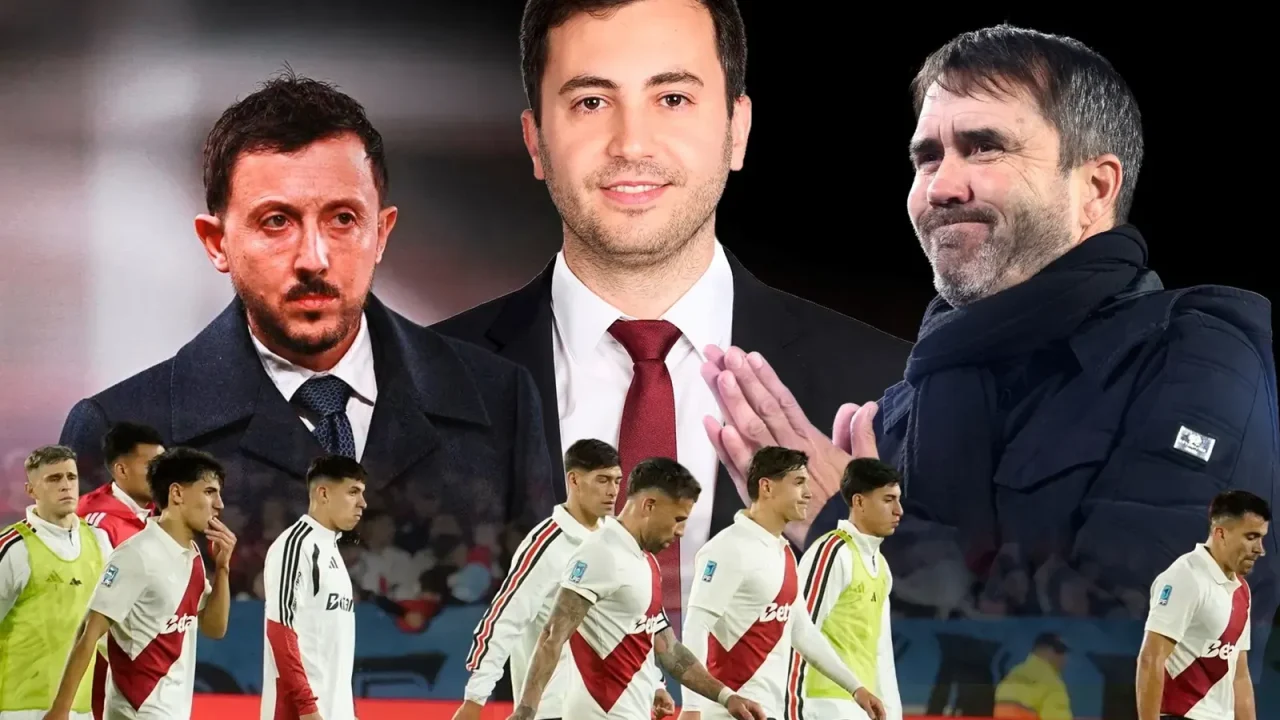
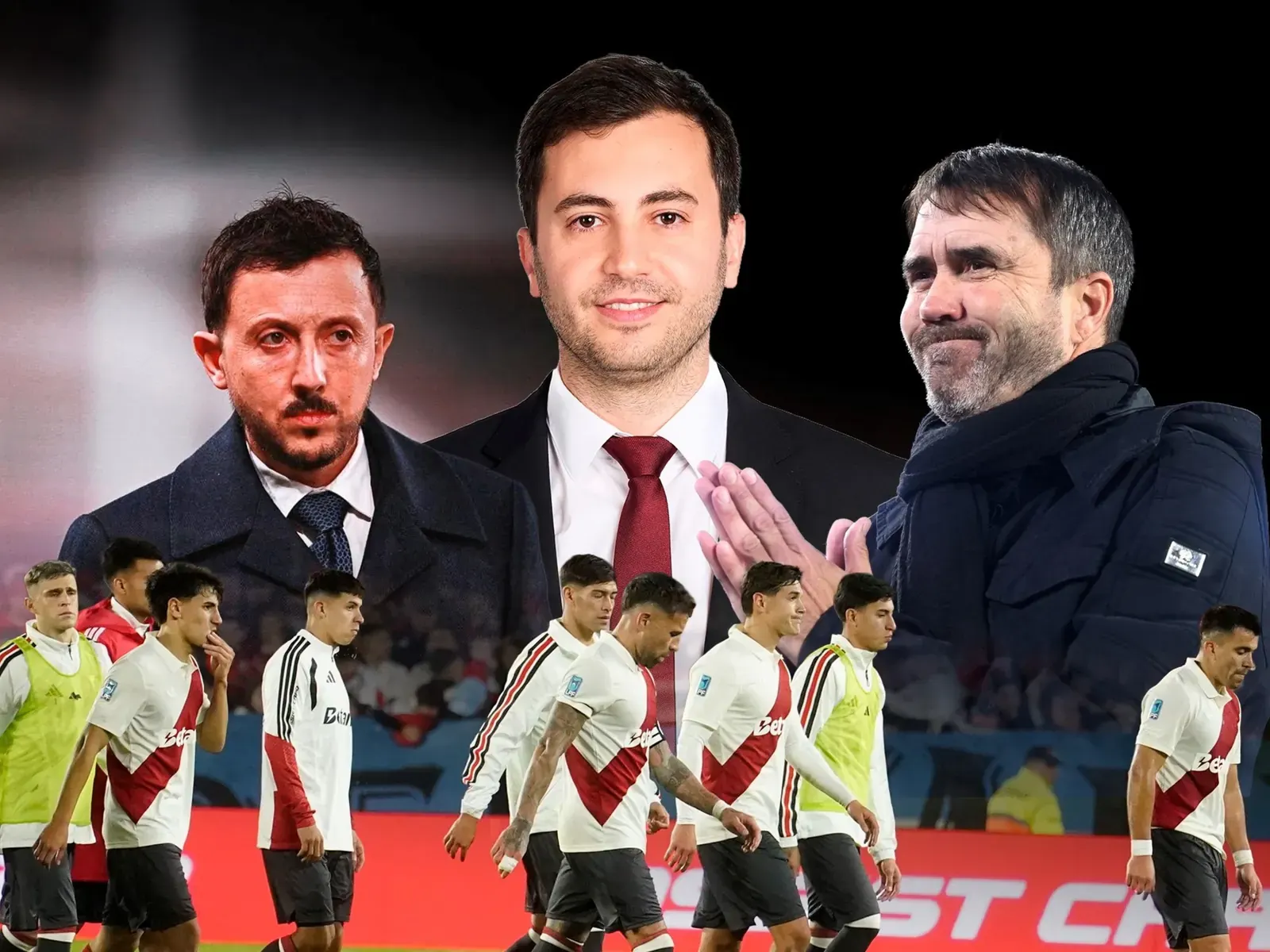
River Plate’s turbulent 2026 season has moved well beyond the pitch. In a detailed chronology published on July 31, Argentine outlet Ole places president Stefano Di Carlo, football director Pablo Longoria and head coach Eduardo Coudet at the centre of a growing crisis, arguing that a string of joint decisions, from an attempt to shed 15 players to a late and expensive transfer market, left the club exposed at a defining moment.
| Key facts | |
|---|---|
| Figures under scrutiny | President Stefano Di Carlo, football director Pablo Longoria and coach Eduardo Coudet |
| Board decision | Di Carlo announced on June 1 that 15 players would leave; two months later, about nine remain in a separate training group |
| Spending | River have spent more than $30 million in the current window but still could not fill a full bench in recent matches |
| Latest demand | Coudet asked for three or four more reinforcements near the end of the market |
A strong first half that hid deeper problems
River reached the domestic final in the first part of the season and lost to Belgrano, yet the overall half was still viewed positively, especially compared with other Argentine giants. Boca were eliminated in the Copa Libertadores group stage and then went out of the Apertura at home to Huracán. Independiente fell in the Apertura round of 16, while Racing and San Lorenzo did not get past the first round of the Sudamericana. River, in contrast, topped their Libertadores group and made a final after a year that had started with Marcelo Gallardo’s departure.
That context makes the current criticism starker. Ole argues that the same “three legs” of the club, players, coach and directors, deserve credit in good times and must also accept responsibility now.
Board decisions under fire
Attention has turned to Di Carlo’s June 1 statement announcing that 15 players would be moved on and instructing Longoria, the newly appointed sporting director, to begin the process. Nearly two months later, nine of those players are still training at a partially finished facility, with Kevin Castaño currently in Colombia. The decision has not cut the wage bill considerably, according to Ole, while increasing tension inside and outside the club.
The treatment of the separated group has also become a public issue. Images of players changing in a container, including youth product Ian Subiabre and World Cup winner Germán Pezzella, have renewed questions about the club’s “River es familia” slogan. The excluded players were visited by Marcos Acuña and Santiago Beltrán as a show of support, but the broader dispute over their status remains unresolved.
Squad planning gaps exposed
The article highlights structural problems that were visible before results worsened. River’s preseason camp in Alicante included only 19 players, 15 of them outfielders, forcing the staff to call up Reserve players from Buenos Aires just to fill the bench for a friendly against Flamengo. A proper 11 vs 11 session could not be organised during the stay.
The Copa Argentina elimination against Aldosivi, a side without a win in the local league in 2026, came with rushed appearances from Lucas Beltrán and Rafael Santos Borré. The market was also late, according to Ole, leaving Nicolás Otamendi to take the captain’s armband without rest after World Cup duty and Ángel Correa to make his debut with only one training session and less than 48 hours after arriving from Mexico.
Acuña’s recent muscle tear exposed the depth problem from another angle: the main replacement at left-back is 20-year-old centre-back Facundo González, while Matías Viña, a Uruguay World Cup player signed six months ago as competition for Acuña, trains with the excluded group. River have spent more than $30 million in the current window, yet the squad still looks unbalanced and short of creative midfielders. In the last three matches, the club did not even name 23 players, with only 10 on the bench against Gimnasia.
Quintero case sharpens tensions
The departure of Juan Fernando Quintero added another layer. The playmaker, scorer of one of the most significant goals in River’s modern history, left as the club’s No. 10 and captain, splitting fan opinion between those who supported him and those who blamed Coudet for not giving him more minutes. River save a salary that ran until December 2027, but they lost a creator with no direct replacement in the squad and failed to recover any fee for the more than $2 million invested in his return under Gallardo.
The saga also created friction between Coudet and the president. Quintero denied from Miami that he was expected to train on Thursday and called Di Carlo his “friend” for granting him leave before the contract was rescinded. Coudet later described the excluded players as an institutional decision by the club, though reports from Núñez suggested the line had been agreed by the board to take pressure off the coach.
A third issue remains unclear: goalkeeper Franco Jaroszewicz was reportedly free to leave, but the club reversed course after reviewing the Sudamericana squad list. Ole raises the question without giving an answer.
Why this matters for River watchers
This is not just a coaching problem. The chronology shows that recruitment, preseason planning, squad separation and player exits were all connected decisions, and all
Source
Ole Original publication: 2026-07-31T13:47:30+00:00
Related news
Harry Kane equals Peter Shilton’s England caps record with two goals in Nations League win over Czechia
Harry Kane scored twice on the night he equalled Peter Shilton’s all-time England appearance record, leading the Three Lions to a 3-0…
Read story
Jesse Marsch says Canada “not afraid” as USMNT friendly intensifies rivalry
Canada coach Jesse Marsch has welcomed the pressure of facing the United States, stating his team is “not afraid” as the two…
Read story
Scotland vs Slovenia: Nations League Group B1 Clash at Hampden Park
Scotland and Slovenia meet at Hampden Park in a pivotal Nations League Group B1 encounter, with both sides level on four points…
Read story
Padres Turn to Robbie Ray for NLDS Game 1 Start as Walker Buehler Goes on Paternity List
San Diego Padres manager Craig Stammen named Robbie Ray the starter for Game 1 of the NL Division Series against Milwaukee after…
Read story