
Spain’s Extra-Time World Cup Win Over Argentina Puts Control and Conduct in Focus
Spain beat Argentina after extra time in the 2026 World Cup final, with Ferran Torres scoring the winner and Argentina’s discipline drawing post-match criticism.
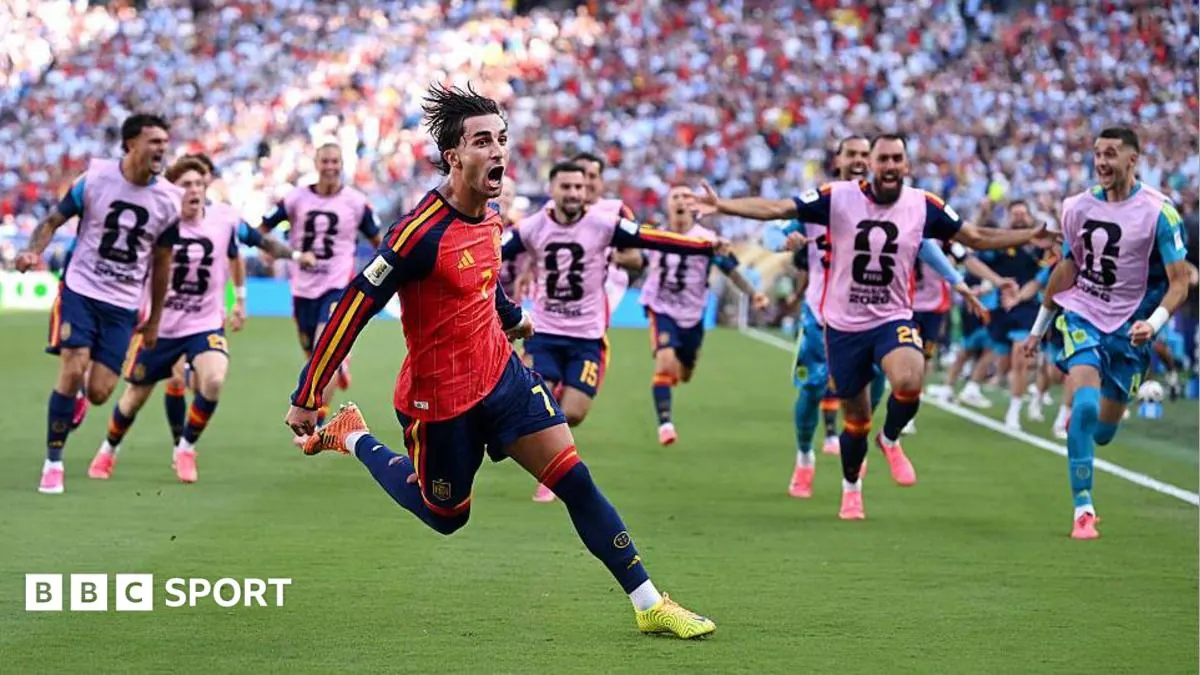
Spain’s 2026 World Cup final against Argentina has moved from pre-match billing to a sharper post-match question: how completely did Spain control the game, and how much will Argentina’s conduct shape the memory of the final?
According to BBC Sport, Spain won their second men’s World Cup after beating Argentina in extra time in New Jersey. Ferran Torres scored the decisive goal in the 106th minute, and Rodri lifted the trophy after a final in which Spain dominated the ball, the shot count and the defensive record.
For FootballGames10 readers following tactics, player development and tournament form, the result is more than a trophy update. It gives a clear snapshot of where international football’s balance of power sits after a final that Argentina survived for long periods but rarely threatened to win.
Spain’s numbers backed up the result
BBC Sport reported that Spain finished with 65% possession, 20 shots, 11 efforts on target and an expected goals figure of 1.94. Argentina, by contrast, were reported to have gone without a shot during the first 90 minutes, with Lionel Messi’s attempt in the 117th minute listed as their first of the match.
That gap explains why Torres’ extra-time goal felt less like a sudden twist and more like the final reward for sustained pressure. Spain also completed 852 passes compared with Argentina’s 464, according to the same report.
| Point to check | Reported detail |
|---|---|
| Final result | Spain beat Argentina after extra time |
| Decisive moment | Ferran Torres scored in the 106th minute |
| Spain attacking output | 20 shots, 11 on target, 1.94 xG |
| Argentina attacking output | No shot in the first 90 minutes, according to BBC Sport |
| Source trail | BBC Sport match analysis and broadcast quotes |
Former England captain Alan Shearer, speaking on BBC One and quoted by BBC Sport, said there was “no doubt” the right team had won, pointing to Spain’s control of possession and their attempts to create chances.
Rodri, Cubarsi and Yamal show Spain’s next layer
Spain’s control was not just a team-wide theme; it showed up in individual passing numbers. BBC Sport reported that Rodri completed 101 passes and Pau Cubarsi completed 121, making them two of the few players on record to complete 100 or more passes in a men’s World Cup final.
Rodri’s influence carried extra weight because he later lifted the trophy. Cubarsi’s performance pointed to Spain’s future as well as their present: the 19-year-old was named young player of the tournament, according to BBC Sport.
Lamine Yamal’s age also underlined the scale of Spain’s long-term potential. BBC Sport reported that at 19 years and six days, he became the third-youngest player to appear in a World Cup final, behind Pele in 1958 and Giuseppe Bergomi in 1982.
Spain’s defensive record was just as decisive. Goalkeeper Unai Simon won the Golden Glove after keeping his seventh clean sheet in eight matches. BBC Sport also reported that Spain conceded only one goal across the tournament, the fewest by any World Cup-winning team.
Argentina reached extra time, but rarely escaped pressure
Argentina forced the final beyond 90 minutes, continuing the recent pattern of World Cup finals going deep. But the way they got there relied heavily on goalkeeper Emiliano Martinez.
BBC Sport reported that Martinez made 11 saves, the most by any goalkeeper on record in a World Cup final. That kept Argentina alive until extra time, but it also showed how frequently Spain were able to turn possession into shots.
Argentina manager Lionel Scaloni acknowledged after the match that Spain deserved the victory, while also referencing the effect of Enzo Fernandez’s dismissal. Fernandez was sent off in the 90th minute after receiving a second yellow card for a late challenge on Cubarsi, having earlier been booked for dissent.
Scaloni’s comments, as reported by BBC Sport, did not overturn the central story of the match: Argentina stayed level for a long time, but Spain were the side creating the clearer and more frequent danger.
Conduct debate followed the final whistle
The final’s football story was followed by a discipline story. BBC Sport reported that Leandro Paredes was involved in post-match confrontations with Spain players, while Nahuel Molina was reported to have thrown a punch at a passing Spain player after the whistle.
BBC pundit Wayne Rooney criticised the scenes, describing them as “embarrassing” in the broadcaster’s coverage. Former England goalkeeper Joe Hart was also strongly critical of Argentina’s behaviour, according to the report.
Those are broadcast and media accounts rather than official disciplinary findings. Any sanctions, if they follow, would need to come from the relevant competition authorities. Until then, the safest reading is that Argentina’s conduct has become a major talking point, not that every allegation has been formally adjudicated.
What remains unclear
The BBC Sport account gives detailed match statistics, broadcast reaction and post-match descriptions, but there are still checks to make before the final record is complete.
Official FIFA documentation would be needed to confirm any disciplinary action linked to the post-match incidents. Full match data from the tournament organiser would also be useful for cross-checking the reported shot, pass and expected-goals figures.
There is also a difference between pundit judgement and formal assessment. Shearer’s “result for football” framing captures how many observers may read the final, but it remains analysis rather than an official conclusion.
What readers can take from it
The practical takeaway is that Spain’s win was built on repeatable strengths: circulation under pressure, territorial control, defensive security and young players already performing at elite tournament level.
For Argentina, the final raises harder questions. Their attack produced very little before extra time, their goalkeeper carried a heavy workload, and their discipline became part of the post-match conversation. Those points will matter when assessing both teams’ next competitive cycle.
Source: BBC Sport Football, https://www.bbc.co.uk/sport/football/articles/cdx8veqllw7o?at_medium=RSS&at_campaign=rss
Source
BBC Sport Football Original publication: 2026-07-20T00:28:50+00:00
Related news
Boca vs River Superclásico Confirmed for November 1 at La Bombonera
The Argentine Professional League has set the date and time for the next Boca Juniors vs River Plate Superclásico, scheduled for Sunday,…
Read story
Harry Kane equals Peter Shilton’s England caps record with two goals in Nations League win over Czechia
Harry Kane scored twice on the night he equalled Peter Shilton’s all-time England appearance record, leading the Three Lions to a 3-0…
Read story
Jesse Marsch says Canada “not afraid” as USMNT friendly intensifies rivalry
Canada coach Jesse Marsch has welcomed the pressure of facing the United States, stating his team is “not afraid” as the two…
Read story
Scotland vs Slovenia: Nations League Group B1 Clash at Hampden Park
Scotland and Slovenia meet at Hampden Park in a pivotal Nations League Group B1 encounter, with both sides level on four points…
Read story