
Spain and Morocco Vie for 2030 World Cup Final Hosting Rights
Spain and Morocco are in a heated competition to host the 2030 World Cup final, with Real Madrid's Bernabéu and Casablanca's proposed Stade Hassan II as the main contenders.

The 2030 FIFA World Cup, co-hosted by Spain, Portugal, and Morocco, is already generating significant debate, particularly over which nation will stage the tournament’s grand finale. Following Spain’s victory in the 2026 World Cup, attention has quickly shifted to the upcoming multi-nation event, where the battle for the final’s venue is intensifying. Both Spain and Morocco are lobbying hard for their respective bids, presenting compelling arguments for their chosen stadiums.
Spain’s long-favoured choice for the final is Real Madrid’s Santiago Bernabéu. The iconic stadium has recently undergone a €1.5 billion redevelopment, boasting enhanced VIP, hospitality, and media facilities, along with a striking ‘silver skin’ exterior and 360-degree digital screens. The Bernabéu holds a unique place in football history, having hosted numerous major finals, including the 1982 World Cup final. Spanish football authorities argue that the country’s extensive experience in staging large events, coupled with its status as a major footballing power and the largest host nation for the 2030 tournament, makes the Bernabéu the logical choice.
Por que importa
Morocco, however, is presenting a formidable challenge with its plans for a brand new 115,000-seat stadium, Stade Hassan II, near Casablanca. The Moroccan government has committed approximately €1 billion in funding for this ambitious project, which aims to be fully compliant with FIFA’s latest requirements. This investment is part of a broader national strategy, led by King Mohammed VI, to elevate Morocco’s standing as a football superpower. Moroccan officials emphasize the flexibility of a new build to adapt to FIFA’s specific needs, contrasting it with the established infrastructure of the Bernabéu.
Key facts
| Aspect | Spain’s Bid (Bernabéu) | Morocco’s Bid (Stade Hassan II) |
|---|---|---|
| Venue Capacity | Existing (post-renovation) | Proposed 115,000 seats |
| Investment | €1.5bn renovation completed | €1bn government funding |
| Historical Context | Hosted 1982 World Cup Final | New build, no prior history |
| Strategic Goal | Leverage established prestige | Boost national football status |
The political landscape surrounding the bid also plays a crucial role. Sources indicate that recent institutional turmoil within the Royal Spanish Football Federation (RFEF) has weakened its position compared to the unified and proactive approach taken by Morocco. Fouzi Lekjaa, president of the Royal Moroccan Football Federation (FRMF) and a significant figure in international football, has been a strong supporter of FIFA President Gianni Infantino, potentially giving Morocco an edge. Moroccan officials also suggest that awarding the final to Casablanca would align with the principle of equitable sharing among FIFA confederations, given Africa has only hosted one World Cup final previously.
Contexto
Despite Morocco’s strong push, Spanish government and football officials remain committed to securing the final for Spain. Spain’s Minister for Education, Professional Training and Sports, Milagros Tolon, has publicly stated her government’s intention to ensure the final is played in Spain. This ongoing competition highlights the intense national pride and strategic importance attached to hosting such a prestigious event. The final decision will undoubtedly have significant implications for both nations and the broader footballing world.
Source: The Athletic Football, https://www.nytimes.com/athletic/7450013/2026/07/22/world-cup-final-2030-spain-morocco/
Source
The Athletic Football Original publication: 2026-07-22T11:00:07+00:00
Related news
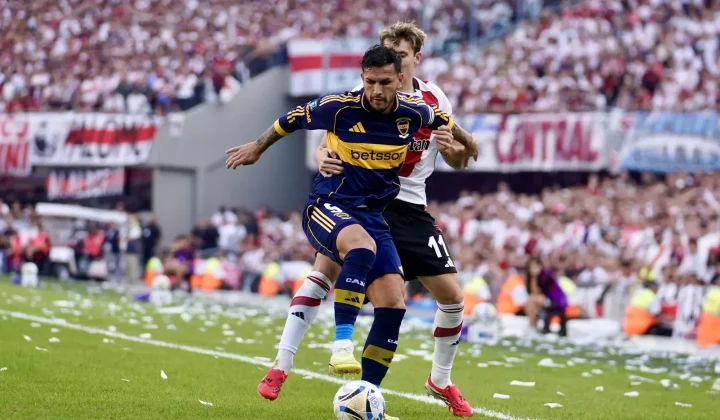
Boca vs River Superclásico Confirmed for November 1 at La Bombonera
The Argentine Professional League has set the date and time for the next Boca Juniors vs River Plate Superclásico, scheduled for Sunday,…
Read story
Harry Kane equals Peter Shilton’s England caps record with two goals in Nations League win over Czechia
Harry Kane scored twice on the night he equalled Peter Shilton’s all-time England appearance record, leading the Three Lions to a 3-0…
Read story
Jesse Marsch says Canada “not afraid” as USMNT friendly intensifies rivalry
Canada coach Jesse Marsch has welcomed the pressure of facing the United States, stating his team is “not afraid” as the two…
Read story
Scotland vs Slovenia: Nations League Group B1 Clash at Hampden Park
Scotland and Slovenia meet at Hampden Park in a pivotal Nations League Group B1 encounter, with both sides level on four points…
Read story