
Tuchel’s Tactical Missteps Contribute to England’s World Cup 2026 Semi-Final Exit
An analysis of Thomas Tuchel's tactical decisions following England's 2-1 World Cup 2026 semi-final defeat to Argentina, highlighting how a defensive approach may have contributed to their downfall.
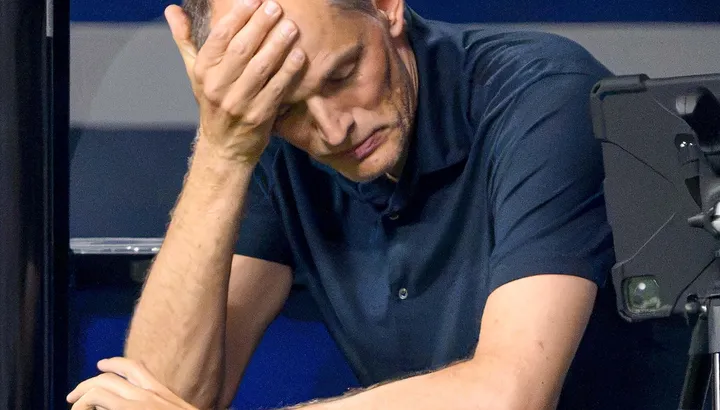
England’s World Cup 2026 campaign came to a disheartening end with a 2-1 semi-final loss to Argentina, a result that has prompted a closer look at the tactical decisions made by manager Thomas Tuchel. Despite taking the lead through Anthony Gordon, England were unable to hold on, conceding twice to Lionel Scaloni’s side in a match where their approach increasingly came under scrutiny.
Tuchel’s tactical choices, particularly his shift to a more defensive posture after securing the lead, have been identified as significant factors in the Three Lions’ predictable exit. This mirrors a historical pattern of England struggling against top-ranked nations in World Cup knockout stages.
Key facts
| Fact | Detail |
|---|---|
| Match Result | Argentina 2-1 England |
| Competition Stage | World Cup 2026 Semi-final |
| England’s Goalscorer | Anthony Gordon |
| Argentina’s Goalscorers | Enzo Fernandez, Lautaro Martinez |
| Key Tactical Shift | England adopted a five-man defence after taking the lead |
| Possession after Lead | England had 12% possession between Gordon’s goal and Martinez’s winner |
Historical Struggles Against Top Nations
England’s semi-final defeat to Argentina marked another instance of their long-standing difficulty in overcoming elite opposition in the World Cup knockout rounds. Since 1998, the Three Lions have been eliminated every time they have faced a nation ranked within the top 10 by FIFA in the latter stages of the tournament, a streak that now stands at seven eliminations out of seven such encounters. This historical pattern suggests a recurring challenge for England when facing the world’s best.
The appointment of Thomas Tuchel was intended to break this cycle. With a reputation as a knockout competition specialist, highlighted by his Champions League success with Chelsea, the German was tasked with guiding England to silverware after years of near misses under Gareth Southgate. However, the team’s performance against Argentina has led to questions about whether Tuchel’s approach, despite its initial success against lower-ranked teams, is sufficient to conquer the very best.
Tactical Shift and Defensive Doubts
A pivotal moment in the match, and a key area of criticism, was Tuchel’s decision to adopt a defensive strategy after Anthony Gordon’s goal just before the hour mark. Around the 70-minute mark, Tuchel introduced centre-back Ezri Konsa, shifting to a five-man defence and effectively sacrificing attacking impetus to protect the lead.
This strategy, often referred to as ‘parking the bus’, proved detrimental. In the period between England taking the lead and Argentina’s late winner, England reportedly held only 12% of the possession. This lack of ball retention and attacking threat allowed Argentina, and specifically the experienced Lionel Messi, ample opportunity to probe and create chances. Messi, despite his age, was instrumental in setting up both of Argentina’s goals, highlighting the danger England conceded by inviting sustained pressure.
The substitution of striker Ivan Toney and the versatile Marcus Rashford late in stoppage time for defenders John Stones and Djed Spence came too late to alter the game’s trajectory, leaving England with a scarcity of attacking options when they needed them most.
Stifling Key Talents
Argentina’s success in nullifying England’s star players, Jude Bellingham and Harry Kane, was another critical factor. These two forwards had been the primary source of England’s goals throughout the tournament, accounting for all but two of their 14 goals. However, in the semi-final, both players were effectively shut down.
Bellingham, in particular, appeared unsettled by the physicality of Argentinian midfielder Leandro Paredes. The Real Madrid star struggled in duels, winning only six of his 13 ground duels and failing to win any aerial contests. His defensive contributions were also uncharacteristically low, with just one tackle made.
Kane, while dropping deeper to influence play and notably assisting in the build-up to Gordon’s goal, managed only one shot throughout the entire match. With their primary attacking threats neutralized, England lacked the individual brilliance needed to break down a resolute Argentinian defence. The reliance on Bellingham and Kane proved unsustainable under the intense pressure of a World Cup semi-final.
The outcome of England’s World Cup 2026 campaign, while a disappointment for fans, underscores the fine margins in international football and the challenges that persist for the Three Lions when facing top-tier opposition. The tactical decisions made in high-stakes matches will undoubtedly be a subject of intense review.
Source: Sports Mole Football RSS – https://www.sportsmole.co.uk/football/england/world-cup-2026/feature/how-tuchels-mistakes-led-to-predictable-england-semi-final-loss-against-argentina_601279.html
Source
Sports Mole Football RSS Original publication: 2026-07-15T23:54:00+00:00
Related news

Exposure to unhealthy food and drink branding ‘unavoidable’ during World Cup, new study finds
A University of Bristol study reveals nearly 66,000 visible appearances of unhealthy food and drink brands during the World Cup finals, raising…
Read story
Gillingham vs Cambridge United: EFL Trophy Southern Group G Preview, Team News, and Prediction
League Two's in-form Gillingham host League One side Cambridge United in the EFL Trophy on Tuesday. We preview the clash with team…
Read story
Brighton defeat exposes five cracks in Arsenal’s Premier League title defence
Arsenal’s perfect start to the season came to a sudden halt with a 3-0 loss at Brighton. The result has raised fresh…
Read story
Harry Kane Fastest to 100 Bundesliga Goals, Reaches Milestone in 98 Appearances for Bayern Munich
Harry Kane scored his 100th Bundesliga goal in Bayern Munich’s 7-0 win over Union Berlin, setting a new record for the fastest…
Read story