
Early 2030 World Cup Power Rankings: Spain Leads, France and England Follow
With the 2030 World Cup still four years away, an early power ranking assesses which national teams possess the strongest foundations and young talent to contend for the title, with Spain, France, and England emerging as early frontrunners.

As the dust settles on the 2026 World Cup, attention is already turning to the 2030 tournament. While four years might seem a long time in football, early assessments are being made regarding which national teams are best positioned to challenge for the next global title. Spain, fresh off their 2026 triumph, are seen as early favorites, with France and England also showing strong potential due to their promising young talent pools.
The 2026 World Cup saw the international farewells of several footballing legends, including Lionel Messi, Cristiano Ronaldo, Luka Modric, and Neymar. This generational shift means that teams looking towards 2030 will rely heavily on players currently in their early to mid-20s, ensuring they are in their prime for the next cycle. The focus is on nations with robust foundations and a clear pathway for player development.
Key facts:
| Fact | Detail |
| :——————— | :——————————————————————————- |
| Defending Champions | Spain (2026 World Cup winners) |
| Tournament Year | 2030 |
| Key Player Age Focus | Players comfortably in their 20s by 2030 |
| Notable Retirements | Messi, Ronaldo, Modric, Neymar (after 2026 World Cup) |
Spain’s Dominance and Future Prospects
Spain enters the 2030 cycle as the reigning champions, having secured the 2026 World Cup. Their success is attributed to Luis de la Fuente’s tactical acumen and a deep squad commitment. The team boasts a strong core of players who will be in their prime by 2030. Goalkeepers like Unai Simón (32) and Joan García (29) are expected to remain key, alongside a solid defensive line featuring Marc Pubill (26), Eric García (29), and Pau Cubarsí (23). The midfield will likely see the return of Dani Olmo (32), Gavi (25), and Pedri (27), with Rodri (33) anchoring the base. Up front, Nico Williams (27) and Lamine Yamal (22) are set to lead the attack. The depth extends to emerging talents like Dean Huijsen (25) and Fermin López (27), suggesting Spain has the resources to maintain their competitive edge.
France’s Tactical Shift
France, despite a semi-final exit in 2026, remains a formidable force. The appointment of Zinedine Zidane to replace Didier Deschamps signals a new era, with hopes of refining their approach. Key players like Mike Maignan (34) in goal and defenders Dayot Upamecano (31), Ibrahima Konaté (31), and William Saliba (29) provide a strong defensive spine. The midfield is equally robust with Manu Koné (29), Aurélien Tchouaméni (30), and the potential return of Eduardo Camavinga (27). Kylian Mbappé (31) is expected to continue leading the attack, supported by talents such as Michael Olise (28) and Désiré Doué (24). Zidane’s challenge will be to leverage this talent effectively and overcome previous tactical shortcomings.
England’s Quest for a Striker
England demonstrated resilience in the 2026 tournament, reaching the semi-finals before a disappointing loss. Their squad for 2030 looks promising, particularly in midfield with Declan Rice (31), Jude Bellingham (26), and Kobbie Mainoo (25). Wingers Bukayo Saka (28) and Anthony Gordon (29) are also expected to feature prominently. The primary concern revolves around the striker position, as Harry Kane will be 36 by 2030, and a clear successor has yet to emerge. However, the depth of talent, including players like Cole Palmer (28), Phil Foden (30), and Adam Wharton (26) who missed the 2026 squad, suggests England has options to explore.
Morocco’s Rising Influence
Morocco, as a co-host for 2030, has established an excellent foundation with consecutive World Cup quarter-final appearances and a semi-final berth. Their squad features a strong defense with Achraf Hakimi (31), Chadi Riad (26), and Noussair Mazraoui (32). Midfielders Ayyoub Bouaddi (22) and Azzedine Ounahi (30) are expected to mature further. The team also benefits from a recent U-20 World Cup win, highlighting a promising pipeline of young talent. Their upward trajectory suggests they could be a significant contender in 2030.
This early look at the 2030 World Cup contenders underscores the importance of youth development and seamless generational transitions in international football. The teams with the most stable core of players in their prime are clearly those being tipped for success.
Source: The Guardian Football, https://www.theguardian.com/football/2026/jul/22/world-cup-2030-very-early-power-rankings
Datos clave
| Punto | Detalle |
|---|---|
| Fuente | The Guardian Football |
| Fecha | 2026-07-22T09:00:11+00:00 |
| Tema | World Cup 2030 (very early) power rankings: who will challenge Spain at top? |
Source
The Guardian Football Original publication: 2026-07-22T09:00:11+00:00
Related news
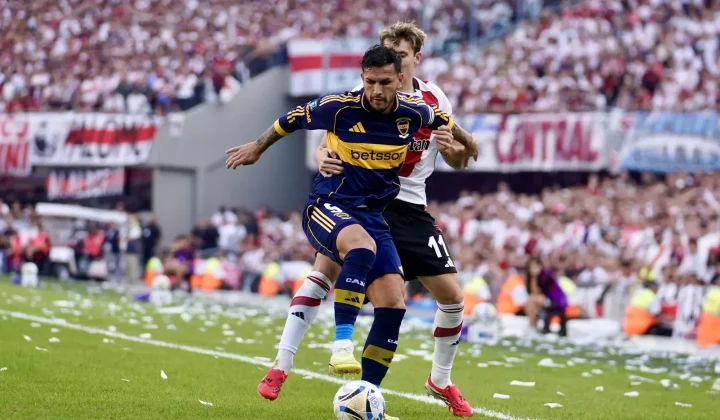
Boca vs River Superclásico Confirmed for November 1 at La Bombonera
The Argentine Professional League has set the date and time for the next Boca Juniors vs River Plate Superclásico, scheduled for Sunday,…
Read story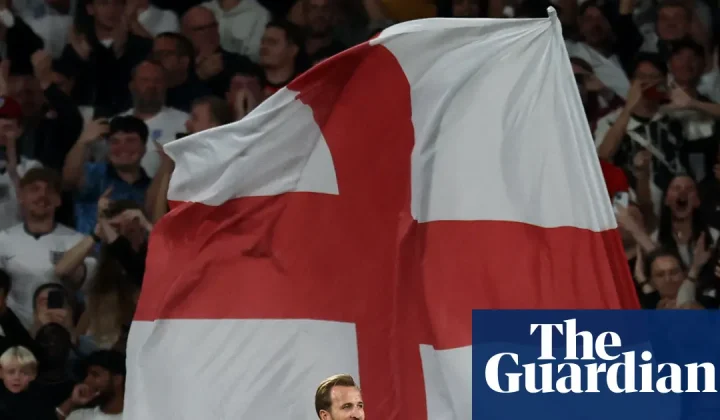
Harry Kane equals Peter Shilton’s England caps record with two goals in Nations League win over Czechia
Harry Kane scored twice on the night he equalled Peter Shilton’s all-time England appearance record, leading the Three Lions to a 3-0…
Read story
Jesse Marsch says Canada “not afraid” as USMNT friendly intensifies rivalry
Canada coach Jesse Marsch has welcomed the pressure of facing the United States, stating his team is “not afraid” as the two…
Read story
Scotland vs Slovenia: Nations League Group B1 Clash at Hampden Park
Scotland and Slovenia meet at Hampden Park in a pivotal Nations League Group B1 encounter, with both sides level on four points…
Read story