
VfL Fosite Helgoland: The Island Club Battling Isolation on the Football Field
Discover the unique challenges faced by VfL Fosite Helgoland, a German amateur football club on the remote island of Heligoland, struggling to find official opponents due to its isolated location and harsh maritime conditions.
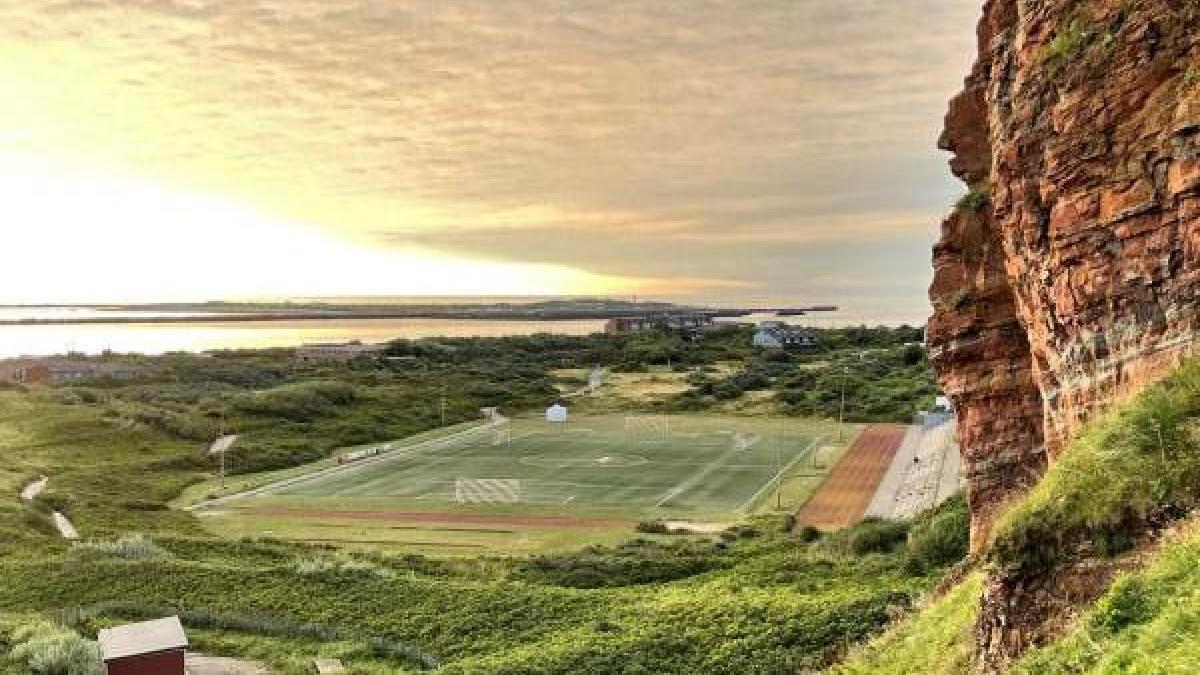
In the vast expanse of the North Sea lies Heligoland, a remote German archipelago with a population of around 1,500. For the VfL Fosite Helgoland football club, this isolation presents a unique and persistent challenge: the near impossibility of finding opponents for official matches. Despite boasting a functional football pitch, the island’s geographical remoteness and the unpredictable maritime conditions create significant hurdles for regular competition.
An Isolated Outpost
Heligoland, administratively part of Germany’s Schleswig-Holstein state, is situated approximately two hours by ferry from the mainland. The region is notorious for its strong winds and often turbulent seas, making travel to and from the island a complex and sometimes hazardous undertaking. This harsh environment not only complicates the club’s ability to participate in regional leagues but also deters other teams from making the arduous journey to Heligoland for a match.
A Rich and Turbulent History
The island of Heligoland is steeped in a history as dramatic as its surrounding waters. For centuries, it served as a refuge for pirates and privateers. Historical accounts suggest that as far back as the 14th and 15th centuries, Catalan merchants navigating the English Channel were targeted by English, French, and Danish pirates who used Heligoland as a base. By the 18th century, islanders had found another lucrative, albeit potentially grim, source of income: salvaging goods from shipwrecks caused by the treacherous weather, in addition to their traditional herring fishing.
Geopolitical Crossroads
Heligoland’s strategic location has also made it a pawn in international politics. It was historically part of Denmark before being ceded to Great Britain in 1814. In a significant exchange in 1890, Germany acquired the island from Britain in return for Zanzibar, recognizing Heligoland’s value as an advanced coastal post. During World War II, the British occupied the island and later used it for massive demolitions in 1952, after evacuating the population, fundamentally altering the island’s landscape.
The Birth of VfL Fosite Helgoland
The VfL Fosite Helgoland club itself has a long and distinguished history, founded in 1893 by English sailors who settled on the island. Remarkably, the club predates the German Football Association (DFB). However, despite its age and the passion of its members, VfL Fosite Helgoland has never competed in official leagues or participated in international fixtures. Their footballing activities are largely confined to approximately ten friendly matches per year, often against visiting holidaymakers or mixed teams.
A Missed Opportunity with Cuba
A notable event in the club’s recent history involved an invitation extended to the Cuban national football team for a friendly match. The prospect of such a high-profile game generated excitement, but it was ultimately cancelled just weeks before it was scheduled to take place. Reports suggest that the Cuban delegation withdrew after learning about the challenging weather conditions they would face on Heligoland.
Adaptation and Inclusivity
Faced with a dwindling pool of male players, VfL Fosite Helgoland has demonstrated a remarkable spirit of adaptation and inclusivity. To ensure they can field a team, they have occasionally incorporated women into their playing squad. This pragmatic approach allows the club to continue its tradition of friendly matches and maintain its active presence within the island community. With around 500 members, the club represents a significant portion of Heligoland’s population.
A Connection to CONIFA
For a period, VfL Fosite Helgoland was affiliated with the Confederation of Independent Football Associations (CONIFA). CONIFA serves as a governing body for football associations outside of FIFA, including teams representing de facto states, minority peoples, and regions with limited international sporting recognition. While part of CONIFA, the Heligoland club never managed to travel for away games or host other CONIFA teams on the island.
The Sealand Analogy
The CONIFA landscape includes fascinating entities, such as the Principality of Sealand. Sealand, a former offshore platform that declared itself an independent nation in 1967, has managed to play football matches, albeit on mainland pitches like the Bill Kyte Stadium in Godalming, England. Despite its small registered population, Sealand’s ability to form a team highlights the diverse and often unconventional nature of football participation within non-traditional entities.
Hopes for the Future
While the prospect of official league football on Heligoland remains distant, the island itself is a popular tourist destination, drawing thousands of visitors annually who are attracted by its natural beauty, serene atmosphere, and tax advantages. For VfL Fosite Helgoland, a future in official competition might depend on significant shifts in logistical capabilities or a newfound willingness from other clubs to embrace the unique challenge of playing on this remote North Sea island.
Club Details
Club: VfL Fosite Helgoland
Location: Heligoland, North Sea
Founded: 1893
Previous Affiliation: CONIFA
Primary Challenge: Difficulty securing opponents for official matches
The story of VfL Fosite Helgoland underscores the realities of football in remote locations and the enduring resilience of sporting communities in the face of geographical adversity. For readers of FootballGames10, this narrative offers a unique glimpse into the myriad forms football takes worldwide, extending far beyond the spotlight of major leagues and tournaments.
Source: Mundo Deportivo Futbol – https://www.mundodeportivo.com/futbol/internacional/20260526/1004184998/vfl-fosite-helgoland-futbol-amateur-club-sin-rival.html
Key facts
- Source: Mundo Deportivo Futbol
- Date: 2026-05-26T04:45:00+00:00
- Topic: El equipo de la isla de los piratas no consigue rival
Source
Mundo Deportivo Futbol Original publication: 2026-05-26T04:45:00+00:00
Related news

One Injured in Marble Hill Shooting; No Football Disruption Confirmed
A person was hospitalized after a shooting reportedly involving federal agents in New York’s Marble Hill neighborhood. The initial account identifies no…
Read story
Boca vs River Superclásico Confirmed for November 1 at La Bombonera
The Argentine Professional League has set the date and time for the next Boca Juniors vs River Plate Superclásico, scheduled for Sunday,…
Read story
Harry Kane equals Peter Shilton’s England caps record with two goals in Nations League win over Czechia
Harry Kane scored twice on the night he equalled Peter Shilton’s all-time England appearance record, leading the Three Lions to a 3-0…
Read story
Jesse Marsch says Canada “not afraid” as USMNT friendly intensifies rivalry
Canada coach Jesse Marsch has welcomed the pressure of facing the United States, stating his team is “not afraid” as the two…
Read story